
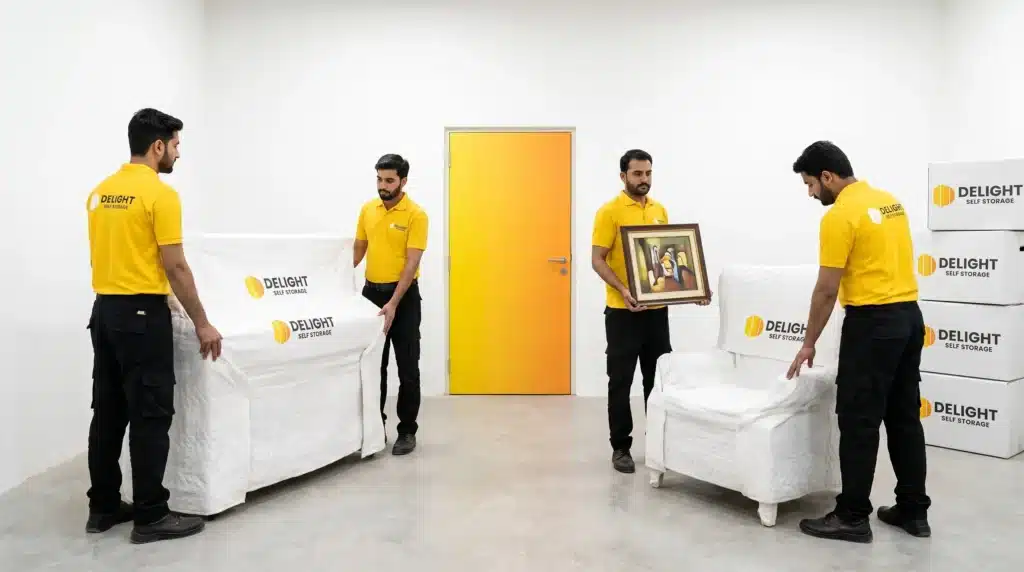
Packing for storage seems simple until you realise some everyday household items can create serious legal, safety, pest, and insurance problems. In Dubai, self-storage rules are not just about what a facility prefers. UAE customs controls, fire safety standards, waste regulations, medicine rules, and data protection concerns shape them.
In Dubai, you should not store illegal drugs, fireworks, weapons, flammable liquids, gas cylinders, hazardous chemicals, perishable food, live plants, animals, damp items, used tyres, radioactive materials, large amounts of cash, high-value valuables, or unsecured data-bearing devices in a household self-storage unit. The reason is not just “company policy”. These everyday items connect to UAE customs rules, Dubai Municipality waste controls, fire safety expectations, medicine regulations, and insurance exclusions.
Packing for storage seems simple until you realise some everyday household items can create serious legal, safety, pest, and insurance problems. In Dubai, self-storage rules are not just about what a facility prefers. UAE customs controls, fire safety standards, waste regulations, medicine rules, and data protection concerns shape them.
What does this guide help you check?
This guide helps you identify restricted household items before you book a storage unit Dubai renters use for moving, renovation, travel, or decluttering.
This article gives you 2 practical benefits:
- You can remove restricted items before packing day.
- You can reduce fire, pest, insurance, access, and dispute risks inside a storage facility Dubai residents use.
Which UAE rules affect household self storage?
UAE self storage restrictions come from customs rules, fire safety rules, hazardous waste controls, medicine controls, personal data rules, and each storage facility agreement.
Dubai Customs defines prohibited goods as goods barred from import or export under the Common Customs Law or other UAE rules. Dubai Customs also defines restricted goods as goods that require approval from a competent authority.
Self-storage facilities use the wider UAE control environment to protect tenants, staff, buildings, and stored property. A facility contract may ban items even when a separate government portal treats the item as restricted rather than fully illegal.
What items cannot go into a storage unit in Dubai?
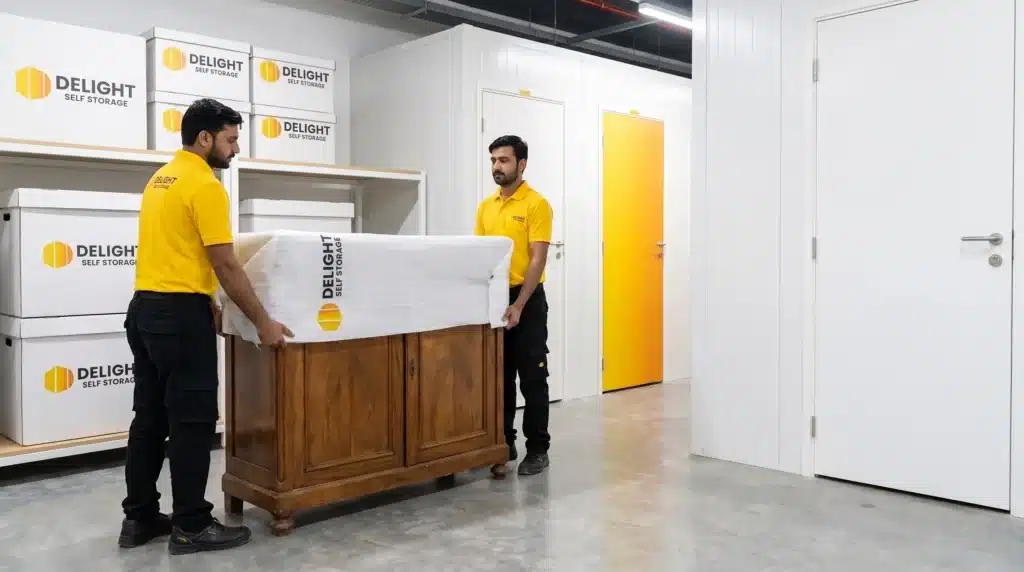
You cannot place main item categories in a Dubai self-storage unit when those items create legal, fire, health, pest, data, or insurance risks.
The table below groups everyday household items by risk type. Use the table before you pack boxes for moving and storage services in Dubai.
| Item category | Everyday examples | Main risk | Safer action |
|---|---|---|---|
| Narcotics and illegal drugs | Cannabis, cocaine, heroin, hallucinogenic pills | Criminal offence | Do not store or transport |
| Controlled medicines | Psychotropic medicine, narcotic medicine | Health and legal control | Keep prescription records |
| Fireworks and explosives | Sparklers, firecrackers, bottle rockets | Explosion and fire | Do not store |
| Weapons and ammunition | Firearms, cartridges, knives with a weapon purpose | Permit and security risk | Use legal clearance channels |
| Flammable liquids | Petrol, paint thinner, solvents | Ignition risk | Dispose through approved routes |
| Pressurized cylinders | Gas cylinders, aerosol cartons | Burst and fire risk | Return to supplier |
| Household chemicals | Pesticides, fertilizers, corrosive cleaners | Toxic or reactive exposure | Use municipal guidance |
| Perishable food | Cooked food, fresh produce, meat | Pest and odor risk | Do not pack |
| Plants and soil | Indoor plants, seeds, soil bags | Pest and plant control risk | Keep outside storage |
| Animals | Pets, fish tanks, insects | Welfare and contamination risk | Never store living things |
| Wet furniture | Damp sofas, wet carpets, soaked boxes | Mold and odor risk | Dry before storage |
| Used tyres | Car tyres, reconditioned tyres | Customs and fire load concern | Use tyre-disposal channels |
| Radioactive items | Radiation-contaminated substances | Safety control | Contact authority |
| Cash and currency | Large cash bundles, forged notes | Theft and legal risk | Use banking channels |
| Jewellery and valuables | Gold, diamonds, luxury watches | Theft and claims risk | Use insured custody |
| Data-bearing devices | Laptops, drives, phones | Data custody risk | Encrypt or erase first |
| Lithium batteries | Power banks, e-scooter batteries | Thermal event risk | Store separately or remove |
| E-waste | Circuit boards, damaged devices | Hazardous waste risk | Recycle through approved channels |
| Alcohol | Private bar stock, large cartons | Restricted handling | Check legal and facility rules |
| Home-made food | Cooked dishes, pickles, open jars | Customs and hygiene risk | Do not store |
| Counterfeit or suspicious goods | Fake branded goods, duplicate currency | Legal and seizure risk | Remove from inventory |
Dubai Municipality classifies Dubai waste into general waste, green or horticultural waste, construction and demolition waste, liquid waste, and hazardous waste. That classification supports a practical storage rule: do not turn a household storage unit into a mixed waste, chemical, or disposal space.
Why are narcotics and illegal drugs prohibited?
Narcotics are prohibited because Dubai Customs lists all kinds of narcotic drugs among prohibited items.
Dubai Customs names hashish, cocaine, heroin, poppy seeds, and hallucinogenic pills as banned items for entry into Dubai. A storage unit Dubai contract usually treats those items as immediate termination and reporting risk.
You cannot treat self storage Dubai as a private exception. The storage operator controls access logs, security cameras, and unit activity. Illegal items create risk for you, the facility, and other renters.
Can you store prescription medicine?
Ordinary medicine is not always “prohibited”, but it is often unsuitable for storage.
MOHAP allows travelers to carry narcotic and controlled medicines for personal use within limits. The stated maximum is 3 months’ supply for narcotic and controlled medicines and 6 months’ supply for prescription-only medicines.
That does not mean a storage unit is a good place for medication. Medicine quality depends on label conditions, temperature, humidity, segregation, and contamination control. The Dubai Health Authority also has a medication disposal route for healthcare facilities covering controlled drugs, semi-controlled drugs, and general medication disposal, with inspection and tracking steps.
Do this instead:
- Keep your daily medicine with you.
- Keep controlled medicine in its original labelled packaging.
- Do not store expired, unlabeled, heat-sensitive, or fridge-only medicine.
- Ask a pharmacy or health authority about safe disposal.
Why are fireworks and explosives banned?
Fireworks and explosives are banned because UAE authorities treat possession and trade as a public safety risk.
Dubai Police reported that Article 54 covers the illegal fireworks trade and possession, with imprisonment of at least 1 year and a fine of at least AED 100,000. That figure matters for storage because a box of sparklers or firecrackers can create both legal and fire exposure.
Emirates also forbids fireworks and explosive items such as firecrackers, bottle rockets, poppers, and sparklers in both carry-on and checked baggage. Aviation rules do not govern self storage directly, but they show how safety systems classify the same household celebration items.
Can you store weapons or ammunition?
You cannot store weapons, firearms, or ammunition in a self storage unit unless the storage provider and all competent authorities allow the item under documented clearance.
Dubai Customs lists arms, ammunition, explosives, and fireworks under authorities including the Ministry of Defence, the Armed Forces, and the Ministry of Interior. That places weapons outside ordinary household storage logic.
Emirates requires original firearm licences, original clearance documents, and prior approval for firearms and ammunition on flights. That strict documentation model shows why casual storage of weapons creates avoidable custody and liability issues.
Why are flammable liquids restricted?
Flammable liquids are restricted because they add ignition load, vapour risk, and spill risk inside an enclosed storage facility.
Examples include petrol, kerosene, paint thinner, turpentine, solvents, lighter fluid, nail polish remover in bulk, and some adhesive products. Dubai Municipality says hazardous waste can include materials that are toxic, reactive, ignitable, corrosive, infectious, or radioactive.
Do not pack partially used paint tins beside curtains, papers, mattresses, or cardboard. That mix creates a high fuel load. Your better option is to separate usable decorating supplies at home and dispose of waste liquid through approved waste routes.
Can you store gas cylinders and aerosol cans?
You cannot store gas cylinders, camping gas, barbecue cylinders, or large aerosol cartons in ordinary self storage.
Pressurized containers create a burst risk under heat and poor handling. Dubai’s climate and enclosed unit conditions increase practical concern, especially where renters stack boxes tightly.
The UAE Fire and Life Safety Code of Practice is the official fire safety reference for preventive safety. A storage facility Dubai operator aligns unit rules with fire prevention, evacuation, and hazardous material controls.
Remove cylinders from barbecue sets before storage. Empty aerosol-heavy boxes before handover. Store cosmetics, sprays, and cleaning products at home only when labels allow normal indoor conditions
What household chemicals create storage risk?
Household chemicals create storage risk when they are toxic, reactive, corrosive, ignitable, or poorly labelled.
This category includes pesticides, fertilizers, pool chemicals, drain cleaners, bleach, ammonia cleaners, oven cleaners, acids, car fluids, and pest-control powders. Dubai Customs links plants, fertilizers, and insecticides to the Ministry of Climate Change and Environment as a controlling authority.
Do not combine bleach, ammonia, acids, and unknown cleaners in the same moving carton. The practical storage rule is simple: keep manufacturer labels visible, never store leaking containers, and remove unlabeled bottles from your storage inventory.
Why is food not allowed in self-storage?
Food is not allowed because it attracts insects, rodents, odors, mold and contamination.
Dubai Customs lists cooked and home-made foods under banned items for passenger entry. That travel rule does not equal a self storage law, but it supports the same hygiene concern behind facility bans on cooked food, open jars, rice bags, spices, and pet food.
Dry pantry goods also create problems. Flour, rice, sugar, cereal, dried fruit, dates, and pet biscuits can attract pests. A storage unit Dubai renter often packs kitchens fast, so check every carton marked “kitchen” before pickup.
Can you store plants, soil or garden items?
You cannot store live plants, soil, fertilizer, or pest-control garden products in a household storage unit.
Plants need light, water, air, and pest management. Soil can carry insects, eggs, moisture, fungus, and odor. Fertilizers and insecticides also sit within restricted goods categories identified by Dubai Customs through the Ministry of Climate Change and Environment.
Store clean empty pots, dry garden tools, artificial plants, and outdoor furniture after cleaning. Remove soil from planters and dry cushions before packing.
Can pets or animals stay in a storage unit?
No living animal should ever be placed in a storage unit.
That includes cats, dogs, birds, fish, reptiles, insects, feeder animals, and “just for a few hours” temporary arrangements during moving day. A storage facility is not built for water, ventilation, supervision, heat control, or emergency care.
If your move creates a pet-care gap, arrange boarding, a friend’s home, or a licensed pet-care service before the movers arrive.
Why are damp items a problem in Dubai storage?
Damp items create mold, odor, fabric damage, wood swelling, and contamination across nearby boxes.
Dubai Municipality states that improper storage, transport, treatment, or disposal can contaminate surface and groundwater supplies in hazardous waste contexts. The same principle matters at household scale: poor containment turns a private unit into a contamination source.
Do not store wet carpets, recently washed curtains, damp mattresses, flooded cartons, leaking aquariums, or outdoor cushions after rain or cleaning. Dry items fully before storage. Photograph the condition before pickup.
Can you store used tyres or car parts?
Used tyres are not suitable for ordinary self storage because Dubai Customs lists used, reconditioned, and inlaid tyres among banned items.
Tyres also create odor, pest harborage, and fire-load concerns. If you rent storage for a car, motorcycle, or garage clear-out, separate tyres, fuel, oils, and batteries before loading.
Clean spare rims, boxed accessories, roof racks, and non-fluid tools usually fit household storage better. Ask your storage provider before you send garage items with a mover.
Why are radioactive or contaminated items prohibited?
Radioactive or contaminated substances are prohibited because they require specialist authority control.
Dubai Customs includes radiation- and nuclear-fallout-contaminated substances among prohibited items. It also identifies the Federal Authority for Nuclear Regulation as a controlling authority for nuclear energy-related products.
Most renters never handle this category. The practical warning covers unusual imported instruments, industrial gauges, medical equipment, laboratory items, and inherited devices with warning labels.
Can you store cash, jewellery, and valuables?
You can store personal valuables only when your facility contract, insurance, and evidence pack cover them, but cash and high-value items rarely belong in ordinary self storage.
Dubai Customs permits cash, currencies, and traveler cheques below AED 60,000 as customs-exempt luggage for passengers aged at least 18. That figure shows how authorities treat cash movement as a defined declaration and control issue.
A storage unit Dubai rental agreement often limits liability for money, jewellery, watches, deeds, passports, antiques, and collectibles. Use a bank safe deposit option, specialist vault, or documented insurance route for high-value assets.
What data-bearing items create custody risk?
Data-bearing items are easy to underestimate.
The UAE’s Personal Data Protection Law, Federal Decree Law No. (45) of 2021 creates a framework for confidentiality and privacy of personal data.
For families, this affects:
- Passports
- Emirates ID copies
- School records
- Tenancy contracts
- Medical reports
- Bank papers
- Hard drives
- Laptops
- Phones
- Memory cards
- Business records
If you must store documents, use sealed boxes and keep originals with you. For devices, encrypt, wipe, or remove sensitive data first.
Are lithium batteries allowed in self storage?
Lithium batteries require extra caution because damaged or loose batteries can create a fire risk.
Power banks, spare laptop batteries, e-scooter batteries, drones, smart luggage, and cordless-tool batteries appear in everyday homes. Emirates requires spare or loose lithium batteries for portable electronic devices in cabin baggage only, and it bans smart bags with built-in batteries that cannot be removed.
That aviation rule does not directly regulate storage units, but it shows a recognised safety pattern: loose batteries need separation, terminal protection, and clear handling. Remove batteries from devices when possible. Do not store swollen, hot, damaged, or unlabelled batteries.
What about old electronics and e-waste?
Old electronics create storage risk when they contain batteries, damaged circuit boards, cracked screens, or personal data.
Dubai Municipality states that hazardous wastes can be recycled into new products, including lead-acid batteries and electronic circuit boards. That makes approved recycling a better route for broken electronics than long-term self storage.
Store working electronics only after cleaning, backup, battery removal where possible, and data protection. Recycle broken power banks, corroded batteries, and damaged devices through approved e-waste channels.
Can you store alcohol in a Dubai storage unit?
Alcohol requires caution because Dubai Customs lists alcoholic beverages under Dubai Police as a restricted authority category.
Do not place large quantities of alcohol into household self-storage without checking your legal position, facility rules, packaging, temperature, and insurance. Glass bottles also create breakage, odor, and leakage risk.
Dubai Customs also sets passenger duty-exempt limits for alcoholic beverages at 4 litres or 2 cartons of beer, with each carton containing 24 cans not exceeding 355 millilitres per can. That specific threshold supports the wider point: alcohol has defined handling limits.
What happens if you store prohibited items?
You can face denied access, forced removal, disposal charges, police reporting, claim denial, contract termination, or legal action.
A facility does not inspect every carton like customs. The problem usually appears later through smell, leakage, pest activity, fire alarm, maintenance checks, insurance investigation, or neighbor complaints.
Dubai Civil Defence open data reported a 5-minute 30-second average response time to fire incidents in 2024 and a fire incident rate of 7.66 per 100,000 population. Those figures show why prevention matters before emergency response starts.
What can you usually store safely?
You can usually store clean, dry, legal, non-perishable household goods with low fire, pest, and theft risk.
Examples include sofas, beds, tables, chairs, books, sealed clothes, kitchenware, sports gear, lamps, framed pictures, suitcases, toys, clean appliances, empty pots, and boxed decor. Keep electronics only when you protect data and remove risky batteries.
Use climate-aware packing for Dubai. Wrap fabric with breathable covers. Keep books off the floors. Leave small air gaps around furniture. Put heavier cartons at the bottom. Label boxes by room and risk.
How do you prepare a compliant storage inventory?
Prepare a compliant inventory by separating safe household goods from restricted, hazardous, valuable, and data-bearing items before collection.
Use this 7-step check before booking a storage unit Dubai residents use for household moves:
- Open every kitchen, bathroom, balcony, and garage box.
- Remove food, liquids, cylinders, batteries, chemicals, and medicines.
- Check labels for flammable, corrosive, toxic, reactive or pressurized warnings.
- Photograph furniture, appliances, and packed cartons before pickup.
- List serial numbers for electronics and appliances.
- Keep passports, cash, jewellery, and deeds outside the unit.
- Ask the facility for its restricted items clause before move-in.
This checklist creates a simple evidence pack. The evidence pack helps with handover, insurance, access disputes, and damage review.
What happens if you store prohibited items?
Depending on the item and contract, you may face:
- Refusal at pickup
- Forced removal
- Disposal charges
- Contract termination
- Denied insurance claims
- Police or authority reporting
- Liability for damage to nearby units
- Loss of access until the issue is resolved
The facility may not inspect every carton on day one. Problems usually appear later through leakage, smell, pests, alarm events, CCTV review, maintenance access, or an insurance investigation.
Which everyday household items deserve a second check?
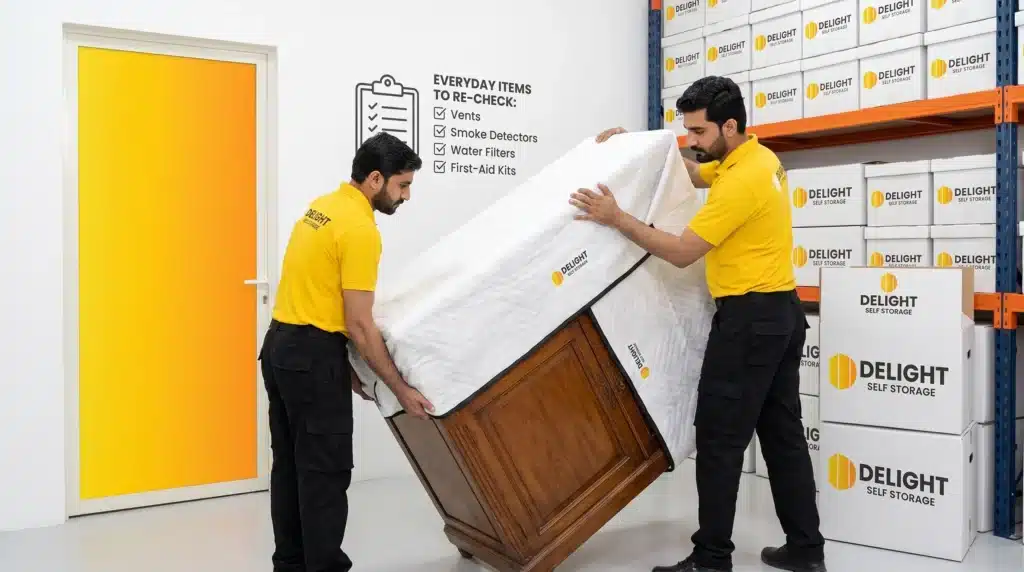
Bathroom, kitchen, balcony, garage, and home-office items deserve the closest check because they contain the highest mix of restricted materials.
The table below maps common rooms to problem items and safer decisions.
| Home area | Items to check | Why the item matters | Better decision |
|---|---|---|---|
| Kitchen | Food, oils, gas lighters, home-made jars | Pest, odor, leakage | Remove before pickup |
| Bathroom | Medicine, aerosols, bleach, cosmetics | Health, pressure, chemical risk | Keep only safe toiletries |
| Balcony | Gas cylinders, plants, soil, pesticides | Fire, pest, restricted goods | Return or dispose |
| Garage | Fuel, tyres, batteries, paint, solvents | Fire, waste, customs risk | Separate before storage |
| Home office | Passports, drives, contracts, laptops | Data and identity custody | Encrypt, erase, or keep with you |
| Children’s room | Battery toys, slime kits, craft chemicals | Battery and chemical risk | Remove batteries |
| Living room | Candles, high-value art, electronics | Fire and claims risk | Document or keep separately |
This room-based check improves packing accuracy. It also reduces rejected items during the moving and storage Dubai handover.
Final checklist before pickup
There are 12 checks to complete before your mover collects items for household storage that Dubai renters use.
- Remove all food.
- Remove all plants and soil.
- Remove all pets and animal items that contain food.
- Remove petrol, gas, paint thinner, and solvents.
- Remove gas cylinders and large aerosol cartons.
- Separate medicine and prescriptions.
- Remove fireworks, weapons, and ammunition.
- Remove cash, jewellery, passports, and deeds.
- Erase or encrypt data-bearing devices.
- Recycle damaged batteries and e-waste.
- Dry furniture, carpets, and curtains.
- Photograph the boxes, furniture, and appliances’ condition.
Self storage works best when your inventory contains stable household goods. The restricted-item check protects your access, your insurance position, and the safety of every other unit in the facility.
Bottom Line: When in doubt, leave it out
Self storage should give you space, control, and peace of mind. It should not leave you dealing with pest problems, fire risks, rejected items, denied insurance claims, or legal complications. That is why the safest storage decision happens before the unit is booked and before the mover arrives.
Walk through your home one room at a time. Check the kitchen for food and oils. Check the balcony for plants, soil, pesticides, and gas cylinders. Check the garage for fuel, tyres, batteries, paint, and solvents. Check the home office for passports, hard drives, laptops, contracts, and personal records. Anything wet, risky, valuable, perishable, hazardous, or difficult to insure should be removed from the storage pile.
Before you hand over your belongings, ask the storage company for its restricted-items list, read the insurance exclusions, photograph your packed items, and keep a clear inventory. These small steps can prevent major problems later.
FAQS
Should I check every box before sending it to a Dubai storage facility?
Yes, because restricted items are often hidden in the kitchen, bathroom, balcony, garage, and office boxes.
Can one small food item really cause a problem in storage?
Yes, even a small amount of food can attract pests, create odor, or damage nearby belongings.
Is it safe to store cleaning products if the bottles are sealed?
Not always, because some cleaners are flammable, corrosive, reactive, or unsuitable for enclosed storage.
What should I do with gas cylinders before storing outdoor furniture?
Remove the cylinder and return it through the proper supplier or disposal route before storage.
Can I store electronics in a Dubai self-storage unit?
You can usually store working electronics but remove risky batteries and protect or erase personal data first.
Why should damp furniture never go into storage?
Damp furniture can develop mold, smell bad, stain other items, and spread moisture inside the unit.
Are valuable items covered if they are kept in self storage?
Not always, as many storage agreements and insurance policies limit claims for cash, jewellery, documents, and luxury goods.
Can I keep prescription medicine in a storage unit for a few months?
It is better not to, because medicine may need controlled temperature, secure handling, original packaging, and proper records.
What is the easiest way to avoid rejected items on moving day?
Separate food, liquids, chemicals, batteries, cylinders, medicines, valuables, and documents before the mover arrives.
What should I ask the storage company before booking?
Ask for its restricted-items list, insurance exclusions, fire-safety conditions, access rules, and packing requirements.
Storage & Warehousing Operations Specialist
14+ years in UAE self-storage and warehousing, managing facilities across Dubai, Abu Dhabi, and the Northern Emirates. Specializes in climate-controlled storage, unit sizing, security systems, and Free Zone vs Mainland compliance.
Content Lead & Storage Solutions Researcher
8 years researching and writing on UAE storage and logistics. Focuses on storage costs, unit-size guides, and packing for Dubai's climate, working closely with facility teams for accurate pricing and specs.