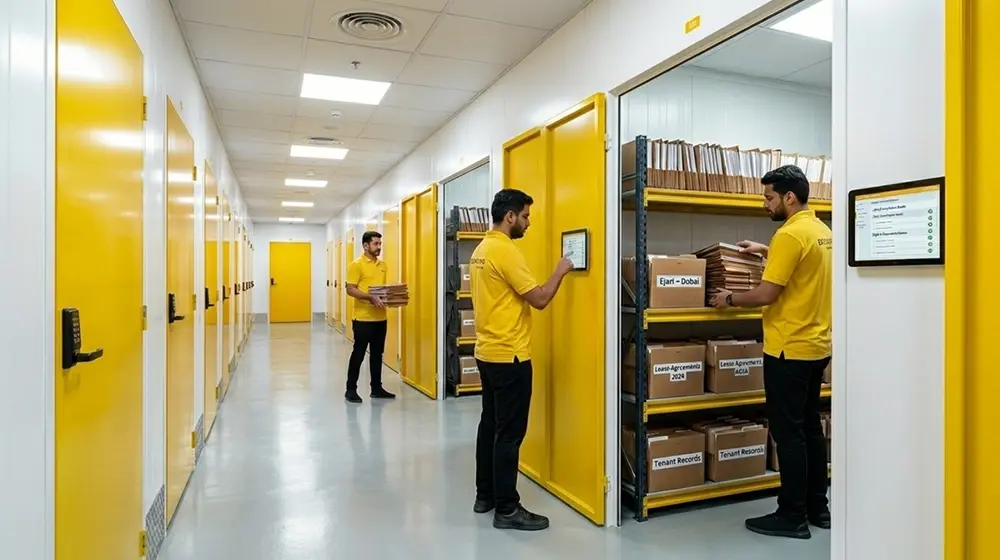
Warehouse Space in Dubai
Warehouse space in Dubai flexible, secure commercial storage for stock, equipment & pallets. Right size for your business. Book Now!

Finding warehouse space in Dubai is not simply about finding the biggest floor area for the lowest monthly price. For a business, the real question is whether the space works for the way stock, equipment, cartons, furniture, or commercial goods actually move in and out. A small business may need a few hundred square feet for excess inventory. A growing retailer may need room for pallets, racking and regular deliveries. Another company may need a larger commercial warehouse because its goods arrive by truck and cannot be handled like household storage.
That is where warehouse space makes sense. At Delight Self Storage, warehouse space is intended for businesses that need more room than a conventional self-storage unit can provide, without automatically taking on a much larger commercial property than they need. The right option depends on volume, handling requirements, vehicle access, rental term and how often the business needs to reach its goods.
What warehouse space in Dubai is leased for
Warehouse space is generally leased as commercial storage space for businesses that need dedicated room for stock, equipment, materials, furniture, documents, packaging supplies or other permitted goods. The main difference is scale and practical use. A business renting warehouse space is usually thinking in terms of cartons, shelving, pallets, loading areas and vehicle movement rather than simply the number of boxes that can fit inside a room.
This can make warehouse space useful for retailers, importers, distributors, contractors, e-commerce businesses, furniture companies and businesses holding seasonal or excess inventory. The space can also be useful when a business is growing but is not ready to commit to a large standalone warehouse. Instead of paying for unused commercial floor area, the business can choose space that is closer to its actual storage requirement.
The exact suitability will depend on the goods and the facility. Some products also have specific storage requirements. Dubai Municipality, for example, publishes technical guidance covering safe storage of consumer products, including requirements around shelving, clearance, cleanliness and storage conditions.
Warehouse vs self storage: where is the size threshold?
There is no single square-foot figure that automatically turns self storage into warehouse space. The better way to make the decision is to look at how much stock you have and how you need to handle it. Self storage is usually a better fit when the business has boxes, furniture, documents, small quantities of inventory or equipment that can be moved through standard access points. It works particularly well when the business needs storage but does not require a dedicated loading operation.
Warehouse space becomes more practical when the volume starts to involve larger quantities of stock, commercial racking, pallets, heavier equipment or frequent loading and unloading. For example, an online retailer with several hundred cartons may outgrow a small storage unit even if the cartons technically fit. If staff need to move through the space regularly, receive larger deliveries and keep products organised on shelving, the layout becomes just as important as the square footage.
Before choosing a unit, it is worth checking the available storage unit sizes in Dubai and comparing the physical dimensions with your inventory volume. The goal is not to rent the biggest space available. It is to rent enough space to store stock safely while leaving practical room for movement and access.
Racking, loading and vehicle access
Warehouse space is only useful if goods can actually get in and out without creating unnecessary work. That means businesses should ask about loading arrangements before signing a rental agreement. Consider the type of vehicle used for deliveries, the size and weight of the goods, how cartons or pallets will be moved, and whether loading and unloading can be carried out comfortably. Racking is another important consideration. A business with hundreds of cartons does not necessarily need more floor space if vertical storage can be used effectively. Shelving and racking can help separate stock by product, category, order or turnover rate.
At the same time, racking should not leave the warehouse difficult to work in. A crowded room may technically hold more goods but can become frustrating when staff need to retrieve individual items. Vehicle access matters too. A company receiving regular commercial deliveries should not choose a warehouse based only on its advertised floor area. It should ask about vehicle access, loading arrangements, access routes and any restrictions that could affect deliveries. These details can have a bigger effect on day-to-day operations than a small difference in monthly rent.
How much warehouse space do you actually need?
Start with the inventory rather than the available warehouse sizes. Make a basic list of what you plan to store and estimate the number of cartons, pallets, shelves, furniture pieces, machines or other large items. Then consider how much stock you expect to add over the next six to twelve months. For example, a business storing 300 cartons today may need considerably more room if its stock is growing every month. Renting exactly enough space for today’s inventory can lead to another move sooner than expected. On the other hand, renting a much larger warehouse simply because the business might grow can mean paying for empty space.
A practical estimate should consider four things:
- Current stock volume
- Expected inventory growth
- Racking or shelving requirements
- Space needed for movement and retrieval
Businesses should also consider how frequently goods are accessed. If stock is rarely touched, compact storage may be sufficient. If employees are constantly picking products, the layout and access space become much more important. For a broader view of pricing factors, see this guide to storage costs in Dubai.
Minimum term and warehouse pricing
Warehouse pricing in Dubai varies according to the amount of space, location, facility type, storage conditions, access requirements and rental period. There is no sensible single price for “a warehouse in Dubai” because a small commercial storage requirement and a large industrial warehouse are completely different propositions. A short-term requirement may also be priced differently from a longer commercial agreement. Businesses should therefore compare the total rental commitment rather than looking only at the monthly headline price.
When requesting a quote, ask what is included. The quoted rent may not necessarily cover every service associated with moving goods. Depending on the agreement, businesses may need to consider VAT, access-related charges, handling arrangements, insurance or transport separately. The UAE Government states that VAT is charged at 5% on taxable goods and services, so businesses should confirm whether VAT is included in the quoted storage price or added separately. A good warehouse quote should make the commercial terms easy to understand. Ask about the minimum rental term, deposit, payment schedule, notice period and any additional charges before committing.
What you handle and what we handle
One of the most important things to understand before renting warehouse space is the difference between leasing storage space and running a fulfilment operation. The warehouse provides the physical space. The business remains responsible for deciding how its stock is organised, labelled and managed unless additional services have specifically been agreed.
For example, a company may store cartons of products in its warehouse space and manage its own inventory. It may also arrange its own transportation when stock needs to move to another location. This distinction is important because not every warehouse provider operates as a third-party logistics company. If your requirement is simply to have secure commercial space for inventory or equipment, warehouse rental can be a straightforward solution. If you need order picking, packing, dispatch, stock management or regular last-mile delivery, you should ask specifically whether those services are available rather than assuming they are included.
Warehouse space for growing businesses
Warehouse requirements often change as a company grows. A new business may start with a small amount of stock stored at the office. As orders increase, boxes begin occupying meeting rooms, corridors or spare areas. Eventually, the business needs a proper storage location. That is often the point at which warehouse space becomes worth considering.
The same applies to seasonal businesses. A retailer may need extra room before a busy sales period and less space during quieter months. A contractor may need somewhere to keep equipment and materials between projects. An e-commerce company may need additional stock space as product lines expand. Flexible commercial storage can give these businesses room to operate without immediately taking on a warehouse that is far larger than their current needs. The important thing is to match the rental arrangement to the business cycle rather than treating warehouse space as a permanent commitment from day one.
What can be stored in warehouse space?
Warehouse space is intended for permitted commercial goods that can be safely stored under the facility’s conditions. Typical examples may include packaged inventory, furniture, business equipment, packaging materials, retail stock, documents, fixtures and other commercial belongings. However, businesses should never assume that every product is acceptable simply because it is commercial stock.
Restricted, hazardous, flammable, illegal or otherwise prohibited goods may not be accepted. Certain products may also require specific temperature, ventilation, hygiene or handling conditions. If the business stores food, chemicals, medicines, sensitive products or other regulated goods, it should confirm the applicable requirements before renting. Dubai Municipality publishes separate technical guidance for different categories of storage, so the correct requirements can depend on the type of goods involved. When in doubt, provide the storage provider with a clear description of the goods before booking.
What warehouse space does not include
This is where expectations matter. Warehouse space is not automatically the same as a fulfilment centre, logistics company or distribution service. Leasing space gives a business somewhere to keep its goods. It does not automatically mean that someone else will receive every shipment, manage inventory, pick orders, pack customer purchases and arrange deliveries. If those services are essential to the business, they should be discussed separately before the agreement is signed. For companies that only need additional commercial storage, keeping the arrangement simple can actually be an advantage. The business controls its own stock while having dedicated space away from its main office, shop or home.
Is warehouse space in Dubai right for your business?
Warehouse space is worth considering when your storage requirement has moved beyond a few boxes or household belongings but you do not necessarily want to commit to a large standalone warehouse. It can make sense when you need more volume, commercial storage conditions, organised stock space and practical access for moving goods. Before making a decision, compare the size, rental term, access arrangements, loading facilities, storage conditions and total monthly cost. Also think about how your stock will change over the next year. Most importantly, be clear about what you actually need from the facility.
If you only need a place to keep inventory, warehouse space may be enough. If you need a complete logistics operation, you will need to look beyond storage space and confirm whether fulfilment, handling and delivery services are available. The right warehouse is not necessarily the largest or cheapest one. It is the space that fits the volume of goods you have, the way you handle them and the rental commitment your business can comfortably manage.
Get the right warehouse space in Dubai
Choosing warehouse space should start with a clear understanding of your stock, access needs and budget. Once those three things are defined, it becomes much easier to compare available options and avoid paying for space or services you do not actually need. For businesses looking for commercial storage in Dubai, the next step is simple: estimate your required volume, identify how often you need access, and ask for a quote based on your actual requirements. That gives you a much clearer basis for deciding whether warehouse space, a larger storage unit or another commercial storage solution is the better fit.
Khalid Al Mansoori
Storage & Warehousing Operations Specialist
14+ years in UAE self-storage and warehousing, managing facilities across Dubai, Abu Dhabi, and the Northern Emirates. Specializes in climate-controlled storage, unit sizing, security systems, and Free Zone vs Mainland compliance.
Sarah Mitchell
Content Lead & Storage Solutions Researcher
8 years researching and writing on UAE storage and logistics. Focuses on storage costs, unit-size guides, and packing for Dubai's climate, working closely with facility teams for accurate pricing and specs.