Storage Unit Access in Dubai: Hours, Drive-Up and Appointments
Storage unit access in Dubai check hours, drive up options & appointment rules before renting. Find the right access for your needs.

Finding the right storage unit in Dubai is not only about size and price. If you need to visit your belongings regularly, access can make or break the whole storage experience. A unit may be affordable and large enough for everything you own, but if getting to it is difficult or you can only access it during limited hours, the low price may not feel like much of a benefit. This becomes even more important for businesses storing stock, equipment, documents, or supplies. A homeowner may only visit a storage unit a few times a year, while a business might need access several times a week.
That is why it is worth checking exactly how access works before renting. Are customers allowed to enter throughout the day? Is 24-hour access actually available? Can you drive close to the unit? Do you need an appointment? Are trolleys and lifts available? What happens if you need to visit on a public holiday? These details are easy to overlook when comparing storage prices, but they can have a major effect on convenience.
What Are the Access Hours?
Every storage facility has its own access policy, so there is no single opening-hour schedule that applies to every storage unit in Dubai. Some facilities may provide extended customer access, while others operate within set daily hours. There can also be a difference between the facility’s staffed hours and the hours during which customers can enter their storage areas. That distinction matters.
A reception desk might close in the evening while customers with authorised access can still enter the facility. On the other hand, a facility may close completely outside its published customer hours. Before booking, ask the provider for the exact customer access hours rather than simply asking when the facility is “open.” If you expect to collect stock early in the morning or retrieve household items late at night, make sure those times are actually covered.
What Does 24-Hour Access Really Mean?
The phrase 24-hour access storage in Dubai sounds straightforward, but it is worth checking what the provider means by it. In some cases, 24-hour access can mean customers with authorised credentials can enter the facility at any time of day or night. In other situations, certain areas may have restricted access even if the facility itself operates around the clock. There may also be additional rules for vehicle access, loading areas, lifts, or staff assistance.
So, if 24-hour access is important to you, ask a few specific questions before signing the agreement:
- Can I enter my storage unit 24 hours a day?
- Does 24-hour access apply every day of the week?
- Can I bring a vehicle during those hours?
- Are loading bays available at night?
- Is staff assistance available outside office hours?
- Is there an additional charge for extended or 24-hour access?
Do not assume that the words “24-hour facility” automatically mean you can drive up to your unit at 2 a.m. and move items without restrictions.
Drive-Up Units vs Indoor Storage
Another important access question is whether you can drive directly to your storage unit. A drive-up storage unit is designed to make loading and unloading easier. You can bring a suitable vehicle close to the storage space, unload your belongings, and avoid carrying heavy boxes through long corridors. This can be particularly useful for furniture, business stock, equipment, appliances, and large quantities of boxes. Indoor storage works differently. Your unit may be inside a building, meaning you could need to use a loading area, trolley, corridor, lift, or other access route before reaching it.
Neither option is automatically better. If you store a few boxes and only visit occasionally, an indoor unit may be perfectly convenient. If you regularly move heavy stock or furniture, easier vehicle access can save a considerable amount of time and effort. When comparing facilities, ask how close vehicles can get to the unit and whether there are restrictions on vehicle size.
Do You Need an Appointment?
Whether you need an appointment depends on what you are doing at the storage facility. Routine access to your own unit may not require an appointment if you already have authorised entry. However, moving in, collecting a large shipment, using a collection or delivery service, or bringing a professional moving team may require advance coordination.
This is especially relevant when you are moving furniture or a large volume of stock. A storage facility needs to have enough space for vehicles and loading activity, and some sites may manage these activities through scheduled time slots. If you are planning a move-in, ask whether you need to reserve a loading bay or notify the facility in advance. It is much better to spend two minutes confirming the procedure than to arrive with a moving truck and discover that access has not been arranged.
Trolleys, Lifts and Loading Bays Matter
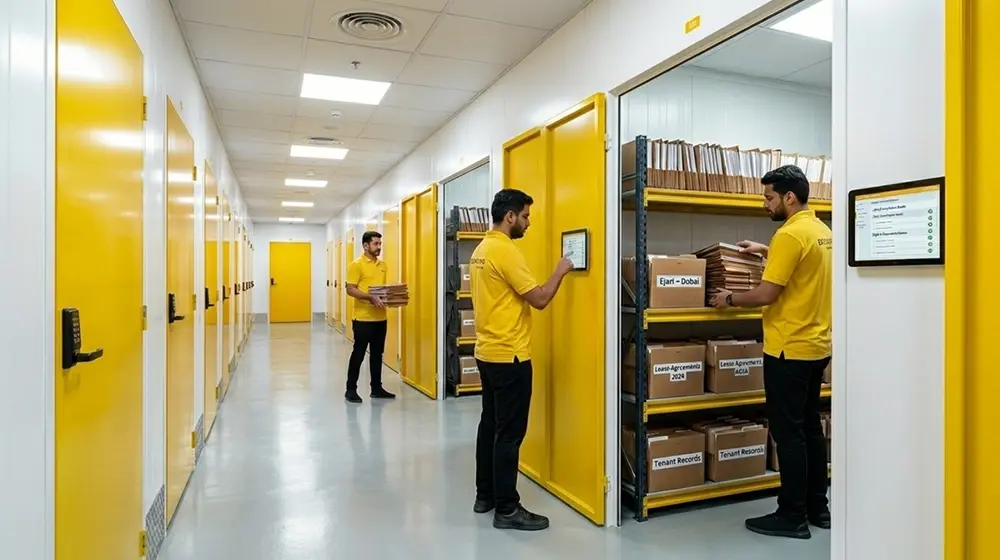
Access is not just about opening a door. Imagine carrying twenty boxes from your car to an indoor unit one box at a time. Now imagine doing the same thing with a trolley. The difference is obvious. Before choosing a storage facility, ask what equipment is available to customers. Trolleys can make moving boxes much easier, while lifts can be essential if units are located on upper floors.
Loading bays are also worth checking, particularly for businesses and customers moving large furniture. Find out whether loading areas are available, whether they have time restrictions, and whether you need to reserve a space. If you are storing heavy appliances, office furniture, or commercial stock, these practical details can matter just as much as the size of the storage unit. For customers who are still deciding how much space they need, it is also worth comparing storage unit sizes in Dubai before choosing a facility. The right size can make loading and retrieving belongings much easier.
Can Someone Else Access Your Storage Unit?
You may not always be the person collecting your belongings. A family member might need to pick something up while you are travelling. A colleague may need to collect business stock. A moving company may need access during a relocation. Ask the storage provider how authorised third-party access works before you need it. Some facilities may require advance approval or identification for another person to enter on your behalf.
For businesses, it is particularly important to establish who is authorised to access the unit. If several employees need to retrieve stock, make sure the access procedure is clear and manageable. Do not simply hand over your access credentials without checking the provider’s rules. A controlled access system is there to protect your belongings as well as the facility.
What About Public Holidays?
Public holidays can create an unexpected access problem. Your storage provider may operate different customer access hours on holidays, even if normal weekday access is available. Staffed services, loading bays, collection services, or reception support may also follow a different schedule.
If you know you will need access around a public holiday, check the facility’s holiday arrangements in advance. This is particularly important for businesses. If your customers are still ordering products during a holiday period, restricted access to your inventory could affect fulfilment. A simple check before the holiday can help you avoid an unnecessary trip.
Does Better Access Cost More?
Not necessarily, but it is something you should ask about. Storage prices are affected by several factors, including unit size, location, rental duration, storage conditions, and the services included. Access arrangements can also differ between facilities and unit types. A facility offering extended or 24-hour access may include that feature in its standard rental price, while another provider may charge separately for certain services or access arrangements.
When comparing quotes, do not compare only the monthly rent. Compare what you actually receive for that price. For example, a slightly more expensive unit with convenient access, easy loading, and suitable parking may provide better value than a cheaper unit that is difficult to reach. The same principle applies to businesses. Saving AED 100 a month may not be worthwhile if employees regularly spend extra time travelling, waiting for access, or manually moving stock through a difficult loading route. For a wider look at the factors that can affect what you pay for storage, you can also review storage costs in Dubai before comparing individual facilities.
What Should You Ask Before Renting?
Before signing a storage agreement, make a short access checklist. Confirm the customer access hours, whether 24-hour access is available, how access credentials work, and whether access changes on weekends or public holidays. If you need vehicle access, ask about parking, loading bays, drive-up availability, and vehicle restrictions. If you are moving in large quantities, ask whether an appointment is required. Also confirm whether trolleys, lifts, loading equipment, or staff assistance are available.
Finally, ask whether any access-related services carry additional charges. These questions are especially important if your storage needs are commercial. A business that collects stock several times a week will have very different access requirements from someone storing furniture for six months.
Choose Access Based on How You Use Storage
There is no point paying extra for features you will never use, but there is also little benefit in choosing the cheapest storage unit if accessing it becomes a regular headache. Someone storing seasonal clothes or spare furniture may only need occasional daytime access. A family moving between homes may need frequent access for several weeks. A business holding inventory could need a much more flexible arrangement.
Think about your routine before you book. If you expect frequent visits, prioritise convenient access, parking, loading arrangements, and suitable operating hours. If you rarely visit, price and storage conditions may deserve more attention. For businesses, think about stock movement as well. The more frequently items enter and leave the unit, the more valuable convenient access becomes.
The Right Storage Facility Should Fit Your Routine
Storage is supposed to make your life easier, not create another logistical problem. Before choosing a storage facility in Dubai, look beyond the monthly price and unit size. Check when you can access your belongings, how you enter the building, whether vehicles can get close, whether appointments are required, and what equipment is available for moving items.
If you specifically need 24-hour access storage in Dubai, confirm that the access policy applies to your individual unit and find out whether there are any restrictions on vehicles, loading areas, or after-hours services. For occasional users, standard access may be perfectly adequate. For businesses, frequent movers, and people who need flexibility outside normal working hours, access can be one of the most important factors in the decision. The best storage unit is not simply the one with the most space or the lowest rent. It is the one that gives you the right combination of price, location, storage conditions, and access for the way you actually use it.
Khalid Al Mansoori
Storage & Warehousing Operations Specialist
14+ years in UAE self-storage and warehousing, managing facilities across Dubai, Abu Dhabi, and the Northern Emirates. Specializes in climate-controlled storage, unit sizing, security systems, and Free Zone vs Mainland compliance.
Sarah Mitchell
Content Lead & Storage Solutions Researcher
8 years researching and writing on UAE storage and logistics. Focuses on storage costs, unit-size guides, and packing for Dubai's climate, working closely with facility teams for accurate pricing and specs.