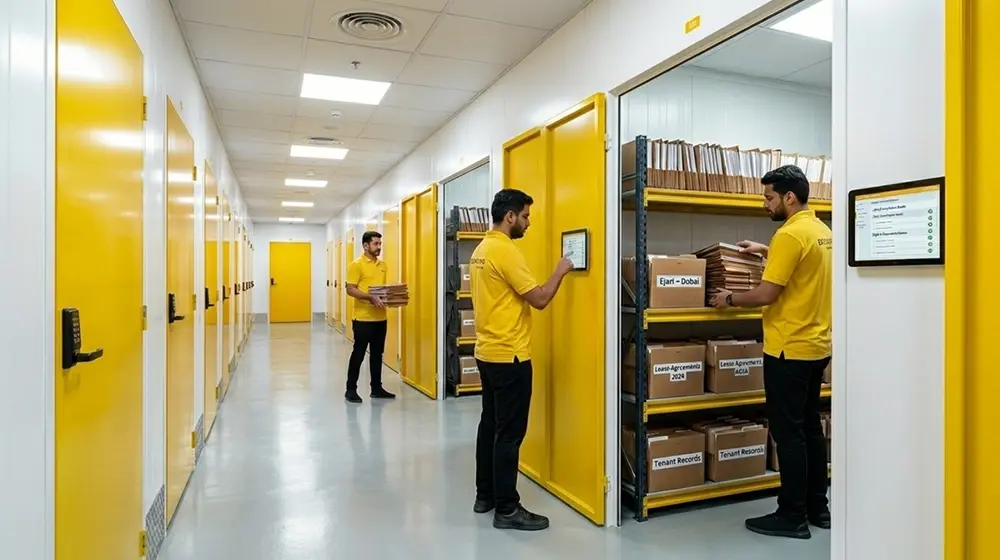
Short-Term Storage in Dubai
Short-term storage in Dubai flexible monthly units for home moves, renovations & travel. Pay only for what you need. Book Now!

Sometimes you don’t need storage for a year. You just need somewhere safe to keep your belongings while you’re between homes, renovating an apartment, travelling for a few months or waiting for your new place to be ready. In these situations, committing to a long-term storage arrangement can feel unnecessary. Short-term storage in Dubai gives you a more practical option when the storage period is temporary but your belongings still need proper protection.
The tricky part is that “short-term” does not mean exactly the same thing for every storage provider. One company may offer monthly storage, while another may have a minimum rental period or require advance notice before you move your belongings out. The advertised monthly price may also change depending on the unit size, services included and length of your rental.
Before booking, work out how much you need to store, how long you expect to need it and how often you’ll need access. That makes it much easier to compare temporary storage options without paying for space or services you don’t need.
What Counts as Short-Term Storage in Dubai?
Short-term storage generally refers to renting a storage space for a temporary period rather than committing to long-term storage. That could mean one month, three months, six months or another period based on your circumstances and the provider’s rental terms. There is no single period that automatically defines short-term storage. A person storing furniture during a six-week home renovation has a different requirement from someone leaving Dubai for four months.
Common reasons for short-term storage include:
- Moving between apartments
- Renovating a home
- Waiting for a property handover
- Travelling for a few months
- Temporary relocation
- Storing furniture between leases
- Clearing a home before selling it
- Keeping seasonal belongings out of the way
- Holding business stock during an office move
The main advantage is flexibility. You aren’t renting storage simply because you don’t know what else to do with your belongings. You’re renting it for a specific temporary need.
Can You Rent Storage for One Month in Dubai?
One-month storage can be useful when you need a temporary place for furniture, boxes or personal belongings during a short transition. However, don’t assume that every provider charges for exactly 30 days or allows you to leave without notice. Check the rental agreement before booking.
Ask these questions:
- Is there a minimum rental period?
- Is one month available?
- Does the rental automatically renew?
- How is the monthly period calculated?
- How much notice is required to move out?
- Are there cancellation or early termination charges?
- Does the price change after the first month?
These details matter because a low advertised monthly rate doesn’t tell you the total amount you’ll actually pay. If your requirement is genuinely only a few weeks, also ask whether the provider offers a shorter arrangement or whether the minimum charge is still one full month.
What Does Three-Month Storage Cost?
Three months is a common timeframe for temporary storage because it can cover a home renovation, relocation or extended trip. The cost depends primarily on how much space you need. Storage cost in Dubai can vary significantly by unit size, rental duration and the services included, so it is worth comparing the full monthly price before booking. A few boxes and suitcases will require considerably less storage than the contents of a furnished apartment.
Your final price can also depend on:
- Storage unit size
- Rental duration
- Climate-controlled conditions
- Pickup and delivery
- Insurance
- Packing services
- Access arrangements
- Promotional pricing
- VAT and other applicable charges
For example, someone storing five boxes for three months shouldn’t compare their requirement with the price of a large unit designed for household furniture. Always compare like-for-like space. The same principle applies when comparing monthly and longer-term offers. A provider may offer a different rate for customers who commit to several months, so ask whether the price changes when your rental period increases.
How Much Does Six Months of Storage Cost?
Six months sits somewhere between short-term and long-term storage, depending on the provider and the customer’s situation. It is long enough for pricing differences to become noticeable. Even a small monthly difference can add up over half a year.
This is why it’s worth calculating the complete rental cost rather than focusing on the monthly figure alone. Suppose one provider has a slightly lower monthly rate but charges separately for pickup, insurance or other services. Another provider may have a higher base price but include services that you actually need. The second option could ultimately be better value. Before choosing, write down the total expected cost for the entire storage period. That gives you a much clearer comparison.
What Is the Minimum Rental Period?
The minimum rental period is one of the first things to check when you need temporary storage. Some storage arrangements may be designed around monthly rentals, while others may have different minimum commitments. The exact terms depend on the provider and the type of storage you choose. Don’t rely on a website’s starting price alone. Ask for the actual terms that apply to your unit.
You should know:
- Minimum term: The shortest period you are required to rent.
- Notice period: How far in advance you need to tell the provider that you want to leave.
- Renewal: Whether the rental automatically continues after the initial period.
- Early termination: Whether leaving earlier creates any additional charge.
Knowing these terms before moving your belongings in can prevent an unexpected extra month’s rent.
How Does Notice Period Work?
A notice period determines when you need to tell the storage provider that you want to end your rental. This becomes particularly important when your moving date is uncertain. Imagine you’re storing furniture while waiting for your new apartment. Your handover date could move. If you need to provide notice before leaving, waiting until the day you collect your belongings could mean paying for additional storage.
Ask the provider exactly when the notice period starts and whether notice must be submitted in writing. It is also worth confirming what happens if you give notice and then need to extend your rental. A clear answer can save you from having to arrange another storage solution at the last minute.
What If You Need Storage Between Two Homes?
Moving between homes is one of the most common reasons for temporary storage. The problem is usually timing. Your old tenancy may end before your new home is ready. Your furniture has nowhere to go, but you don’t want to move it into temporary accommodation and then move everything again.
Short-term storage can bridge that gap. Instead of repeatedly moving the same furniture, you can place the belongings into storage until the new property is ready. This can be particularly useful when your moving dates don’t line up. Before booking, estimate what you actually need to store. If you’re keeping only furniture, your unit size will be different from someone storing furniture, appliances, boxes and personal belongings together.
Should You Store Everything or Only Some Belongings?
Temporary storage doesn’t mean you have to put your entire home into a unit. In many cases, storing only the items that are difficult to accommodate elsewhere is more economical. For example, you might keep everyday clothing and essential belongings with you while putting larger furniture, seasonal items and extra boxes into storage. This approach can reduce the amount of space you rent.
Start by separating your belongings into three groups:
- Keep with you: Items you’ll use regularly.
- Put into storage: Items you need but don’t currently have space for.
- Sell, donate or dispose of: Items you no longer need.
There’s little point paying monthly storage fees for things you already planned to get rid of.
Can You Extend Short-Term Storage?
Temporary plans don’t always stay temporary. A renovation can take longer than expected. A property handover can be delayed. A work assignment can be extended. If this happens, ask your storage provider whether you can simply continue the rental. In many cases, extending is easier than moving everything out and finding another storage facility, but the pricing and terms may change.
Before your original rental period ends, confirm:
- The new monthly price
- Whether the same unit remains available
- Whether your existing contract continues
- Whether you need to provide new notice
- Whether any promotional rate expires
- Whether access arrangements remain unchanged
Getting this information early is much easier than dealing with it on the day your original rental ends.
What Storage Size Do You Need for a Short Rental?
The length of your rental doesn’t determine the unit size. The amount and type of belongings you are storing does. A person storing several boxes may need a small space, while someone storing the contents of a one-bedroom apartment may require a considerably larger unit. Don’t rent a large unit simply because you’re unsure how much space you need. At the same time, don’t choose the smallest possible space and force furniture into it. Think about your inventory first.
For a short-term household move, consider whether you’re storing:
- Sofas
- Beds and mattresses
- Wardrobes
- Dining furniture
- Appliances
- Moving boxes
- Electronics
- Seasonal belongings
Leave enough room to organise items safely and, if access is permitted, retrieve what you need without having to unpack the entire unit.
Do You Need Climate-Controlled Storage for a Short Period?
Short-term storage doesn’t automatically mean you can ignore environmental conditions. Dubai’s heat and humidity can still matter even when belongings are stored for only a few months. The decision depends on what you’re storing. For example, basic household items may not require the same storage conditions as leather furniture, wooden pieces, electronics, documents or artwork.
If you’re storing sensitive belongings, ask the provider what environmental conditions are maintained and whether climate control is included or charged separately. The right question isn’t simply, “Is climate control available?” Ask whether your belongings actually need it for the period you’re planning to store them.
Can You Book Storage at Short Notice?
Sometimes storage is needed unexpectedly. A property handover happens early, a move falls through or renovation starts sooner than planned. Short-notice storage may be possible, but availability depends on the provider and the unit size you need.
If you need storage quickly, have your basic information ready:
- Approximate number of boxes
- Large furniture items
- Preferred storage start date
- Expected rental duration
- Required unit size
- Pickup or delivery requirements
- Any items requiring special storage conditions
The more accurately you describe your inventory, the easier it is for the provider to recommend suitable space. Don’t wait until moving day if you can avoid it. Popular unit sizes may not always be available when you need them.
How Can You Keep Short-Term Storage Costs Down?
The easiest way to reduce your storage bill is to avoid paying for unnecessary space. Measure your belongings before booking. Disassemble furniture where appropriate, pack boxes efficiently and remove items you don’t actually need. Also compare the complete price instead of looking only at the monthly headline rate.
Check whether the quotation includes:
- VAT
- Pickup
- Delivery
- Insurance
- Lock or access charges
- Packing materials
- Administration fees
- Retrieval charges
- Climate-control fees
A cheap monthly price can become less attractive once additional services are added. For temporary storage, flexibility can also have financial value. Paying slightly more for a contract that lets you extend or leave without an expensive penalty may be preferable when your moving date isn’t certain. Also check VAT when comparing quotes. The UAE’s official legislation states that the standard VAT rate is 5%, so confirm whether the storage company’s advertised price is inclusive or exclusive of VAT. See the official UAE VAT legislation for the applicable standard rate.
Is Short-Term Storage in Dubai Worth It?
For people dealing with a temporary gap between homes, renovation, travel or relocation, short-term storage can be a practical way to keep belongings out of the way without making a long-term commitment. The important thing is to look beyond the phrase “monthly storage.” Check the minimum rental period, notice requirements, renewal terms and total price. Then match the storage space to the belongings you actually have. If you’re storing only a few boxes for a month, a small storage option may be enough. If you’re storing a complete apartment while waiting for a new home, you’ll need a larger unit and should plan the move accordingly.
Most importantly, get the terms in writing before your belongings go into storage. Know what you’re paying, how long the rental lasts, how much notice you need to give and what happens if your plans change. When those details are clear, temporary storage becomes much less stressful. You know where your belongings are, how long they’re covered for and what to expect when it’s finally time to move everything back home.
Khalid Al Mansoori
Storage & Warehousing Operations Specialist
14+ years in UAE self-storage and warehousing, managing facilities across Dubai, Abu Dhabi, and the Northern Emirates. Specializes in climate-controlled storage, unit sizing, security systems, and Free Zone vs Mainland compliance.
Sarah Mitchell
Content Lead & Storage Solutions Researcher
8 years researching and writing on UAE storage and logistics. Focuses on storage costs, unit-size guides, and packing for Dubai's climate, working closely with facility teams for accurate pricing and specs.