Personal Storage in Dubai: Secure Space for Your Household Belongings
Personal storage in Dubai secure, flexible units for furniture, clothing & household belongings. Find the right size. Book Now!

Homes in Dubai do not always come with enough space for everything you own. A move to a smaller apartment, a temporary stay abroad, a home renovation, a new baby, or simply years of accumulated belongings can leave you looking for somewhere safe to put things away. That is where personal storage in Dubai can make life easier.
Personal storage is designed for individuals who need extra space for household belongings without giving up the items they may want later. Instead of selling furniture, squeezing boxes into a spare room, or leaving belongings with friends or family, you can rent a dedicated storage space for as long as you need it.
The right choice, however, is not simply the unit with the lowest monthly price. You need to think about how much you are storing, what type of items you have, how often you will need access, how long you plan to rent, and what level of protection your belongings require.
What Does Personal Storage in Dubai Cover?
Personal storage generally covers everyday belongings that you need to keep outside your home for a period of time. This can include furniture, clothing, books, suitcases, household appliances, children’s items, seasonal belongings, sports equipment, personal documents, and packed boxes. For example, someone moving between apartments may store a sofa, dining table, wardrobes, appliances, and boxes until the new home is ready. Someone travelling overseas for a year may store most of their household belongings instead of continuing to pay for a larger apartment.
Personal storage can also be useful when renovating a home. Moving furniture and fragile items out of the renovation area gives contractors more room to work and reduces the chance of belongings being damaged during construction. The important thing is to check the provider’s storage rules before booking. Not every item is suitable for a storage unit, and prohibited goods can vary between facilities.
How Much Storage Space Do You Need?
The size of your household load is one of the biggest decisions you will make. Renting too much space means paying for unused capacity, while choosing a unit that is too small can leave you struggling to fit everything safely. A few suitcases and boxes may only need a small locker or compact unit. A studio apartment might require around 25–50 sq ft, while a furnished 1BHK may need considerably more depending on the furniture and number of boxes. Larger apartments and villas naturally require larger spaces.
The best way to estimate your requirements is to make an inventory before asking for a quote. List your large furniture first, including beds, sofas, wardrobes, dining tables, refrigerators, washing machines, and cabinets. Then count your boxes, bags, appliances, and smaller belongings. If you are unsure, compare different storage unit sizes in Dubai before booking. Looking at both floor area and storage volume can help you avoid paying for space that you do not actually need. Also consider how you will arrange the unit. If you expect to retrieve items during the rental period, do not pack everything tightly from floor to ceiling. Leaving sensible access space can make a smaller unit more practical.
What Can You Expect to Pay for Personal Storage?
Personal storage costs in Dubai vary according to unit size, location, rental duration, storage conditions, access, and additional services. Current Dubai storage pricing published by Delight Self Storage shows indicative ranges from smaller units costing a few hundred dirhams per month to larger spaces costing several thousand dirhams. For example, published ranges include approximately AED 300–450 for 25 sq ft, AED 550–750 for 50 sq ft, AED 900–1,300 for 100 sq ft, and AED 1,600–2,200 for 200 sq ft in non-climate-controlled storage. These are market ranges rather than guaranteed quotes, so the final price should be confirmed with the provider.
Price is also affected by how long you rent. Someone storing belongings for a few weeks may have different options from a customer signing up for six months or a year. Do not forget to check VAT when comparing prices. The UAE Government states that the standard VAT rate is 5% on taxable goods and services. Ask whether the quoted storage price already includes VAT so you know the actual amount you will pay. Other costs may include collection and delivery, insurance, locks, special handling, or additional services. A cheaper monthly rate is not necessarily the cheaper overall option if several extras are added later.
Short-Term Personal Storage vs Long-Term Storage
Your rental period should influence the type of storage you choose. Short-term storage is useful when there is a clear end date. Perhaps your new apartment is not ready yet, you are between tenancies, or you are renovating your home. You may only need the unit for one or two months. Long-term storage makes more sense when you do not need your belongings regularly. This is common among people moving abroad, downsizing, keeping inherited belongings, or storing furniture while deciding what to do with it.
If you are going overseas for a year, for example, the decision is different from storing furniture for six weeks. You should think about the total annual cost, the condition of your belongings, access requirements, and whether the storage environment is suitable for a longer period. Before committing to a long rental, ask whether the provider offers different rates for longer commitments. Also check the notice period and what happens when the rental ends.
Personal Storage While You Are Abroad
Dubai has a large population of residents who may relocate temporarily for work, study, family reasons, or extended travel. Leaving an apartment does not always mean you want to get rid of everything inside it. Personal storage can provide a practical middle ground. Instead of selling furniture and replacing it later, you can store the items until you return.
This can be especially useful for belongings that would be expensive or difficult to replace, such as good-quality furniture, appliances, personal collections, books, photographs, and other household items. If you will be outside the UAE for several months, organise the unit carefully before leaving. Label every box, create a basic inventory, and keep a digital copy of what is stored. If someone else may need access while you are away, clarify the facility’s visitor or authorised-access rules in advance.
Security Matters for Personal Belongings
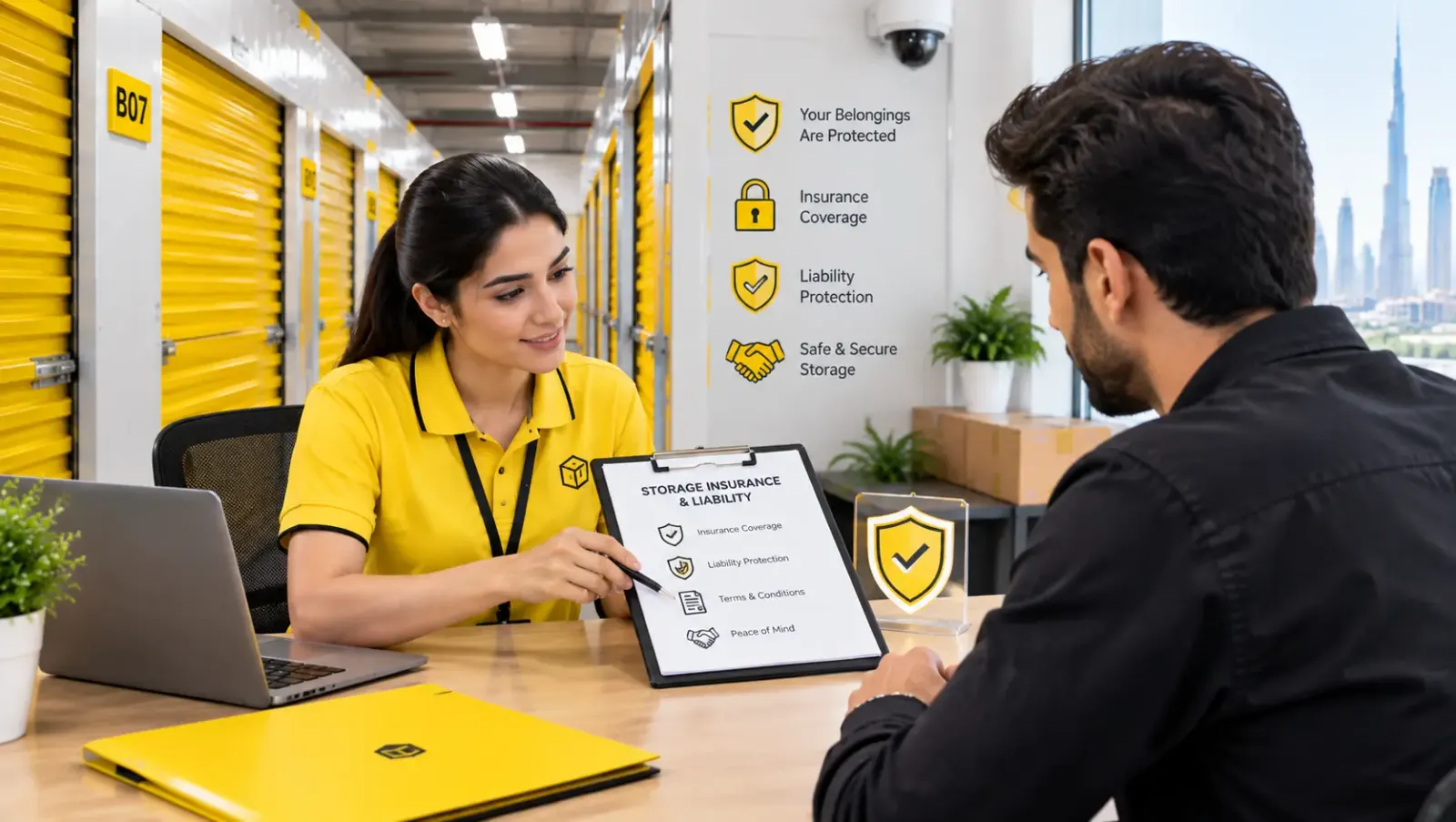
When you are storing household belongings, security should be part of the decision rather than an afterthought. Ask how the facility controls access, whether CCTV is used, how customer entry is managed, and what procedures are followed around the storage units. You should also understand whether your belongings are covered by insurance or whether you need to arrange separate coverage.
A secure storage unit is particularly important when you are leaving valuable furniture, electronics, documents, or personal possessions for an extended period. It is also worth asking how the facility handles emergencies and whether there are fire detection and safety systems in place. These questions may feel unnecessary when you are booking a unit, but they matter much more once your belongings are inside.
What Should You Not Put in Personal Storage?
Storage units are intended for safe, lawful belongings. You should never assume that anything can be placed inside simply because there is enough physical space. Prohibited items commonly include dangerous, illegal, flammable, explosive, toxic, or otherwise hazardous materials. Perishable food and items that could attract pests or create unpleasant conditions may also be restricted.
Before moving in, ask the provider for its complete list of prohibited goods. If you are unsure about an unusual item, describe it to the storage company before bringing it to the facility. This is much easier than arriving on moving day and discovering that an item cannot be accepted.
How to Keep Household Belongings in Good Condition
Good packing makes a major difference, especially when belongings will remain stored for months. Clean furniture before putting it away and make sure everything is completely dry. Use suitable covers for sofas, mattresses, and other upholstered pieces, but avoid wrapping items in a way that traps moisture. Dismantle large furniture where practical to save space, and label screws and fittings so they can be found later.
Keep boxes off the floor where appropriate and avoid putting extremely heavy items on top of fragile cartons. Electronics should be packed carefully, while important papers and photographs should receive extra protection. For belongings that are sensitive to Dubai’s heat or humidity, consider whether climate-controlled storage is appropriate. This is particularly relevant for long-term storage of furniture, electronics, documents, leather, and fabrics.
How to Reserve Personal Storage in Dubai
Once you know what you want to store, the booking process is usually straightforward. Start by preparing an inventory and estimating the space you need. Then request a quote and ask the provider to explain the available unit sizes, monthly cost, rental terms, access arrangements, deposit, VAT, and any additional charges.
If you need collection, confirm the pickup arrangements before your move-in date. If you are transporting the belongings yourself, ask about vehicle access and loading arrangements. Before signing the agreement, make sure the price and rental conditions are clear. Do not be afraid to ask questions. It is much easier to clarify a fee or access rule before moving your belongings into the unit than after the rental has started.
Is Personal Storage Worth It?
For many Dubai residents, personal storage is less about having somewhere to put unwanted belongings and more about buying flexibility. You may not have enough room in your current apartment, but you may not want to sell everything either. You may be moving temporarily, travelling abroad, renovating, downsizing, or simply trying to make your home less crowded.
The right storage unit gives those belongings a separate space without forcing you to make permanent decisions. The key is to choose based on your actual needs. Work out the size before booking, compare the full cost rather than just the headline monthly rate, consider how long you will need the space, and check the security and storage conditions. Most importantly, do not pay for more space than you need. A carefully planned personal storage unit can keep your home organised while giving you a practical place for the belongings you are not ready to part with.
Khalid Al Mansoori
Storage & Warehousing Operations Specialist
14+ years in UAE self-storage and warehousing, managing facilities across Dubai, Abu Dhabi, and the Northern Emirates. Specializes in climate-controlled storage, unit sizing, security systems, and Free Zone vs Mainland compliance.
Sarah Mitchell
Content Lead & Storage Solutions Researcher
8 years researching and writing on UAE storage and logistics. Focuses on storage costs, unit-size guides, and packing for Dubai's climate, working closely with facility teams for accurate pricing and specs.