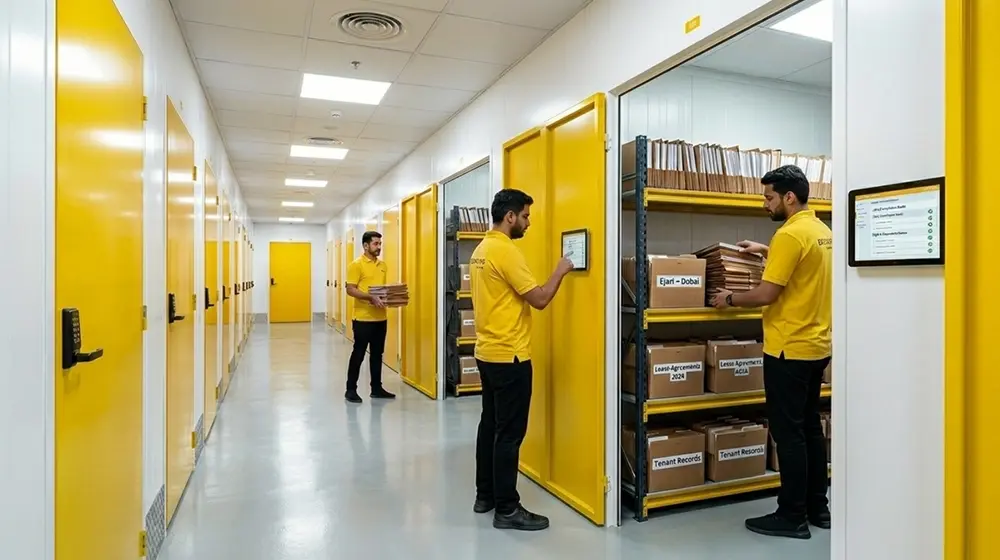
Document Storage in Dubai
Document storage in Dubai store invoices, contracts & business records securely with easy retrieval & climate-controlled units.
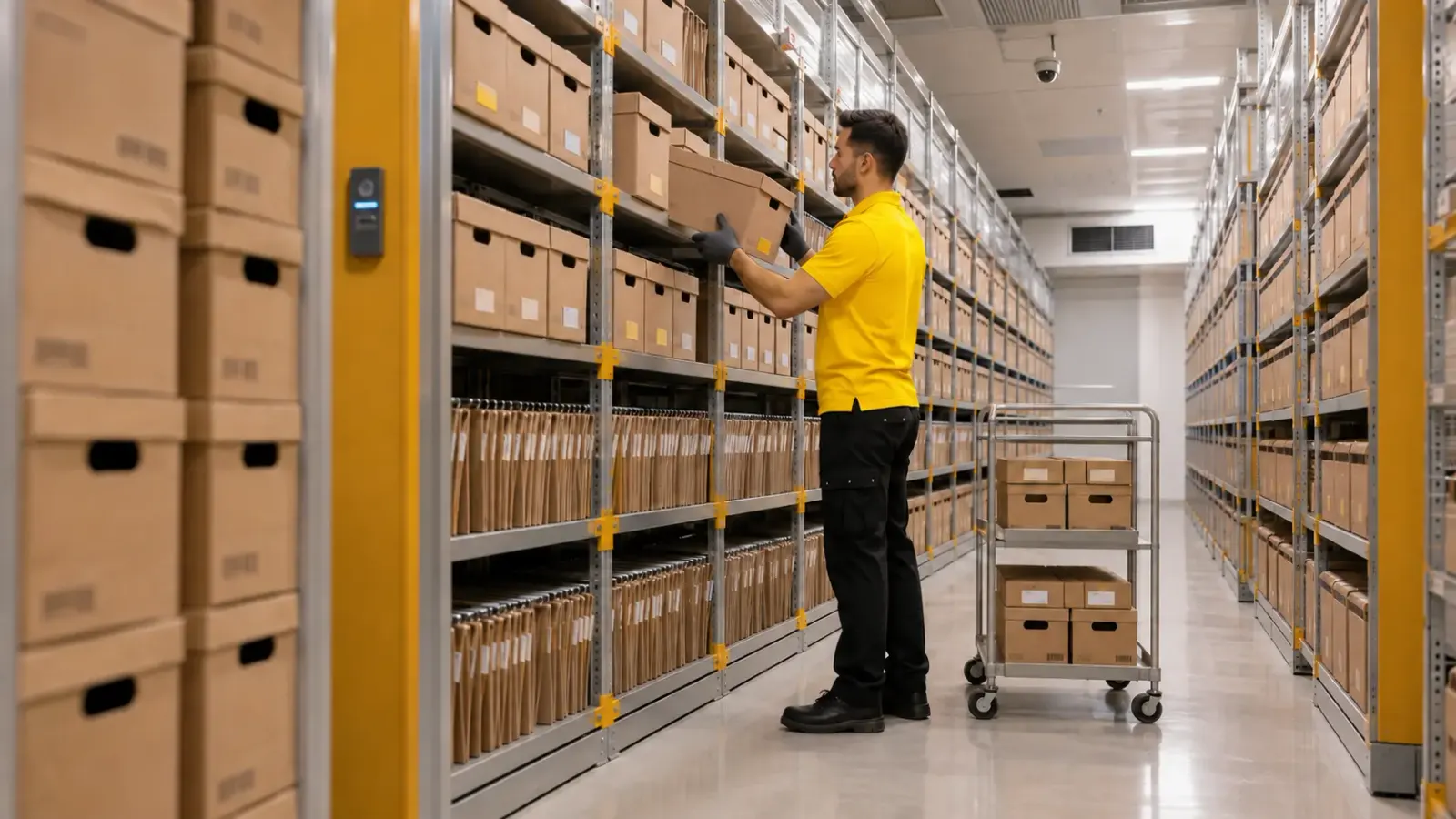
Businesses can accumulate paperwork much faster than they expect. Invoices, contracts, employee files, accounting records, property documents, customer paperwork and old project files can occupy entire cupboards before anyone realises how much space they are taking. Deleting everything is not an option either. Some business records need to be retained for legal, tax, operational or historical reasons, even when nobody needs to look at them every day.
That is where document storage in Dubai becomes useful. Instead of keeping years of inactive files inside an office, businesses can move archived documents into a dedicated storage unit and keep only the records they currently use close at hand. The important part is not simply finding somewhere to put boxes. Documents need to remain dry, organised, secure and easy to retrieve when a particular file is suddenly needed.
What Does Document Storage in Dubai Include?
Document storage is designed for businesses that need to keep physical records without using valuable office space. Depending on the business, stored documents can include:
- Accounting records and invoices
- Contracts and agreements
- Employee records
- Customer files
- Project documentation
- Property and tenancy records
- Purchase and sales documents
- Tax records
- Archived correspondence
- Business registration paperwork
- Historical company files
- Product and inventory records
Not every document needs to remain in the office. If a file is rarely accessed but still needs to be retained, storing it away from the main workplace can be a practical solution. The key is to separate active documents from archive documents. Files employees use every week should remain easily accessible. Older records that may only be required occasionally can be boxed, indexed and moved into storage.
How Long Do UAE Businesses Need to Keep Documents?
There is no single retention period that applies to every business document in the UAE. The required period depends on the type of record and the legislation that applies to it. For example, the Federal Tax Authority states that taxable persons subject to UAE Corporate Tax must retain relevant records and documents for at least seven years following the end of the relevant Tax Period. VAT records have different requirements. The FTA states that VAT invoices issued and received must generally be retained for a minimum of five years. That distinction matters. A business should not assume that every document can be kept for five years, seven years or any other fixed period.
Retention should be based on the specific document type, the business activity and the applicable UAE requirements. When a record has tax, legal or regulatory importance, confirm the retention requirement with your accountant, legal adviser or the relevant authority before destroying it. The Federal Tax Authority also continues to update its legislation and record-keeping requirements, including new rules concerning accounting records and commercial books.
Why Businesses Move Archived Documents Out of the Office
Office space is expensive, and archived paperwork rarely needs a desk or filing cabinet every day. Keeping boxes of old records in an office can create several problems. They take up usable floor and cupboard space, make offices look cluttered and can make it harder for staff to find the documents they actually need. Moving older records into storage allows the business to keep the paperwork without allowing it to take over the workplace.
Document storage can be particularly useful for:
- Small companies with limited office space
- Businesses moving to a smaller office
- Companies with several years of archived records
- Professional firms handling confidential paperwork
- Businesses preparing for office renovation
- Companies that need to retain records but rarely access them
- Organisations with seasonal paperwork or project archives
The idea is simple: keep current files where your team can reach them quickly and move inactive records somewhere suitable for longer-term storage.
How Should Documents Be Packed for Storage?
Good document storage starts with good packing. Don’t throw loose papers into random boxes and expect to find a specific invoice three years later. The storage unit may protect the documents physically, but poor organisation will still make retrieval difficult.
Use strong archive boxes that can handle the weight of paper without collapsing. Avoid overfilling them. A box that is impossible for one person to lift is not particularly useful, even if it saves a little space. Documents should be grouped logically. You might organise them by:
- Financial year
- Department
- Customer
- Project
- Document type
- Employee
- Contract period
Choose one system and use it consistently. For example, an accounting company might label boxes:
2024 – Accounts – Box 01
2024 – Accounts – Box 02
2025 – VAT Records – Box 01
This is far more useful than labels such as “Old Papers” or “Office Files.”
Create an Index Before the Boxes Go Into Storage
The best document storage system is one that lets you find a file without opening ten boxes. Create a simple digital inventory before moving the boxes into storage. It doesn’t need to be complicated. A spreadsheet can be enough.
Useful fields include:
| Information | Example | | Box number | ACC-2025-04 | | Department | Accounts | | Contents | VAT invoices | | Date range | Jan–Dec 2025 | | Retention date | Check applicable requirement | | Storage location | Unit A, Row 2 | | Access level | Accounts Manager |
You can also record the number of boxes and their physical location inside the storage unit. This becomes especially valuable when a business has hundreds of archive boxes. Without an index, finding one document can become a frustrating search through an entire unit.
How Does Climate Affect Paper Documents?
Paper may look durable, but it can be affected by unsuitable storage conditions over long periods. Heat, moisture and poor ventilation can create problems for paper archives. Documents can become damp, develop odours, stick together or deteriorate if they are stored in an unsuitable environment. This is one reason businesses should pay attention to the storage conditions rather than treating document storage as simply “putting boxes somewhere.”
Climate-controlled storage can be worth considering for long-term archives, particularly when the documents are valuable, irreplaceable or expected to remain stored for several years. You don’t necessarily need climate control for every box of routine paperwork. The decision should depend on the importance of the records, the length of storage and the conditions provided by the facility. If the documents are legally important or impossible to recreate, paying more for better environmental protection may be easier to justify.
How Do You Protect Confidential Business Documents?
Security is just as important as temperature and humidity when you’re storing company records. Documents can contain personal information, financial details, contracts, employee information and commercially sensitive material. They should not be treated like ordinary household belongings. Before choosing a storage provider, ask how access is controlled and who can enter the storage area.
Useful security features can include:
- Controlled facility entry
- CCTV monitoring
- Individual access credentials
- Secure locks
- Restricted visitor access
- Alarm systems
- On-site security measures
- Records of authorised access
The business should also control who internally is allowed to retrieve archived files. If only the accounts manager and company director should access financial records, don’t give the entire office unrestricted access to those boxes. Security therefore has two sides: protecting the storage facility and controlling internal access to the documents.
Should Every Employee Be Allowed to Access Stored Files?
No. Access should depend on the sensitivity of the documents. A simple permission system can make document retrieval much safer. For example:
General business records: Office manager
Financial records: Finance team
Employee records: HR or authorised management
Legal contracts: Management or authorised legal personnel
Confidential client files: Assigned staff only
The exact system will depend on the business, but the principle is straightforward. The fewer people who can access sensitive records unnecessarily, the easier it is to maintain control. Keep a record of documents that leave the storage unit and make sure they are returned or securely disposed of when no longer required.
How Do You Retrieve One Box From Storage?
Retrieval should be simple if the archive has been indexed properly. Imagine an accountant needs a specific set of VAT invoices from 2024. If the business knows the box number, date range and location, there is no reason to search the entire unit. The process could be:
- Search the digital archive index.
- Identify the relevant box number.
- Confirm its location in the unit.
- Retrieve the box.
- Record that it has been removed.
- Return it to the correct location when finished.
If your storage provider offers collection and delivery, you may also be able to request individual boxes without arranging the entire archive yourself. Ask about this before signing up. A business that retrieves documents every week has very different requirements from one that accesses its archives twice a year.
What Does Document Storage Cost in Dubai?
The cost depends mainly on how much space you need and how long you plan to keep the documents. A company with 20 archive boxes will need far less space than one with 300 boxes. The storage environment, access arrangements, pickup and delivery services and other options can also affect the final price. When comparing storage quotes, ask for the complete cost rather than relying on a starting price.
Consider:
- Monthly storage rental
- Unit size
- Climate-controlled storage, if required
- Pickup and delivery
- Insurance
- Access arrangements
- Packing materials
- Administration fees
- VAT
- Long-term discounts
For businesses with large archives, a slightly larger unit may sometimes be more practical if it allows better organisation and easier retrieval. The cheapest possible unit isn’t necessarily the best choice if employees have to move dozens of boxes every time they need one file.
How Much Space Do Business Documents Need?
Paper is surprisingly heavy, but archive boxes are relatively compact when properly organised. The best way to estimate space is to count your boxes rather than guessing based on office size. Start by working out:
Number of archive boxes × approximate box dimensions = approximate storage volume
Then allow additional room for safe stacking and access. Don’t fill the unit from floor to ceiling without a plan. If boxes are difficult to reach, the storage space may become an archive that nobody can actually use. For a large archive, organise boxes in rows and label every section clearly. Keep frequently retrieved records closer to the entrance and place rarely accessed historical records further back.
What Happens When the Retention Period Ends?
Businesses should have a proper disposal process for records that no longer need to be retained. Don’t simply throw confidential documents into ordinary rubbish. Sensitive records should be disposed of securely. Before destroying anything, confirm that the applicable retention period has actually expired and that there are no ongoing disputes, audits, legal matters or other reasons the records need to be preserved.
Once authorised for disposal, confidential paperwork can be securely shredded or destroyed through an appropriate document-destruction service. The storage unit should therefore be treated as part of a wider records-management process, not as a permanent dumping ground.
How to Make Long-Term Document Storage Easier
A good archive should become easier to manage over time, not harder. Review your boxes periodically. If new records are added every year, maintain the same naming and indexing system. Keep the digital index updated whenever a box is moved, removed or destroyed. You can also schedule an annual archive review to check:
- Which records are still within their retention period
- Which boxes have become inactive
- Whether the storage unit is still large enough
- Whether any boxes have been damaged
- Whether access permissions need updating
- Which records are approaching their disposal date
This small amount of administration can prevent years of archive clutter from building up again.
Is Document Storage in Dubai Worth It?
For businesses with years of physical records, document storage can free up valuable office space while keeping important paperwork available when it is needed. The real benefit isn’t simply having somewhere to put boxes. It is having a controlled system for storing, protecting, indexing and retrieving business records.
Start by identifying which documents must be retained and how long they need to be kept. Separate active files from archives, pack the documents properly and create an index before moving anything into storage. For confidential or valuable records, pay close attention to security and access controls. For documents that will remain stored for years, consider whether climate-controlled conditions are appropriate.
Most importantly, don’t treat every document the same. Tax records, contracts, employee files and ordinary administrative paperwork can have different retention and access requirements. A well-organised archive should make your business more efficient, not create another problem to manage. When boxes are clearly labelled, digitally indexed and stored under suitable conditions, finding a document months or years later becomes a straightforward task rather than an office-wide search.
Khalid Al Mansoori
Storage & Warehousing Operations Specialist
14+ years in UAE self-storage and warehousing, managing facilities across Dubai, Abu Dhabi, and the Northern Emirates. Specializes in climate-controlled storage, unit sizing, security systems, and Free Zone vs Mainland compliance.
Sarah Mitchell
Content Lead & Storage Solutions Researcher
8 years researching and writing on UAE storage and logistics. Focuses on storage costs, unit-size guides, and packing for Dubai's climate, working closely with facility teams for accurate pricing and specs.