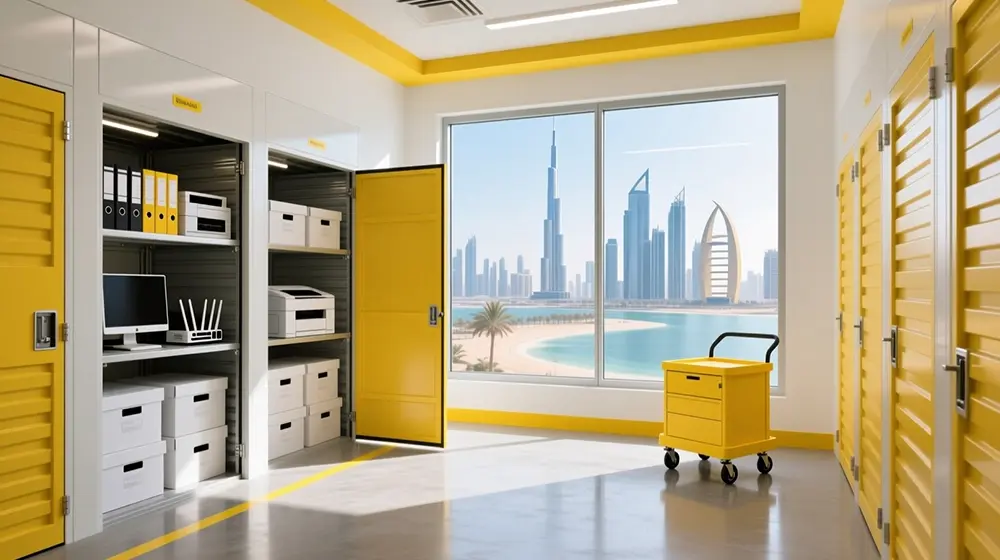

Choosing between self storage and a warehouse in Dubai is not only a space decision. It affects cost, access, item safety, compliance, and how easily you can manage furniture, documents, stock, or business equipment.
Self storage in Dubai fits flexible, unit-based storage for furniture, documents, household items, and small business overflow. A warehouse fits bulk stock, pallet movement, licensed commercial activity, daily dispatch, and inventory workflows.
Dubai’s growing population, active real estate market, and expanding trade activity have made storage a practical issue for households and businesses. More residents create more apartment moves, villa handovers, renovation gaps, and seasonal storage needs. More trade and real estate activity create more warehouse demand for stock, records, equipment, and distribution.
A tenant may need short-term furniture storage during a handover gap. A retailer may need space for cartons, seasonal stock, or daily dispatch. The wrong option can create extra rent, access delays, damaged goods, or unnecessary warehouse overhead.
This guide compares self storage vs warehouse in Dubai across cost, access, climate control, security, documentation, compliance, and real use cases. You can use it to choose a storage facility Dubai option without paying for the wrong type of space.
What is self storage in Dubai?
Self storage in Dubai is a rented storage unit or managed storage space for personal items, household goods, documents, furniture, seasonal items, and small business stock.
You use self storage when you want flexible storage without running a warehouse. Common users include apartment tenants, villa residents, expats, retailers, online sellers, consultants, offices, and families between leases.
A self storage facility usually gives you unit-based space, controlled access, CCTV coverage, packing support, and short-term or long-term rental options. A provider may also offer collection, delivery, shelving, climate-controlled rooms, and inventory support.
Self storage is a better match if your goods sit idle most of the month.
Examples:
- Sofas
- Mattresses
- Home appliances
- Archived records
- Event materials
- Sample products
- Spare office chairs
- Exhibition stands
- Extra cartons
Use self storage facilities in Dubai when your storage requirement depends on access, protection, flexible space, and simple monthly use rather than warehouse operations.
What is a warehouse in Dubai?
A warehouse in Dubai is a commercial property used for storing, handling, sorting, receiving, dispatching, or distributing goods at business scale.
You use a warehouse when storage becomes an operating function. This includes palletized stock, retail inventory, imported goods, spare parts, food-grade items, construction materials, distribution stock, and e-commerce fulfillment stock.
A warehouse requires more administration than self storage. In Dubai, the tenancy contract for office or warehouse space has to be registered through the Dubai Land Department’s (DLD) Ejari portal.
A warehouse also introduces fit-out, labor, utilities, insurance, Civil Defense compliance, access control, inventory systems, forklifts, loading zones, and lease commitments. These layers make warehousing useful for scale, but inefficient for light or irregular storage.
How do self storage and warehouse space differ in Dubai?

Self storage sells flexible space. Warehousing sells operational capacity. That single distinction explains most differences in cost, access, compliance, and control.
The table compares both options across practical decision dimensions. Use it before you request quotes, because the cheapest square meter may not create the lowest total storage cost.
| Comparison point | Self storage in Dubai | Warehouse in Dubai |
|---|---|---|
| Best fit | Household goods, furniture, boxes, documents, small stock | Bulk inventory, pallets, logistics, fulfillment, commercial goods |
| Typical user | Tenant, homeowner, expat, SME, online seller, office | Distributor, importer, retailer, manufacturer, logistics operator |
| Space model | Unit-based or room-based | Full premises, shared warehouse, or third-party logistics space |
| Access pattern | Occasional or scheduled access | Daily receiving, picking, packing, and dispatch |
| Cost structure | Monthly rental plus optional pickup, packing, insurance | Lease, utilities, staff, equipment, fit-out, systems, approvals |
| Compliance layer | The provider manages facility controls | Business manages lease, licensing, safety, insurance, and audits |
| Climate control | Available for sensitive goods | Depends on warehouse type and fit-out |
| Scalability | Easy to expand by unit size | Strong for bulk scale, slower to resize |
| Evidence trail | Inventory list, photos, access logs, receipts | Stock system, goods records, customs papers, lease records |
Self storage has lower administrative weight. Warehouse space has higher operating power. The right choice depends on whether your stored items are passive assets or active inventory.
When does self storage make more sense?
Self storage makes more sense when your items need protection, access, and flexible space without a full commercial operation.
You need self storage if your storage volume changes with a lease move, renovation, seasonal demand, office clearance, or stock overflow. Dubai’s housing movement supports this use case. DLD reported 217,000 real estate investments worth AED 526 billion in 2024, which signals heavy residential and commercial movement across the city.
Choose self-storage for 6 common item groups:
- Store furniture, such as sofas, beds, wardrobes, dining tables, and office desks.
- Store appliances, such as washing machines, refrigerators, monitors, and printers.
- Store documents, such as archived files, tax records, contracts, and HR folders.
- Store seasonal goods, such as decorations, sports gear, camping kits, and travel luggage.
- Store small stock, such as cartons, samples, spare parts, packaging, and event materials.
- Store temporary overflow, such as items waiting for handover, relocation, or fit-out completion.
Self storage works best when you do not require daily warehouse labor. It also reduces the time spent on lease negotiations, utilities, municipality approvals, racking design, warehouse staffing, and equipment procurement.
When does a warehouse make more sense?
A warehouse makes more sense when your goods move through receiving, storage, picking, packing, dispatch, or distribution workflows.
You need warehouse space if your business handles large stock volumes, frequent inbound shipments, palletized goods, SKU-level control, customs-linked cargo, or daily dispatch. The UAE’s non-oil foreign trade reached AED 1.728 trillion in H1 2025, with 24% year-on-year growth, according to the Dubai Media Office.
A warehouse fits 7 commercial storage needs:
- Receive containerized or palletized stock from suppliers.
- Sort inventory by stock keeping unit, batch, size, color, or expiry date.
- Pick and pack orders for stores, marketplaces, and customers.
- Operate forklifts, pallet jacks, loading docks, and racking systems.
- Separate goods by customs status, free zone movement, or mainland sale.
- Hold regulated stock that requires special storage, safety, or documentation.
- Maintain a warehouse management system for inventory accuracy.
Warehousing becomes logical when storage supports revenue operations. It becomes excessive when your goods only sit in cartons for weeks or months.
How does cost compare between self storage and warehouse space?
Self storage usually costs less for small, irregular, or temporary storage. Warehousing usually becomes more efficient when volume, handling, and dispatch activity justify fixed operating costs.
The mistake is comparing only monthly rent. A warehouse has direct and indirect costs. Direct costs include rent, Ejari, utilities, fit-out, security, staff, insurance, racking, pest control, and maintenance. Indirect costs include management time, stock errors, equipment downtime, compliance documentation, and underused space.
Self storage usually groups many facility costs into one monthly charge. You may pay extra for pickup, packing materials, insurance, climate control, or frequent access. Even with add-ons, self storage often stays simpler for households and small businesses.
Use this cost logic:
| Cost trigger | Choose self storage | Choose a warehouse |
|---|---|---|
| Storage term | 1 month to 24 months | 12 months or longer |
| Space use | Boxes, furniture, mixed items | Pallets, racks, bulk stock |
| Staff requirement | No storage staff | Warehouse staff required |
| Equipment | No forklift or loading bay | Forklift, racking, dock, pallet movement |
| Administration | Simple rental agreement | Lease, license, Ejari, insurance, safety files |
| Stock movement | Occasional access | Daily inbound and outbound flow |
| Cost risk | Paying for extra unit space | Paying for unused warehouse capacity |
A storage facility Dubai quote looks higher per square meter than warehouse rent in some cases. The total monthly cost may still be lower because self storage removes payroll, utilities, fit-out, racking, and compliance overhead.
How does access compare?
Self storage gives controlled access to stored items. A warehouse gives operational access to goods, staff, vehicles, suppliers, and dispatch teams.
Choose self storage if you access items weekly, monthly, or only during a move. Choose warehousing if goods enter and leave every business day.
Access affects 4 costs:
- Travel time
- Staff time
- Delivery timing
- Missed dispatch windows
Location also matters. Warehouses in Jebel Ali, Dubai South, Al Quoz, Ras Al Khor, Dubai Investment Park, and JAFZA can support trade routes. They may not suit households storing furniture or documents.
A residential user may prefer a storage facility near home. A distributor may prefer a warehouse near a port, free zone, supplier route, or delivery cluster.
Use this access rule:
- Choose self storage if you visit fewer than 4 times per month.
- Choose warehouse storage if your team handles goods daily.
- Choose third-party logistics if you need picking, packing, returns, and delivery integration.
- Choose climate-controlled self storage if high-value goods move rarely.
This rule keeps access linked to item behavior.
How does climate control affect the decision?
Climate control matters in Dubai because heat, humidity, and dust can affect wood, paper, leather, electronics, fabric, cosmetics, and packaging.
The UAE has an arid desert climate, according to the UAE Climate Fact Sheet, with 2 main seasons:
- Winter
- Summer
Winter mean temperatures range from 16.4°C to 24°C. World Bank climate data uses observed historical records from 1991 to 2020 to describe the UAE’s climatology.
Dubai’s storage risk increases when goods sit for months without airflow or temperature control. Sensitive materials can change even when they look stable at packing time.
Climate-sensitive items include:
- Leather sofas and chairs
- Wooden wardrobes and tables
- Paper files and legal records
- Mattresses and fabrics
- Electronics and monitors
- Cameras and lenses
- Cosmetics and perfumes
- Branded cartons and printed packaging
Self storage with climate control works well for smaller volumes of sensitive goods. A temperature-controlled warehouse works better when large commercial inventory needs daily access and process control.
How does security compare?
Self storage focuses on item-level custody. Warehousing focuses on site-level security and process-level control.
A self storage facility Dubai user usually cares about locks, CCTV, access records, unit privacy, visitor control, and insurance. This model fits household goods, office records, furniture, personal effects, and moderate-value business stock.
A warehouse user needs wider controls. A warehouse may involve staff, suppliers, drivers, loading doors, pallet movement, stock transfers, damaged goods, returns, and system access.
Security should cover 6 layers:
- Perimeter control
- CCTV coverage
- Visitor records
- Staff access permissions
- Stock reconciliation
- Insurance documentation
The security question changes with volume. A sofa in a storage unit needs protection from unauthorized access and damage. A warehouse with 3,000 units of stock needs stock control, dispatch accuracy, shrinkage checks, and role-based access.
Choose self storage if fewer people need access. Choose warehousing if many people need controlled access.
How do compliance and documentation compare?
Self-storage reduces compliance work for the user. A warehouse transfers compliance work to the business.
Dubai business setup rules require a physical address for business activity. Office or warehouse lease contracts in Dubai require Ejari registration.
Register / Renew Rental Contract
This service allows customers to register or renew a tenancy contract in the Emirate of Dubai.
Service Procedures
Service Centre:
- Step 1: Visit the nearest Real Estate Trustee Center, or property management company (if the property is managed by one)
- Step 2: Submit the required documents, ensuring no key document is missing
- Step 3: An employee will review and approve the request through the system
- Step 4: Proceed to pay the service fees (if any) and collect the receipt
- Step 5: Receive the e-Contract Registration Certificate
Ejari System or Dubai REST:
- Step 1: Log in to Ejari or the app and select the desired service
- Step 2: Fill in the required information and upload any necessary documents
- Step 3: Proceed to pay the service fees (if any)
- Step 4: An employee will review and approve the request through the system
- Step 5: Receive the e-Contract Registration Certificate by email
A warehouse user also deals with licensing activity, insurance, fire systems, municipality conditions, staff access, and sometimes customs status.
Fire safety matters because warehouse storage changes fire load, aisle access, racking height, materials, and evacuation planning. Dubai Civil Defense publishes the UAE Fire and Life Safety Code of Practice as the core reference for fire safety requirements. Dubai Development Authority guidance also highlights safe storage of flammable and combustible material away from ignition sources, plus Dubai Civil Defense approval for bulk storage of flammable material.
Self-storage users still need records. Keep an inventory, item photos, insurance proof, receipts, access dates, and delivery notes. These documents help with claims, audits, relocation disputes, and internal accounting.
Warehouse users need deeper records. Keep lease documents, Ejari, trade license, Civil Defense files, insurance, stock ledgers, delivery notes, customs papers, supplier invoices, and staff access logs.
What about customs, free zones, and mainland goods?
Warehouse choice matters more when goods connect to customs, free zones, duty status, or re-export activity.
Goods destined for the UAE’s mainland are subject to duty under the GCC’s Common Customs Law, while goods destined for FTZs are exempt from duty. Goods imported into free trade zones are exempt from duties, and the UAE has approximately 45 free trade zones.
This matters for Dubai businesses that import, re-export, distribute, or sell stock across mainland and free zone channels.
Use warehousing when goods require:
- Customs documentation
- Free zone storage
- Re-export control
- Batch-level inventory records
- Pallet movement
- Commercial dispatch
- Regulated storage conditions
Use self storage when goods are already cleared, owned, packed, and stored for access rather than trade movement.
Self storage does not replace a customs warehouse. It can support samples, display materials, marketing stock, non-regulated spare stock, and archived records.
Which option fits households?
Self storage fits most household storage needs in Dubai because homes require flexibility, protection, and access rather than commercial operations.
You may need storage during villa renovation, apartment handover, international travel, downsizing, delayed tenancy start, or family expansion. Dubai’s population growth and real estate activity make these needs common across Marina, Downtown Dubai, Jumeirah Village Circle, Business Bay, Dubai Hills, Arabian Ranches, Mirdif, and Jumeirah.
Self storage helps households avoid 4 common problems:
- Prevent overcrowding during apartment moves or villa renovations.
- Protect furniture during handover gaps and fit-out delays.
- Separate seasonal items from daily living space.
- Keep documents, luggage, and spare appliances accessible.
A household rarely benefits from a warehouse. Warehouse leases, industrial locations, access rules, and facility size create more cost than value for personal goods.
Which option fits small businesses?
Self storage fits small businesses with low stock movement, mixed assets, or temporary overflow. Warehousing fits small businesses with regular fulfillment and controlled inventory flow.
A consultant may store archived documents, spare chairs, exhibition banners, laptops, and files in self storage. A boutique retailer may store seasonal stock, packaging, and display material. An online seller may start with self storage before daily dispatch volume increases.
A warehouse becomes stronger when the business handles stock as a core workflow. This includes receiving supplier shipments, tracking stock keeping units, packing orders, managing returns, and shipping daily.
Use this practical threshold. Choose self storage when access happens weekly or monthly. Choose warehousing when stock movement happens daily and errors affect customer delivery.
Which option fits offices and corporate teams?

Self storage fits office assets that are inactive, archived, or temporarily displaced. Warehousing fits operational stock and equipment fleets.
Office users store records, desks, chairs, IT peripherals, monitors, marketing booths, branded stands, old files, and spare furniture. A storage facility Dubai option can support office relocation, refurbishment, hybrid work changes, or document retention.
Corporate teams need an evidence pack. Include item codes, photos, box numbers, department names, access approvals, insurance proof, and disposal status. This makes self storage more audit-ready.
Warehousing suits corporate inventory with daily movement.
Examples:
- Spare parts
- Uniforms
- Retail stock
- Event kits
- Maintenance materials
- Field equipment
What risks appear if you choose the wrong option?
The wrong storage option creates cost waste, access delays, damage risk, compliance gaps, and weak custody records.
Choose a warehouse too early, and you may pay for unused space, utilities, equipment, and staff. Choose self storage too late, and your business may outgrow unit-based access and manual inventory control.
There are 8 common mismatch risks:
- Paying for warehouse space when items stay inactive
- Using self storage for daily fulfillment
- Storing heat-sensitive goods without climate control
- Missing Ejari or licensing requirements for warehouse use
- Keeping weak inventory evidence
- Choosing a poor location for supplier or home access
- Storing regulated goods without correct approvals
- Mixing personal goods with commercial inventory
Good storage decisions begin with item behavior. Static goods suit self storage. Moving goods suit warehousing.
How can you choose between self storage and warehouse space?
Choose between self storage and warehouse space by scoring volume, access frequency, handling, compliance, climate sensitivity, and documentation.
Use this 10-point checklist before you request a quote:
- List item categories, such as furniture, files, appliances, stock, and equipment.
- Count cartons, pallets, racks, or cubic meters.
- Record access frequency as daily, weekly, monthly, or rare.
- Mark sensitive items, such as leather, wood, paper, electronics, and cosmetics.
- Identify stock movement, such as receiving, picking, packing, dispatch, and returns.
- Check whether goods link to customs, free zones, or regulated storage.
- Calculate total cost, not only rent per square meter.
- Compare location against home, office, supplier, port, or customer routes.
- Request security details, including CCTV, access logs, alarms, and visitor control.
- Create an evidence pack with photos, inventory lists, receipts, and insurance documents.
This checklist separates storage space from storage operations. That difference prevents most wrong-fit storage decisions.
What storage option fits each use case?
The table below gives a practical recommendation by user type and storage behavior.
| User or item type | Better option | Reason |
|---|---|---|
| Apartment tenant between leases | Self storage | Flexible term and easy access |
| Villa owner during renovation | Self storage | Furniture protection without warehouse burden |
| Expat traveling for 3 to 12 months | Self storage | Personal goods stay grouped and accessible |
| Office archiving records | Self storage | Lower operational complexity |
| Online seller with 20 to 50 cartons | Self storage | Stock overflow without warehouse staff |
| Online seller with daily dispatch | Warehouse | Picking, packing, and returns need process control |
| Importer with palletized goods | Warehouse | Bulk handling and customs records matter |
| Retailer with store replenishment | Warehouse | Stock rotation and dispatch timing matter |
| Event company with stands and props | Self storage or warehouse | Choice depends on access frequency |
| Food distributor | Warehouse | Temperature, expiry, and compliance controls matter |
Use the table as a first filter. Then confirm the final decision through cost, access, climate, and compliance checks.
What is the final recommendation?
Choose self storage in Dubai for flexible space, household goods, office assets, documents, furniture, seasonal items, and small business overflow. Choose a warehouse in Dubai for bulk inventory, customs-linked goods, pallet movement, daily fulfillment, and commercial stock operations.
The best storage facility Dubai decision is not about space size alone. It is about item behavior, access frequency, climate sensitivity, compliance exposure, and handling requirements.
For most users and early-stage users, self storage gives the better starting point. For importers, distributors, larger retailers, food operators, and fulfillment-heavy companies, warehousing becomes the stronger operating model.
Final takeaway: Choose the storage model that matches how your items move
The right choice between self storage and warehouse space in Dubai starts with one practical question: are your items sitting, or are they moving?
Self storage fits items that need a safe, flexible place without daily handling. Furniture, documents, seasonal goods, office overflow, personal belongings, and small stock usually fit this model. It keeps storage simple, controlled, and easier to scale.
A warehouse fits goods that move through a business process. If your stock needs receiving, sorting, picking, packing, dispatch, customs records, or staff handling, warehouse space gives you the operational structure that self storage cannot replace.
Cost also depends on more than rent. Access frequency, climate control, compliance, labor, documentation, location, and inventory movement all affect the real storage decision. A cheaper space can become expensive if it creates delays, damage risk, weak records, or unused capacity.
For households, expats, offices, and early-stage businesses, self storage is often the more practical starting point. For importers, distributors, retailers, food operators, and fulfillment-heavy businesses, warehousing becomes more suitable when stock movement becomes daily and process-driven.
The best storage facility Dubai choice is the one that matches your items, access pattern, budget, and risk level. Once you understand that difference, the decision becomes less about “more space” and more about the right kind of control.
FAQS
Is self storage cheaper than a warehouse in Dubai?
Self storage is usually cheaper for small, temporary, or low-movement items because it avoids warehouse staff, utilities, fit-out, and compliance costs.
Can a small business use self storage instead of a warehouse?
A small business can use self storage for overflow stock, samples, documents, packaging, and equipment if daily picking and dispatch are not required.
When does a warehouse become better than self storage?
A warehouse becomes better when your goods need daily receiving, sorting, picking, packing, dispatch, returns handling, or pallet-level inventory control.
Is self storage suitable for furniture in Dubai?
Self storage is suitable for furniture if the facility offers clean space, controlled access, suitable packing, and climate control for sensitive wood, leather, and fabric items.
Can I store business documents in self storage?
You can store business documents in self storage if you keep an inventory, label boxes clearly, protect paper from humidity, and control access permissions.
Does warehouse storage require more paperwork in Dubai?
Warehouse storage usually requires more paperwork because commercial space may involve Ejari, trade license alignment, insurance, safety records, and stock documentation.
Which option is better for e-commerce sellers in Dubai?
Self storage fits low-volume e-commerce stock, while warehouse storage fits sellers with daily orders, returns, stock keeping units, and dispatch deadlines.
Is climate-controlled storage important in Dubai?
Climate-controlled storage is important for leather, wood, electronics, paper records, cosmetics, fabrics, and other goods affected by heat, humidity, or dust.
Can self storage replace a customs warehouse?
Self storage cannot replace a customs warehouse because customs-linked goods require proper duty status, records, approvals, and commercial storage controls.
How do I choose the right storage facility Dubai option?
Choose by checking item volume, access frequency, climate sensitivity, security needs, documentation requirements, location, and whether your goods are static or moving daily.
Storage & Warehousing Operations Specialist
14+ years in UAE self-storage and warehousing, managing facilities across Dubai, Abu Dhabi, and the Northern Emirates. Specializes in climate-controlled storage, unit sizing, security systems, and Free Zone vs Mainland compliance.
Content Lead & Storage Solutions Researcher
8 years researching and writing on UAE storage and logistics. Focuses on storage costs, unit-size guides, and packing for Dubai's climate, working closely with facility teams for accurate pricing and specs.