Climate-Controlled Storage in Dubai: Cost & ROI Calculator
Compare standard vs climate-controlled storage in Dubai. Calculate the AED premium, damage exposure, and break-even month before you store your assets.
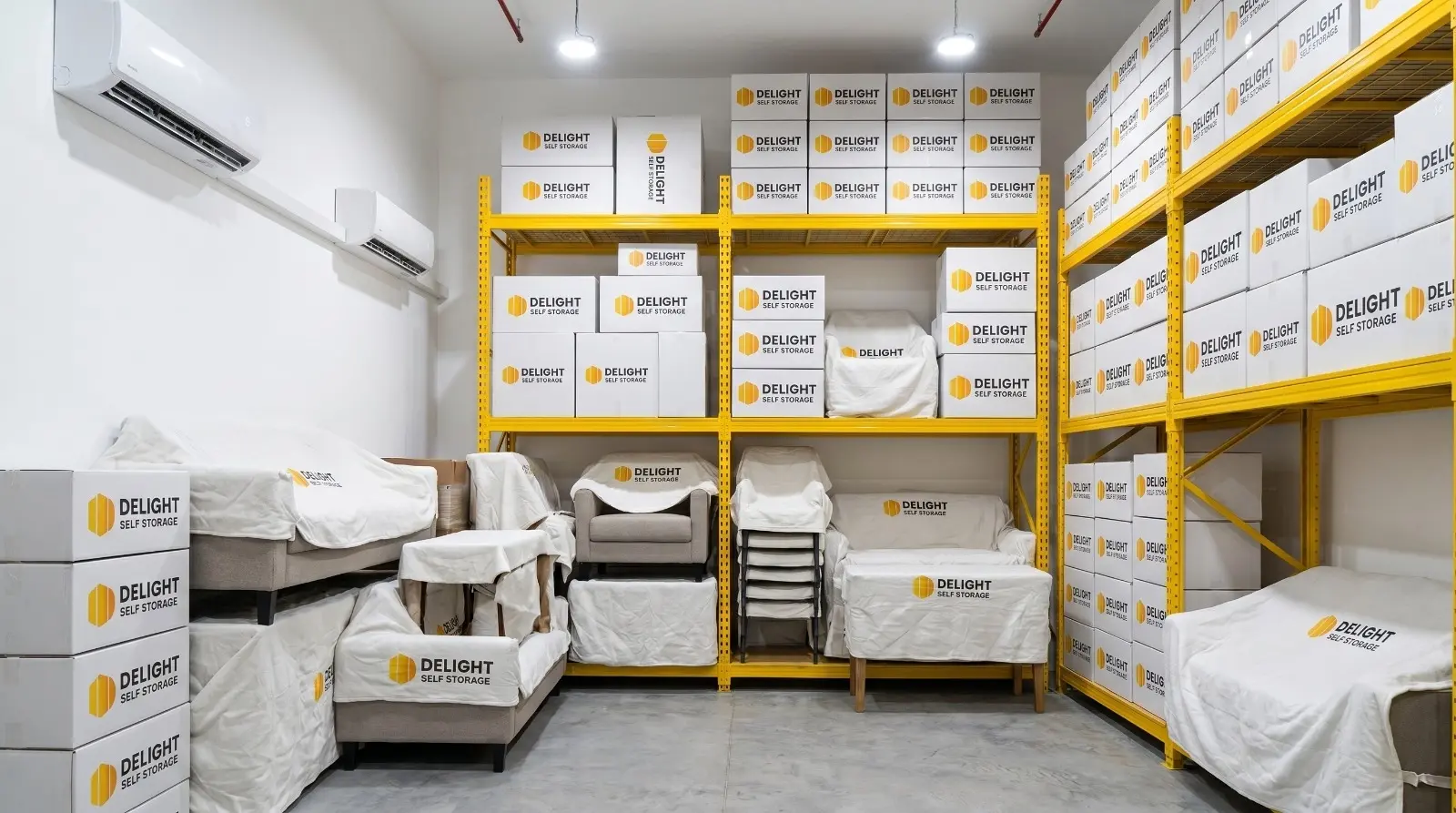
Dubai storage decisions are not only about finding extra space. They are also about protecting furniture, electronics, documents, photographs, stock, and office assets from heat, humidity, dust, and long summer exposure.
Climate-controlled storage in Dubai becomes important when a standard unit looks cheaper at first, but the stored items carry higher replacement, repair, or evidence value. A sofa, laptop, framed photo, signed contract, or boxed inventory can lose value when temperature and relative humidity move beyond safe limits.
This article gives you a calculator-style framework for comparing standard self storage Dubai pricing with climate-controlled storage.
The goal is simple: Calculate the climate-control premium, estimate the damage exposure, and identify the break-even point.
You can use this framework before booking self-storage Dubai space for household goods, warehouse stock, home-office equipment, archived documents, seasonal items, or small business inventory.
What is climate-controlled storage in Dubai?
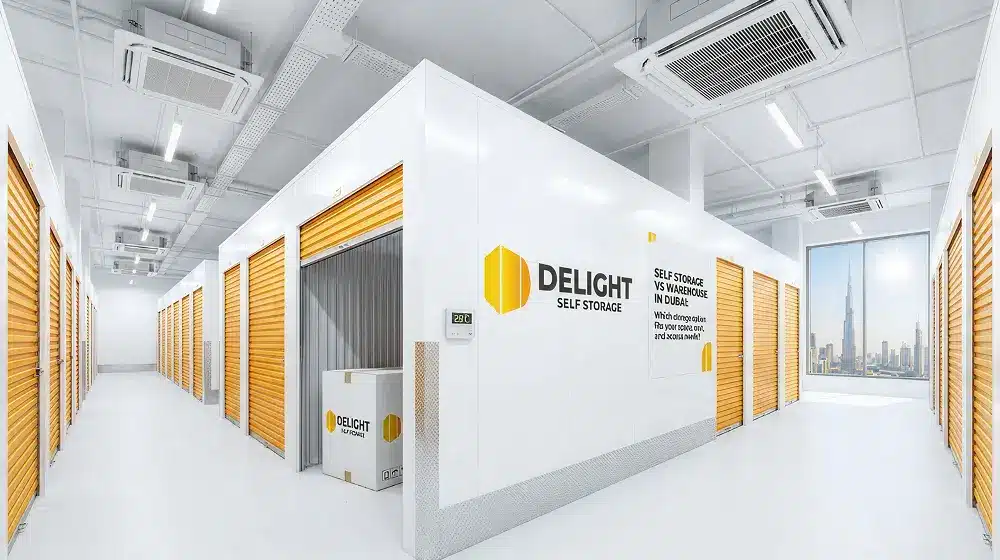
Climate-controlled storage in Dubai is a self storage option that keeps items inside a managed indoor space with controlled temperature, relative humidity, airflow, and dust exposure.
For Dubai residents, this storage type matters because heat, humidity, and long summer cooling cycles affect furniture, electronics, paper files, photographs, textiles, leather, tools, boxed stock, and home-office assets. The decision is not only about a higher monthly storage quote. The decision is about the AED value of avoiding damage.
Climate-controlled storage in Dubai is worth it when the AED premium is lower than the expected damage cost for heat-sensitive, humidity-sensitive, or high-value items such as electronics, documents, photographs, furniture, textiles, stock, and office assets.
Why does Dubai’s climate change the storage calculation?
Dubai’s climate changes the storage calculation because heat and humidity increase the risk attached to furniture, paper, electronics, photographs, textiles, leather, and packaged stock.
Visit Dubai reports July in Dubai with an average daily mean near 36°C, an average high near 40°C, an average low near 33°C, 0.5 rainy days, and 10.7 hours of sunshine.
That temperature profile matters for storage because many household and office items age faster when heat combines with trapped moisture. A closed unit, a parked truck, or a poorly ventilated room can hold heat longer than outdoor air.
Relative humidity is the second variable. Humidity measures how much moisture the air holds compared with the maximum amount possible at that temperature. Stored items react to that moisture in different ways.
Paper absorbs moisture. Wood swells and shrinks. Metals corrode faster in moist air. Photos soften, curl, crack, or grow mold. Electronics face corrosion and battery stress.
What is the safe RH% range for common stored items?
A practical RH range for many mixed household and office assets is 30% to 55%, with limited daily fluctuation.
The U.S. Environmental Protection Agency recommends indoor humidity below 60% and ideally between 30% and 50% relative humidity (RH) to reduce mold risk.
The Library of Congress states that photographs store best in a dry, cool, stable environment of 30-50% RH, with RH fluctuation below 5% in 24 hours.
The National Archives advises storing family papers and photographs below 75°F and below 65% relative humidity. The same guidance says RH below 15% can cause brittleness.
The Canadian Conservation Institute states that RH above 60% accelerates chemical and biological deterioration in paper. It recommends RH below 50% for general paper collections.
RH% decision table for Dubai storage
This table converts preservation guidance into a practical self storage Dubai decision. Use it to classify stored items before choosing a unit type.
RH% rangeStorage meaningItem impact****Dubai storage actionBelow 15% RHToo dry for some paper itemsBrittleness riskAvoid very dry storage for archives30% to 50% RHStrong preservation range for photos and paperLower mold and chemical ageing riskGood target for sensitive items50% to 55% RHPractical mixed-asset rangeAcceptable for many household goodsMonitor if storing paper, wood, or textilesAbove 60% RHHigher deterioration and mold riskPaper distortion, mold, odor, corrosionUse climate control or dehumidificationAbove 65% RHHigher archive riskFamily papers and photographs face storage concernsAvoid for long storage
The table does not create a universal guarantee. It gives you a reference-backed RH% screen before you compare storage quotes.
What items gain the most from climate-controlled storage?
Climate-controlled storage gives the highest value to items that lose function, appearance, resale value, or evidence value after heat and humidity exposure.
- Store electronics carefully: Laptops, monitors, routers, gaming consoles, printers, hard drives, servers, and home-office devices contain metals, batteries, boards, screens, and plastics.
- Protect paper records: Passports, tenancy files, invoices, business records, certificates, drawings, contracts, and family archives react to moisture and heat.
- Control photo storage: Framed photographs, albums, negatives, prints, and artwork require stable RH and limited light exposure.
- Protect wood furniture: Desks, cabinets, tables, wardrobes, chairs, and veneer pieces respond to humidity movement.
- Separate fabric stock: Clothing, curtains, carpets, upholstered furniture, bedding, and display stock absorb odor and moisture.
- Review metal items: Tools, fixtures, display stands, office partitions, and warehouse equipment face corrosion risk in moist air.
The list does not mean every item belongs in climate control. The list means the item deserves a value check before you choose a standard self storage Dubai unit.
How does heat affect electronics and office equipment?
Heat affects electronics by increasing battery stress, weakening plastics, encouraging adhesive failure, and raising corrosion risk when humidity also rises.
iPhone and iPad devices are designed for use where the ambient temperature is between 0ºC and 35ºC (32ºF and 95ºF). Apple also states that very hot conditions can permanently shorten battery life.
Warehouse and office assets often include laptops, payment devices, scanners, routers, tablets, screens, external drives, point-of-sale devices, and battery-powered tools. These items may survive occasional heat. Long storage cycles create a different risk profile.
ASHRAE’s data centre guidance lists 18-27°C (64-81°F) as the recommended dry-bulb temperature range for A1 to A4 air-cooled data centre equipment, with recommended humidity limits tied to dew point and RH.
A storage unit is not a data centre. The comparison still matters because office electronics use similar risk variables: temperature, humidity, dust, airflow, and condensation.
How does humidity affect furniture and wooden assets?
Humidity affects wooden furniture because wood absorbs moisture when air humidity rises and releases moisture when air dries.
Wood swells when humidity rises and shrinks when humidity decreases. Those changes can split wood, crack finishes, loosen joints, and promote mold in high humidity.
This matters in Dubai self-storage because furniture often moves between three environments. The first environment is an air-conditioned home. The second environment is a moving truck or loading bay. The third environment is the storage unit.
Each transfer creates a temperature and humidity change. Climate-controlled storage reduces the size of that change after the move-in day.
How do you calculate climate-controlled storage cost in Dubai?
Calculate climate-controlled storage cost by adding the standard unit fee, the climate-control premium, insurance, pickup cost, packing cost, access fees, and any handling charge in AED.
Use this formula:
- Total monthly storage cost = standard unit fee + climate-control premium + insurance + access or handling charges
Use this premium formula:
- Climate-control premium = climate-controlled quote minus standard storage quote
Storage costs vary by unit size, access level, location, season, collection service, insurance, and contract length. A real calculator gives a better answer when you enter your own quote.
Dubai Electricity and Water Authority (DEWA) electricity costs still help explain why climate control carries a premium. DEWA lists residential and commercial electricity slabs from AED 0.230 to AED 0.380 per kilowatt-hour, plus a fuel surcharge listed monthly and 5% value added tax (VAT).
A storage operator’s climate-control cost does not equal your home DEWA bill. The tariff data still shows why cooling, ventilation, and humidity control create an energy-linked operating cost in Dubai.
Climate-controlled storage cost calculator
Use this calculator framework before you book a storage unit. Replace the sample values with your actual quote, asset value, and storage period.
Calculator inputExample valueHow to use itStandard storage quoteAED 450 per monthEnter your basic self storage Dubai quoteClimate-controlled quoteAED 600 per monthEnter the quote for controlled storageMonthly climate premiumAED 150 per monthSubtract standard quote from climate quoteStorage period5 monthsUse your expected storage durationSummer-cycle premiumAED 750Multiply AED 150 by 5 monthsAsset replacement valueAED 12,000Add furniture, electronics, documents, and stock valueEstimated avoidable damageAED 900Use your realistic damage exposure estimateNet value from climate controlAED 150Subtract AED 750 premium from AED 900 avoided loss
This table defines the climate-control decision as a cost gap, not a sales claim. The key number is not the total storage price. The key number is the difference between standard storage and climate-controlled storage.
How do you calculate ROI for climate-controlled storage?
Calculate storage ROI by comparing the climate-control premium with avoided replacement, repair, cleaning, resale, evidence, and downtime costs.
Use this formula:
- Storage ROI % = [(avoided damage cost minus climate premium) divided by climate premium] × 100
Example:
- Climate-control premium: AED 150 per month
- **Storage duration:**5 months
- Total climate premium: AED 750
- Avoided damage estimate: AED 900
- Net value: AED 150
- ROI: 20%
The calculation is:
- [(900 minus 750) divided by 750] × 100 = 20%
The example uses buyer-selected values. It does not claim that every storage unit creates 20% ROI. It shows how you can compare a known premium with an estimated damage cost.
What is summer-cycle math for Dubai storage?
Summer-cycle math multiplies the monthly climate-control premium by the number of high-heat months in the storage period.
For Dubai storage planning, a 5-month summer-cycle test works for many residents. The months are May, June, July, August, and September. Use a 3-month cycle for short storage. Use a 6-month cycle for longer exposure or late handovers.
Use this table to test AED exposure.
Monthly climate premium3-month cycle5-month cycle****6-month cycleAED 75AED 225AED 375AED 450AED 150AED 450AED 750AED 900AED 250AED 750AED 1,250AED 1,500AED 400AED 1,200AED 2,000AED 2,400
This table gives the premium total before damage comparison. A small monthly difference becomes material across a Dubai summer.
When is climate-controlled self storage Dubai worth it?
Climate-controlled self storage Dubai is worth it when your avoidable damage cost is higher than the AED premium.
Use climate control for items with high replacement value, high sentimental value, low heat tolerance, or weak resale value after cosmetic damage. This includes photographs, paper records, leather, wood furniture, electronics, artwork, display stock, and boxed inventory.
Use standard storage for low-risk items with low moisture sensitivity. Examples include sealed plastic household items, metal shelving without active corrosion, empty luggage, spare tiles, garden tools, and durable equipment.
The decision changes when you store mixed assets. One box of legal documents or one desktop computer can change the risk profile of the whole unit.
What is the break-even point for climate-controlled storage?
The break-even point is the month where avoided damage equals the climate-control premium.
Use this formula:
- Break-even month = estimated avoidable damage cost divided by monthly climate premium
Example:
- Estimated avoidable damage: AED 900
- Monthly climate premium: AED 150
- Break-even point: 6 months
The calculation is:
900 divided by 150 = 6 months
In this example, climate-controlled storage reaches break-even at 6 months. For a 5-month summer cycle, the premium reaches AED 750. The decision becomes positive when the protected asset group justifies that AED 750 exposure.
What risk level applies to your stored assets?
Storage risk depends on material sensitivity, value, replacement difficulty, storage length, and evidence importance.
This table groups common and small-business storage items by risk level.
Risk levelAsset examplesMain environment concernRisk levelAsset examplesMain environment concernCost exposure****Storage decisionLow riskLuggage, spare tiles, plastic bins, metal racksDust and handlingLowStandard storage may fitMedium riskSofas, clothing, carpets, books, office chairsRH movement, odor, pestsMediumClimate control helps for longer storageHigh riskElectronics, records, documents, photos, artworkHeat, corrosion, mold, paper damageHighClimate-controlled storage fits betterVery high riskHard drives, signed contracts, rare photos, leather goodsData loss, proof loss, irreversible damageVery highUse climate control plus specialist packing
The table gives a first risk screen. It does not replace facility inspection, item valuation, or insurance review.
How do you estimate avoidable damage costs?
Estimate avoidable damage cost by adding replacement cost, cleaning cost, repair cost, resale loss, and time loss.
Use this structure:
- Calculate replacement cost: add the AED value of items that lose function after heat or humidity exposure.
- Calculate repair cost: Include furniture refinishing, electronics inspection, mold cleaning, document recovery, and reprinting.
- Calculate resale loss: Estimate the value drop for stained upholstery, warped wood, yellowed paper, or corroded metal.
- Calculate downtime cost: Include days lost if office equipment, stock, or documents become unusable.
- Calculate evidence cost: Include tenancy documents, invoices, warranties, and audit records that are difficult to replace.
For household readers, the evidence cost often feels invisible until a dispute, visa process, property handover, insurance claim, or warranty claim requires the original document.
What role does insurance play in the ROI calculator?
Insurance reduces financial exposure, but insurance does not replace prevention.
Storage insurance may cover selected events, depending on the policy. It may exclude poor packing, gradual deterioration, mold, humidity damage, pests, or existing defects. Read the policy wording before placing high-value assets in storage.
Climate-controlled storage supports the claim file because it shows a reasonable care decision. Keep the storage contract, inventory list, photos, receipts, humidity notes, and move-in condition record.
A strong evidence pack contains 6 items:
- Inventory sheet with item names and quantities
- Photos before packing
- Photos after packing
- Storage contract and unit type
- Insurance document
- Receipts for high-value items
This evidence pack helps you prove condition, ownership, and storage decisions. It also improves handover discipline when items leave the unit.
Which packing materials support climate-controlled storage?
Packing materials support climate control when they reduce dust, abrasion, pressure, moisture transfer, and carton collapse.
Use these material controls:
- Use breathable covers for wood furniture and fabric items.
- Use acid-free folders for paper records and certificates.
- Use archival boxes for photographs and family documents.
- Use sealed plastic bins for durable goods, not damp textiles.
- Use desiccant packs inside smaller sealed boxes.
- Use original cartons for electronics when possible.
- Use cable bags and labels for screens, routers, printers, and laptops.
- Use pallets or shelving where facility rules allow.
Photographs should be housed within protective primary enclosures, such as folders or sleeves, to protect them from dust, light, and handling.
Avoid direct plastic wrapping on wooden furniture for long storage. Plastic can trap moisture against finishes, veneer, or leather. Use breathable covers and leave airflow gaps instead.
How do warehouse and office assets change the storage decision?
Warehouse and office assets change the storage decision because one item can hold more than replacement value.
A laptop may contain active work files. A printer may support sales operations. A router may support a home office. A stock carton may hold seasonal inventory. A box of signed contracts may support a tenancy, tax, immigration, or warranty process.
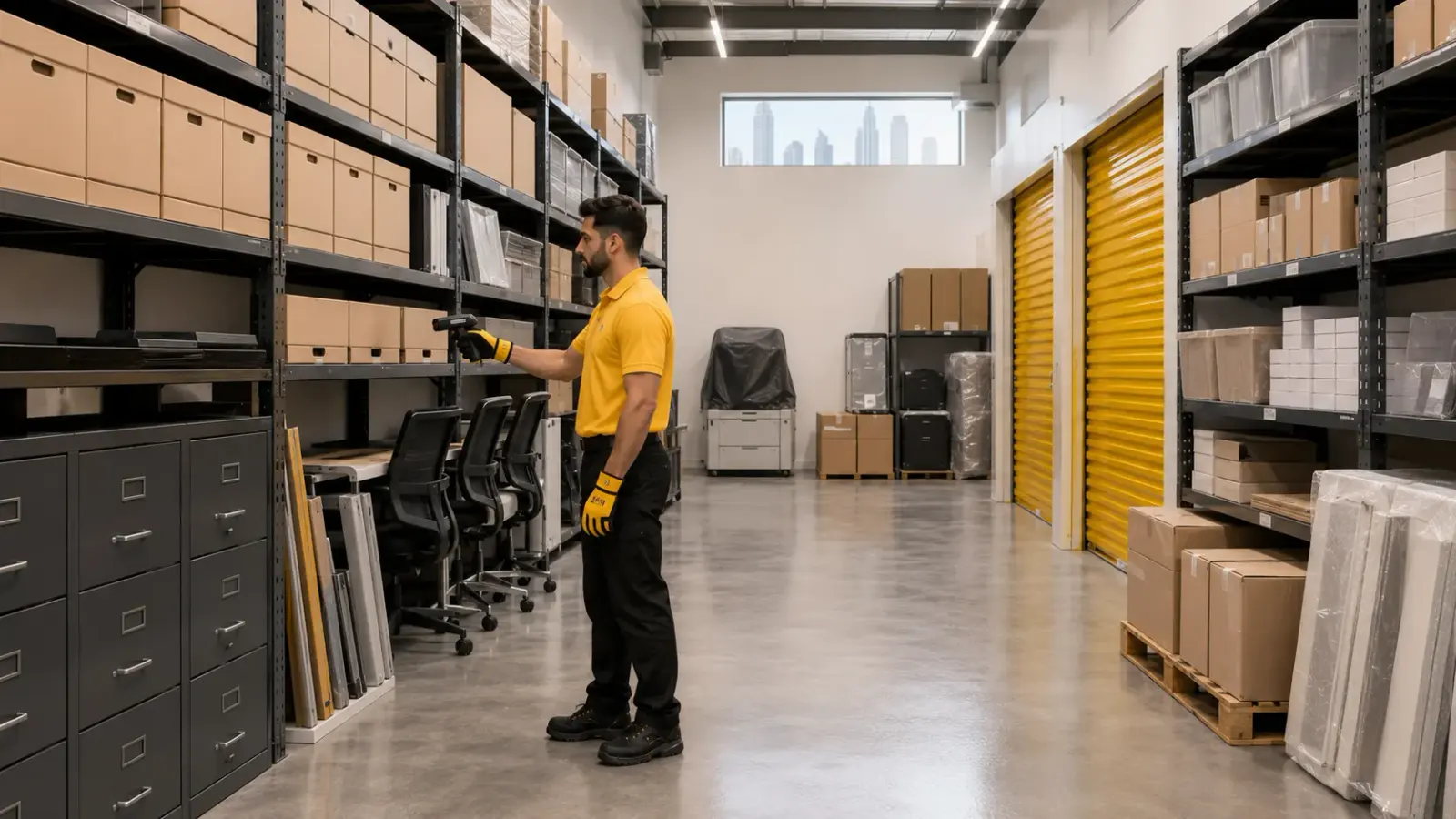
For residents who run online stores, sell through marketplaces, or work from a home office, storage becomes a business-continuity decision. The cost does not stop at the unit fee.
The better calculation includes 5 values:
- Replacement value
- Resale value
- Time-to-replace value
- Evidence value
- Customer-delay value
Climate-controlled storage becomes stronger when one stored asset affects income, deadlines, proof, or customer orders.
What is the AED premium rule for storage?
The AED premium rule compares the climate-control surcharge with the value of the most sensitive 20% of stored items.
Example:
- Total stored asset value: AED 20,000
- Sensitive asset value: AED 8,000
- Monthly climate premium: AED 150
- Five-month summer premium: AED 750
- Premium as share of sensitive value: 9.4%
The calculation is:
750 divided by 8,000 × 100 = 9.4%
That premium may look high for durable items. It may look reasonable for electronics, documents, photographs, and stock that lose value after one bad humidity cycle.
How does storage duration affect ROI?
Storage duration affects ROI because the climate-control premium repeats each month.
Short storage under 30 days often depends on the asset type. A standard unit may work for durable items. Climate control still makes sense for documents, electronics, artwork, and leather.
Medium storage from 2 to 6 months often overlaps the Dubai heat cycle. Climate control becomes easier to justify when the storage period includes July or August.
Long storage over 6 months changes the calculation again. The total premium rises, but exposure time also rises. Use the break-even formula instead of guessing.
What is the recommended calculator output?
The recommended calculator output is a clear decision label with AED values.
Use these 4 labels:
- Standard storage fits: Premium exceeds estimated avoidable damage.
- Climate control is reasonable: Premium and avoided damage sit close together.
- Climate control is financially justified: Avoided damage exceeds premium.
- Specialist storage review required: Asset value, legal value, data value, or sentimental value is high.
The fourth label matters. Some items do not belong in a basic calculator. Examples include rare artwork, critical hard drives, regulated documents, high-value inventory, and fragile antiques.
How do you prepare items before move-in?
Prepare items before move-in by cleaning, drying, photographing, labelling, separating, and spacing sensitive materials.
Use this move-in checklist:
- Clean surfaces before packing.
- Dry fabrics before boxing.
- Label boxes by item type and access priority.
- Photograph condition before wrapping.
- Photograph carton labels after packing.
- Separate documents from textiles.
- Remove batteries where manufacturer guidance allows.
- Store cables in labelled bags.
- Keep fragile items off the floor.
- Leave airflow gaps around stacked goods.
- Avoid overstuffing boxes.
- Keep high-value originals with you where practical.
This checklist reduces avoidable damage before climate control begins protecting the unit environment.
What items require extra caution?
Some items require extra caution because climate-controlled storage alone does not solve every risk.
Food, liquids, plants, chemicals, flammable materials, illegal goods, and poorly sealed containers create safety or pest concerns. Storage providers usually restrict these items.
High-value jewellery, cash, passports, original legal documents, and irreplaceable family records may require secure custody instead of ordinary storage.
Hard drives and laptops need backup before storage. Climate control reduces environmental stress. It does not protect data from device failure, password loss, theft, or impact damage.
Final decision: calculate the storage risk before you pay the premium
Climate-controlled storage in Dubai makes sense when the numbers support the risk. A lower monthly storage quote can look attractive, but that saving loses value when heat, humidity, mold, corrosion, or paper damage affects items with replacement, repair, resale, or evidence value.
Use the calculator before choosing a unit. Compare the standard storage quote with the climate-controlled storage quote. Then multiply the monthly AED premium by the number of storage months, especially if the period includes May, June, July, August, or September.
A practical decision starts with 4 checks:
- List the stored items that react to heat or relative humidity.
- Add the AED value of sensitive items, not only the total unit value.
- Estimate repair, replacement, cleaning, resale, and downtime exposure.
- Compare that exposure with the climate-control premium.
The strongest storage decision is not the cheapest option. It is the option that protects the right assets at the right cost.
FAQS
Can I use climate-controlled storage for only some of my items?
Yes, you can place only heat-sensitive, humidity-sensitive, or high-value items in climate-controlled storage and keep durable items in standard storage.
What storage quote details matter before I compare prices?
Ask for the unit size, monthly fee, climate-control premium, insurance cost, access rules, pickup fee, contract length, and any handling charges.
How do I know if my items are humidity-sensitive?
Items are humidity-sensitive if they contain paper, wood, leather, fabric, glue, metal parts, photographs, electronics, or packaging that absorbs moisture.
Is climate-controlled storage useful for short-term storage in Dubai?
Climate-controlled storage can be useful for short-term storage if the unit contains electronics, documents, photographs, leather, artwork, or business stock.
What is the first number I need for the ROI calculator?
The first number is the monthly climate-control premium, which equals the climate-controlled quote minus the standard storage quote.
Why does a 5-month Dubai summer cycle matter?
A 5-month Dubai summer cycle matters because a small monthly premium becomes a larger AED decision across May, June, July, August, and September.
Can standard storage work for warehouse and office assets?
Standard storage can work for durable warehouse and office assets, but electronics, paper files, stock, and signed documents need a risk check first.
What items should stay out of a basic storage calculator?
Rare artwork, critical hard drives, legal originals, luxury leather goods, fragile antiques, and regulated documents need specialist review beyond basic ROI math.
Does climate-controlled storage replace good packing?
No, climate-controlled storage reduces environmental exposure, but good packing still protects items from dust, pressure, moisture transfer, and handling damage.
What proof should I keep after booking storage?
Keep the contract, inventory list, item photos, carton-label photos, insurance details, receipts, and exit photos for claim support and handover evidence.
Storage & Warehousing Operations Specialist
14+ years in UAE self-storage and warehousing, managing facilities across Dubai, Abu Dhabi, and the Northern Emirates. Specializes in climate-controlled storage, unit sizing, security systems, and Free Zone vs Mainland compliance.
- Khalid Al Mansoori**Storage units in JVC: a practical guide to secure, flexible storage in Jumeirah Village Circle
- Khalid Al Mansoori**Storage units in Dubai Marina: What to verify before signing a storage agreement
- Khalid Al Mansoori**How to pack furniture for storage in Dubai humidity: Wood, leather, fabric, and metal packing rules
- Khalid Al Mansoori**What You Cannot Store in Self Storage: UAE Rules Behind Everyday Household Items
Content Lead & Storage Solutions Researcher
8 years researching and writing on UAE storage and logistics. Focuses on storage costs, unit-size guides, and packing for Dubai’s climate, working closely with facility teams for accurate pricing and specs.
Khalid Al Mansoori
Storage & Warehousing Operations Specialist
14+ years in UAE self-storage and warehousing, managing facilities across Dubai, Abu Dhabi, and the Northern Emirates. Specializes in climate-controlled storage, unit sizing, security systems, and Free Zone vs Mainland compliance.
Sarah Mitchell
Content Lead & Storage Solutions Researcher
8 years researching and writing on UAE storage and logistics. Focuses on storage costs, unit-size guides, and packing for Dubai's climate, working closely with facility teams for accurate pricing and specs.