
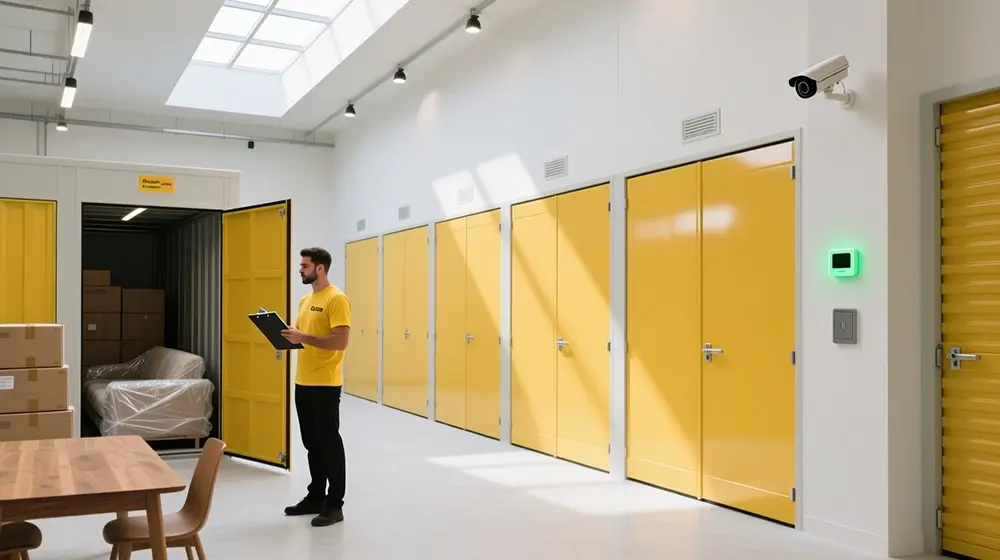
Furniture storage in Abu Dhabi now sits at the crossing point of rapid population growth, rising rents, and harsh coastal climate. Emirate’s population has climbed to about 4.14 million residents in 2024, roughly 51 % higher than in 2014, which means more relocations, more furnished homes, and more deposits tied to inspection reports. At the same time, apartment rents in Abu Dhabi have moved upward across many districts, so even middle range leases can link to deposits worth several thousand AED.
Climate pressure quietly adds another layer. Average relative humidity often ranges between the low fifties and high 60 % across the year, while summer temperatures can approach or exceed 40 °C, conditions that accelerate mold, warping, and corrosion in unprotected furniture. Alongside this, the wider UAE self-storage market already generates more than 600 million dollars in annual revenue and continues to expand, confirming that more residents and villa owners are shifting furniture off site during moves and refurnish projects.
This guide explains how furniture storage in Abu Dhabi really works, which risks matter most, and how contract checks, climate controls, and practical checklists protect both furniture and deposits.
Why does furniture storage in Abu Dhabi matter for relocation and villa refurnish projects?
Furniture storage in Abu Dhabi matters because high relocation activity and frequent villa refurnish projects move complete households into temporary storage while leases, renovation phases, and inspection appointments overlap.
- Abu Dhabi population rose from about 2.7 million in 2014 to more than 4.1 million in 2024, an increase of close to 51 % in ten years.
- Many residents live in apartments with limited spare rooms, so large furniture sets leave the unit during relocation or villa refurnish work.
- Residents protect deposits on high rent properties and require secure external space while they repaint, replace flooring, or upgrade joinery.
Relocation plans and villa refurnish schedules therefore integrate furniture storage in Abu Dhabi as a planned phase rather than an emergency step.
What do population and housing numbers reveal about demand for furniture storage in Abu Dhabi?
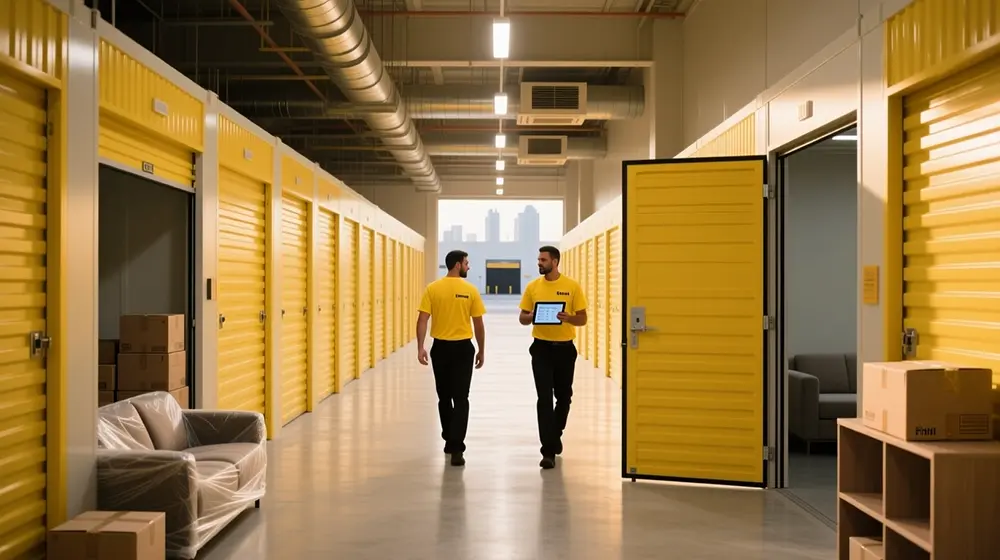
Population and housing numbers reveal that furniture storage in Abu Dhabi serves compact urban homes that link to high annual rents and significant deposits.
- Abu Dhabi’s population reached about 4,135,985 residents in 2024, according to the official UAE government platform.
- Average yearly apartment rents in Abu Dhabi sit near 133,000 AED, with entry levels around 22,000 AED per year for smaller units.
- Average rent for studio apartments is about 51,931 AED per year, with a range between roughly 16,000 and 180,000 AED, depending on location and specification.
When deposits equal about 5 to 10 % of annual rent, even a mid range apartment can tie up several thousand AED, so residents treat furniture storage in Abu Dhabi as part of a wider deposit protection strategy during relocation and villa refurnish stages.
How do temperature and humidity data quantify climate risk for furniture storage in Abu Dhabi?
Temperature and humidity data show that furniture storage in Abu Dhabi operates in a hot and often humid environment where unconditioned storage units expose furniture to accelerated damage.
Key climate indicators:
- Average annual temperatures near 27.9 °C and annual rainfall of about 42 millimetres, which classifies Abu Dhabi as a hot desert climate.
- Yearly temperature ranges from about 15.5 °C to about 40 °C, with summer highs commonly above 40 °C in coastal cities.
- Average relative humidity is around 54 to 56 % in autumn months, with higher values in other periods, which keeps many days inside a mold friendly band.
In this climate, non climate controlled furniture storage in Abu Dhabi increases the probability of mold growth, corrosion, warping, and odor formation on stored sofas, beds, wardrobes, and appliances.
Which furniture categories carry the highest risk in furniture storage in Abu Dhabi?
High risk categories in furniture storage in Abu Dhabi include items with textiles, foams, natural wood, adhesives, or exposed metal surfaces.
- Upholstered sofas and armchairs: Textiles and foams absorb moisture at relative humidity above about 60 % and support mold colonies on hidden surfaces.
- Mattresses: Multiple fabric layers and springs trap humid air, which encourages odor and microbial growth during long storage periods.
- Solid wood tables and chairs: Natural wood responds to humidity through swelling and shrinkage, which distorts joints and veneers in unstable storage environments.
- Particle board wardrobes and cabinets: Lower density boards degrade quickly when humidity fluctuates, especially at edges, screw points, and cutouts.
- Metal frames and appliances: Elevated humidity increases rust formation on unprotected steel parts, hinges, and appliance panels.
- Leather seating: Leather surfaces crack and discolor when humidity, cleaning residues, and heat combine over several months in storage.
Relocation and villa refurnish projects often send exactly these categories into furniture storage in Abu Dhabi, so climate data and warehouse conditions matter more than unit count alone.
How much does furniture storage in Abu Dhabi cost at different unit sizes?
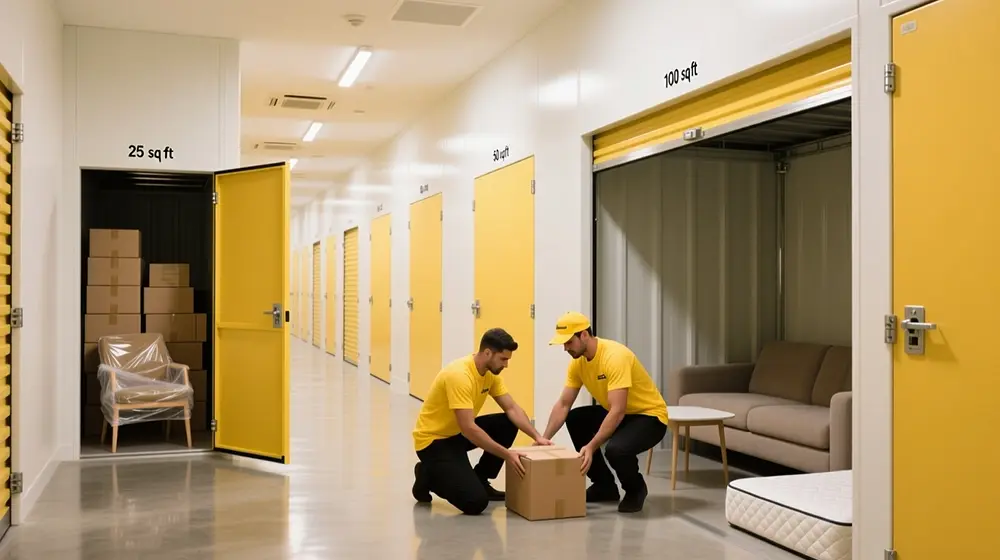
Furniture storage in Abu Dhabi typically costs a few hundred AED per month for small units and more than one thousand AED per month for larger climate controlled units, with variation by size and specification.
According to Abu Dhabi focused storage platforms:
- A 25 square foot unit that fits roughly six regular boxes often costs around 300 to 400 AED per month.
- A 50 square foot unit that fits around fourteen boxes frequently costs between about 900 and 1400 AED per month.
Storage fee table for furniture storage in Abu Dhabi
| Approx unit size | Typical use case | Indicative monthly rent (AED) | Common climate level |
|---|---|---|---|
| 25 sq ft | Boxes, small items, side tables | 300 to 400 | Often basic |
| 50 sq ft | 1 room of furniture | 900 to 1400 | Mixed basic and climate controlled |
| 75 sq ft | Small apartment set | 1200 to 1800 | More climate controlled options |
| 100 sq ft | 2 bedroom apartment set | 1500 to 2200 | Often climate controlled |
Values approximate ranges from provider listings and comparisons, and serve as a reference frame for furniture storage in Abu Dhabi, rather than fixed offers.
How do apartment rents and deposits link to decisions on furniture storage in Abu Dhabi?
Apartment rents and deposits link directly to decisions on furniture storage in Abu Dhabi because damage or delay during relocation or villa refurnish periods can influence deposit refunds on high value leases.
Reference values:
- Average monthly apartment rent is near 10,000 AED, and average yearly rent is near 133,000 AED.
- Studio apartments on show an average annual rent of about 51,931 AED, with the cheapest options between roughly 16,000 and 35,000 AED per year.
If a lease deposit equals 5 % of the annual rent:
- A 50,000 dirham rent links to a deposit of around 2,500 AED.
- A 133,000 dirham rent links to a deposit of nearly 6,650 AED.
If a deposit equals 10 % of the annual rent:
- A 50,000 dirham rent links to about 5,000 AED.
- A 133,000 dirham rent links to about 13,300 AED.
For many households, this deposit sits alongside the replacement value of furniture, so any mistake in furniture storage in Abu Dhabi during relocation can affect both furniture condition and cash held with the landlord.
Which warehouse conditions define safe furniture storage in Abu Dhabi?
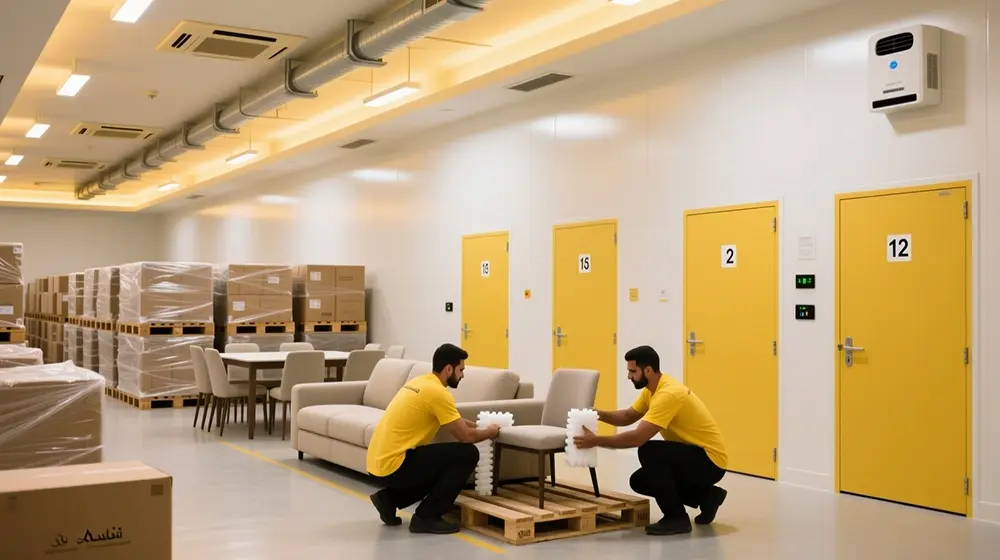
Safe furniture storage in Abu Dhabi relies on verifiable climate control, robust building design, security, and maintenance routines that reduce mold, corrosion, and handling damage.
Core conditions for safe furniture storage in Abu Dhabi:
- Temperature and humidity control: Indoor environments perform best when temperatures remain in the mid twenties °C, and relative humidity stays near the 40 to 50 % band, which contrasts with outdoor averages.
- Insulation and building envelope: Insulated walls and roofs reduce heat gain and condensation risk on interior metal surfaces and ducts.
- Ventilation and air circulation: Mechanical ventilation extracts humid air from corridors, while fans prevent stagnant pockets at the back of units.
- Cleanliness and pest management: Documented cleaning and pest monitoring schedules reduce the risk of stains, droppings, and chewing damage on stored items.
- Security infrastructure: Controlled access, digital logs, and CCTV coverage protect high value villa furniture while relocation and villa refurnish projects advance.
- Power backup systems: Generators or other backup supply systems support the continuous operation of climate and security equipment during grid interruptions mentioned in broader warehousing sector assessments.
Residents request written statements or technical sheets that describe these conditions before committing to furniture storage in Abu Dhabi for high value items.
How do storage locations inside Abu Dhabi city and outer areas change the risk for furniture storage in Abu Dhabi?
Storage locations inside Abu Dhabi city and outer areas change risk for furniture storage in Abu Dhabi because microclimate, building age, and infrastructure access vary between central districts and peripheral industrial zones. Abu Dhabi city occupies coastal land with low elevation and maritime influence, while the wider emirate covers desert hinterland with industrial clusters and logistics zones. Furniture storage in Abu Dhabi city often operates in multi level buildings near residential clusters, which reduces travel time during relocation but can increase reliance on lifts and constrained access for large items.
Facilities in outer industrial zones may provide larger floor plates and higher ceilings, which support bulky villa refurnish projects, but external temperatures often track desert extremes and require stronger building envelopes and more robust climate control. Transport distance between residences and remote warehouses also affects exposure of furniture to open air loading yards, where direct solar radiation and dust uplift increase during hot months, especially when daytime highs exceed 40 °C.
Therefore, furniture storage in Abu Dhabi must weigh location convenience against climate stability, access geometry, and vehicle movement rules that affect relocation schedules.
Which contract clauses require careful checks in furniture storage in Abu Dhabi?
Contract clauses that require careful checks in furniture storage in Abu Dhabi include limitations of liability, climate disclaimers, insurance allocation, access rules, and lien rights.
Important groups of clauses:
- Liability caps and declared value: Many storage contracts limit provider responsibility to a fixed amount per unit or per event, which can be lower than the actual replacement cost for villa furniture.
- Exclusions for mold, humidity, and pests: Contracts often exclude damage caused by gradual deterioration, mold, vermin, or insects, which aligns with climate risk in Abu Dhabi.
- Insurance structure: Some providers offer optional insurance based on declared value, while others rely on customer arranged policies.
- Access and notice conditions: Rules for visit frequency, supervision, and notice periods affect the ability to inspect stored furniture during long relocation or villa refurnish projects.
- Lien, sale, and disposal rights: Clauses describe how long unpaid furniture remains in storage and how providers later sell or dispose of contents.
Structured reading of these clauses reduces surprises during furniture storage in Abu Dhabi, especially when relocation schedules shift, or villa refurnish work extends.
How can residents quantify total cost and hidden fees in a furniture storage contract?
Residents quantify total cost and hidden fees in a furniture storage contract by mapping every action and default to a numeric entry, not only the base rent per month.
Key fee types in furniture storage in Abu Dhabi
- Base rent by unit size and climate level
- Administrative and account setup fees
- Access card or key replacement fees
- Late payment fees and interest
- Insurance premiums by declared value band
- Cleaning and disposal fees at move out
- Auction, legal, or lien enforcement costs
Fee impact table
| Scenario | Base rent (AED / month) | Extra fees (AED) | Example cause | Notes |
|---|---|---|---|---|
| On time payments | 1,200 | 0 | Standard use | Climate controlled 50 sq ft unit |
| One late payment | 1,200 | 150 | Fixed the late fee | Assumes one reminder charge |
| Lock replacement | 1,200 | 200 | Lost key or card | One time fee |
| Disposal after arrears | 1,200 | 600 | Cleaning and disposal | Does not include lost contents |
Values illustrate how non-rent fees can equal half a month or more of base rent in furniture storage in Abu Dhabi, which matters when relocation or villa refurnish cash flows already carry rent and contractor costs.
What protection steps can relocation and villa refurnish clients add before using furniture storage in Abu Dhabi?
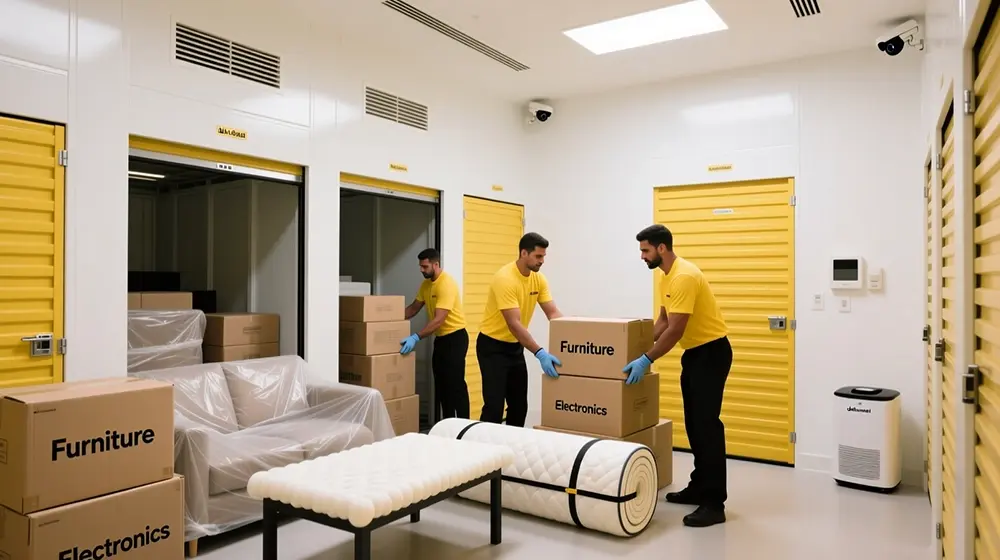
Relocation and villa refurnish clients enhance protection before using furniture storage in Abu Dhabi by combining improved packing, documentation, insurance, and inspection routines.
Checklist:
- Use breathable covers on sofas and mattresses instead of complete plastic wrapping that traps moisture.
- List every major furniture item with description, material, and estimated value in a spreadsheet.
- Take date stamped photographs of furniture before loading, including close ups of vulnerable edges and corners.
- Request written confirmation of climate ranges, power backup arrangements, and pest control schedules.
- Compare insurance options based on declared value bands for villa furniture and electronics.
- Schedule periodic visits to the storage unit to detect early signs of condensation, mold odor, or pests.
- Keep heavy items on pallets or racking to avoid floor level moisture and cleaning water exposure.
These steps strengthen claims and negotiations if any dispute about furniture storage in Abu Dhabi arises after relocation or villa refurnish completion.
How can a checklist improve decisions about furniture storage in Abu Dhabi for tenants and owners?
A structured checklist improves decisions about furniture storage in Abu Dhabi for tenants and owners by converting complex risk factors into observable items that can be confirmed during site visits and contract reviews.
Sample checklist for furniture storage in Abu Dhabi
| Checklist area | Question for the provider | Evidence required |
| Climate | What temperature and humidity ranges does the system maintain for storage corridors and units? | Written specification or technical data sheet |
| Power backup | What backup systems protect climate control and security for outages | Description of generators, battery systems, and test schedules |
| Building envelope | What insulation and roofing materials protect against external heat | Construction notes or building standard references |
| Security | What access control and surveillance measures protect stored furniture | CCTV coverage map and visitor access policy |
| Cleaning and pests | What cleaning schedule and pest monitoring plan applies to furniture storage areas | Written schedule or maintenance contract |
| Insurance | What insurance options exist for stored contents, and at which declared values | Insurance summary and policy wording |
| Fees | What additional fees apply for access, late payments, or disposal | Complete the fee table and example scenarios |
Tenants and owners who apply this checklist before signing contracts for furniture storage in Abu Dhabi during relocation or villa refurnish activity often detect misaligned warehouse choices early.
Which short quiz helps residents test the strength of their furniture storage plan in Abu Dhabi?
A short quiz with numeric scoring helps residents test the strength of their plan for furniture storage in Abu Dhabi before the relocation date.
Give one point for each yes answer.
1. Have you visited at least one storage facility in person in Abu Dhabi?
2. Have you seen written climate data for the storage area, including temperature and humidity ranges?
4. Have you prepared an itemised furniture inventory with estimated replacement values?
5. Have you checked apartment or villa insurance for off site storage coverage limits?
6. Have you reviewed any dedicated storage insurance policy that the provider offers?
7. Have you read all the clauses on mold, humidity, and pest exclusions?
8. Have you listed every possible fee from the contract on a single page?
9. Have you set calendar reminders for rent due dates and inspection visits?
- 0 to 3 points basic plan for furniture storage in Abu Dhabi with high information gaps
- 4 to 6 points, moderate plan with partial documentation and some risk controls
- 7 to 8 points structured plan aligned with relocation and villa refurnish schedules
Conclusion: Turning Furniture Storage in Abu Dhabi into a Planned Safety Net
Furniture storage in Abu Dhabi is no longer an emergency stopgap. It has become a planned phase that sits between the last inspection of the old home and the first inspection of the new one. Population growth, higher average rents, and sizable deposits mean every sofa, bed, and wardrobe in storage now quietly links to real money as well as comfort. When residents ignore climate ranges, building quality, and contract wording, they do not just risk a few scratches. They risk mold on textiles, warped wood, and difficult conversations about deposit refunds.
The good news is that most of these problems are predictable. Climate data already shows where humidity sits, warehouse visits reveal how well a building is run, and contract clauses spell out who carries which risk. A clear checklist, a documented inventory, and a simple scoring quiz turn an anxious relocation into a controlled project.
If you treat furniture storage in Abu Dhabi as a deposit protection tool rather than just a place to park boxes, you already move ahead of many tenants and owners. The extra hour spent checking climate readings, insurance options, and fee tables today can decide whether you walk away from your next inspection with a clean report, intact furniture, and a full deposit refund.
Frequently Asked Questions
What is the main reason people use furniture storage in Abu Dhabi during relocation?
Most residents use furniture storage in Abu Dhabi to bridge gaps between leases and to protect furniture while renovation or refurnishing work is underway.
Is climate controlled furniture storage in Abu Dhabi always necessary?
Climate controlled furniture storage in Abu Dhabi is strongly recommended for textiles, wood, and leather because heat and humidity can damage them within a few months.
How early should I book furniture storage in Abu Dhabi before my move?
It is sensible to reserve furniture storage in Abu Dhabi at least two to four weeks before the relocation date, especially in busy seasons.
Can furniture storage in Abu Dhabi help me protect my rental deposit?
Yes, careful furniture storage in Abu Dhabi reduces impact damage and clutter, which makes it easier to pass inspection and recover the deposit.
What size unit suits a typical 2 bedroom apartment in Abu Dhabi?
Many households find that a furniture storage unit in Abu Dhabi, around 75 to 100 square feet, can hold most items from a small 2 bedroom set.
Which items should never go into basic furniture storage in Abu Dhabi?
Very delicate antiques, art pieces, and high value electronics should avoid basic furniture storage in Abu Dhabi and instead go into well documented, controlled units.
How can I check if a warehouse in Abu Dhabi really controls humidity?
Ask the provider for written temperature and humidity ranges, look for installed sensors, and compare those figures with independent climate guidelines.
Do storage companies in Abu Dhabi insure my furniture by default?
Many furniture storage providers in Abu Dhabi do not include full contents insurance by default and rely on optional or customer arranged policies.
What hidden fees should I watch for in a furniture storage contract in Abu Dhabi?
Look closely at fees for late payments, access outside normal hours, lock or card replacement, cleaning, and disposal after arrears.
How can I tell if my plan for furniture storage in Abu Dhabi is strong enough?
If you have climate data, a full inventory with photos, clear insurance, and a written list of all fees, your furniture storage plan in Abu Dhabi is on solid ground.
Storage & Warehousing Operations Specialist
14+ years in UAE self-storage and warehousing, managing facilities across Dubai, Abu Dhabi, and the Northern Emirates. Specializes in climate-controlled storage, unit sizing, security systems, and Free Zone vs Mainland compliance.
Content Lead & Storage Solutions Researcher
8 years researching and writing on UAE storage and logistics. Focuses on storage costs, unit-size guides, and packing for Dubai's climate, working closely with facility teams for accurate pricing and specs.