Dubai business districts compress high rent, dense population, and rapid growth into limited space, so self storage for business in Dubai becomes a structural tool rather than a convenience. Dubai reached about 3.81 million residents by December 2024, and the total expat population in the UAE in 2025 is 10.04 million, while the number of Emirati citizens is 1.31 million. As of mid-2022, the number of small & medium enterprises in the UAE was 557,000. SMEs contribute as much as 63.5 % to the non-oil GDP. It is forecasted that there will be 1 million SMEs in the UAE by the year 2030. This combination places continuous pressure on commercial floorspace.
According to the UAE self-storage market analysis, self storage services in the country generated about US$602.5 million in 2024 and are forecast to reach about US$859.2 million by 2030 at around 6.3 % compound annual growth. Dubai leads this demand because of concentrated offices and trade activity. These numbers show why self storage for business in Dubai forms part of a structural solution for companies that face high rents, dense urban layouts, and volatile inventory volumes.
How does Dubai’s growth create a constant space squeeze for businesses?
Dubai’s fast population growth and SME density convert office space into a scarce and expensive resource, so self storage in Dubai absorbs non-productive items and archives.
- Dubai’s population climbed from about 3.66 million in 2023 to around 3.86 million in 2024, an increase of roughly 5.5 % in one year.
- Expatriates account for about 88.5 % of the UAE’s 12.5 million residents, with about 11.06 million expatriates as of 2024.
These numbers confirm three structural drivers that push businesses toward self storage for business in Dubai:
1. High business density in a limited urban footprint
Many SMEs compete for the same central districts such as DIFC, Business Bay, and JLT.
2. Continuous inflow of residents and firms
Population and company registrations rise faster than new office completions in several submarkets, so vacancy in prime space stays low.
3. Rising office occupancy costs
Dubai ranks among the top ten global cities for prime office occupancy costs, with average annual occupancy around $148.9 per square foot.
Under these conditions, storing non-essential inventory inside offices erodes profitability. Self storage in Dubai separates space for people from space for stock, records, fixtures, and seasonal assets.
How expensive is office space in Dubai compared with self storage units?
Office space in Dubai usually costs more per usable storage square foot than dedicated self storage units, so relocating low-value items from desk-side areas into self storage often reduces annual occupancy costs.
According to recent storage pricing guides, mainstream self storage in Dubai typically charges:
- About AED 300 to 400 per month for about 25 square feet.
- About AED 895 to 1400 per month for about 50 square feet.
- About AED 1700 to 2600 per month for about 100 square feet, depending on access and climate control.
Cost comparison of prime office space versus self storage in Dubai
Values are indicative ranges based on cited market reports and provider price cards.
| Space type | Example size | Approx annual band (AED) | Operational note |
|---|---|---|---|
| Prime office in DIFC or Trade Centre | 100 sq ft | AED 35000–35500 | 100 % of the floor is counted as a premium office area, even if racks or boxes occupy it |
| Grade A office in Business Bay | 100 sq ft | About AED 15100 | Storage in this area ties up client-facing or desk capacity |
| Mainstream self storage medium unit | 50 sq ft | About AED 10740–16800 | Secure climate-controlled space away from the office, often with 24/7 access |
| Mainstream self storage large unit | 100 sq ft | About AED 20400–31200 | Serves as a mini warehouse for inventory, fixtures, and marketing assets |
Why is self storage important for small and medium businesses in Dubai
Self storage is important for small and medium businesses in Dubai because SMEs dominate the economic fabric while operating from constrained premises that leave little buffer for inventory spikes or document retention rules.
According to entrepreneurship programmes, policy targets focus on increasing the number of SMEs and their share of GDP further, which suggests that the stock of modest-sized offices, showrooms, and workshops will continue to grow faster than very large campuses.
For these firms, self storage for business in Dubai functions as an external extension of the premises:
- Inventory overflow: Self storage units for business in Dubai hold cartons of e-commerce stock, spare parts, and promotional materials that no longer fit inside a compact shop or office.
- Document and record retention: Corporate and regulatory frameworks in the UAE expect retention of accounting records and certain contracts for multiple years, and self storage in Dubai provides a lower-cost location for these archives than prime office floors.
- Seasonal and project equipment: Event props, exhibition stands, or seasonal decorations move into self storage units between campaigns, which protects circulation space inside the office.
This explains why self storage is important for business in Dubai that grows in phases and cannot justify a larger office after each sales milestone.
What space problems do Dubai businesses face before they look at self storage?
Most Dubai firms experience a series of specific space problems before they consider self storage, including inventory creep, blocked circulation routes, and inefficient use of premium deskside areas.
Common pre-crisis patterns include:
1. Inventory spread inside open-plan offices
Sample stock, expired marketing materials, hardware spares, and event items occupy corners, corridors, or unused meeting rooms.
2. Paper and digital archive overlap
According to SME advisory reports, many companies in the UAE still maintain physical files and ledgers alongside digital systems for regulatory comfort, which doubles record storage footprint.
3. Seasonal and project-based equipment
Exhibition stands, pop-up branding, Ramadan or New Year décor, and promo stands remain on site between campaigns, occupying floor space that does not host staff.
4. Compliance and safety friction
Stacked cartons near exits or electrical panels create safety concerns and can attract negative remarks during building inspections.
Self storage in Dubai targets these categories specifically. Offsite units absorb low-velocity items, while offices carry fast-moving documents, equipment, and client-facing materials.
Why do many owners discover self storage only after a space crisis?
Many business owners in Dubai recognise the importance of self storage only after a space crisis exposes hidden costs, safety issues, and lost opportunities inside their offices.
Typical triggers include:
1. Lease renewal with rent increase
When landlords present increased rent, occupied storage corners become a visible profit leak.
2. Headcount growth without relocation
New staff join, but desks cannot replace the storeroom because archived documents or slow inventory fill that area.
3. Fit out or fire safety inspection
Building management highlights blocked escape routes, overloaded rooms, or items stored under raised floors.
4. Weather damage to in-office storage
Cardboard boxes near windows or non-cooled areas degrade faster under these conditions, and equipment stored in unsuitable areas faces corrosion risk.
At this point, the owner discovers that self storage for business in Dubai already exists as a mature market with climate-controlled units, loading docks, and documented price tiers. Early integration of such units into space planning prevents reactive decisions under time pressure.
Which types of businesses in Dubai benefit most from self storage?
Self storage in Dubai supports a broad range of business models, especially those with inventory, seasonal campaigns, or mobile teams.
Key segments include:
1. E-commerce and omnichannel retailers
The UAE e-commerce market reached about AED 32.3 billion in 2024 and is projected to exceed AED 50.6 billion by 2029.
2. SME wholesalers and importers
Non-perishable goods, promotional bundles, spare parts, and trial shipments remain in storage units close to ports or logistics corridors, which reduces pressure on head office floors.
3. Professional and financial services
Law firms, auditors, and corporate service providers store closed files, archive boxes, and rarely used records in external units to keep client-facing offices clear.
4. Marketing, events, and exhibition agencies
Stage elements, modular booths, lighting rigs, and printed backdrops occupy large volumes and move in cycles, so self storage for business in Dubai acts as an equipment base.
5. Construction, fit out, and maintenance contractors
Tools, consumables, and project-specific materials stay in well-located units that maintenance teams access on route to sites.
Across these categories, the importance of self storage for business in Dubai lies in its role as a flexible extension of operational space rather than a static warehouse.
How does self storage help Dubai businesses control costs and cash flow?
Self storage for business in Dubai often converts fixed occupancy expenses into more flexible operational costs, which supports cash flow control in volatile markets.
Cost control mechanisms include:
1. Right-sizing of storage capacity
- Units in Dubai range from around 12 square feet lockers at roughly AED 300 per month up to units above 180 square feet at about AED 1500 or more per month, with climate control and security included.
- Businesses select unit sizes based on current campaigns rather than long leases for oversized warehouses.
2. Segregation of storage from prime office costs
- Prime offices in central locations carry high per square foot rents, while self-storage units near industrial or logistics zones charge lower blended rates.
3. Ability to consolidate multiple micro stores
- Instead of small stock pockets in several offices, a business can consolidate into one monitored unit with controlled access, which simplifies stock counts and reduces shrinkage.
In practical terms, when a firm moves 100 square feet of storage contents out of a DIFC grade office into a 100 square feet self storage unit, the yearly occupancy cost gap can range between roughly AED 4000 and 15000, depending on exact rent and unit pricing.
How does self storage in Dubai reduce operational and climate-related risk?
Self storage facilities in Dubai mitigate several operational, climate, and compliance risks that arise when goods and archives sit inside regular offices.
Risk reduction channels include:
1. Climate control and humidity management
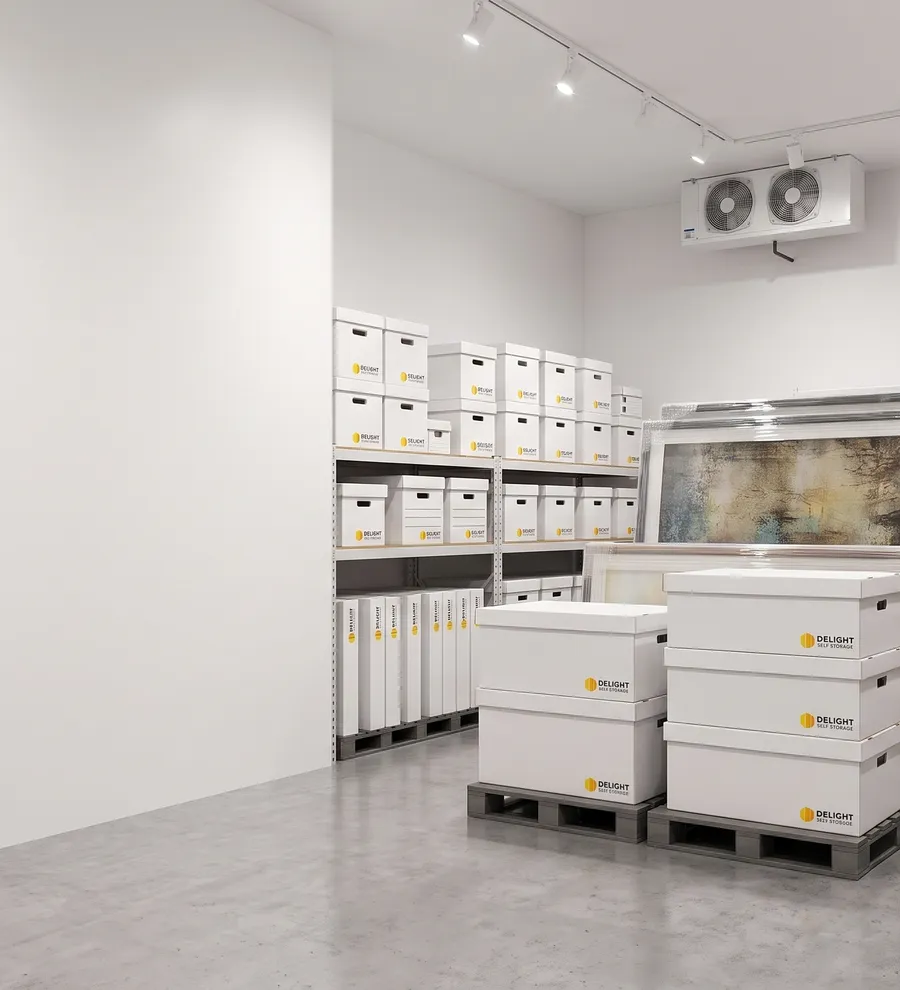
Climate-controlled self-storage units maintain more stable temperature and humidity profiles, which protect electronics, paper, textiles, and wooden fixtures from warping and mould.
2. Fire safety and emergency access
Moving combustible boxes, banners, and packaging out of corridors and stairwells into purpose-designed units keeps egress routes clear and simplifies fire risk assessments.
3. Security and controlled access
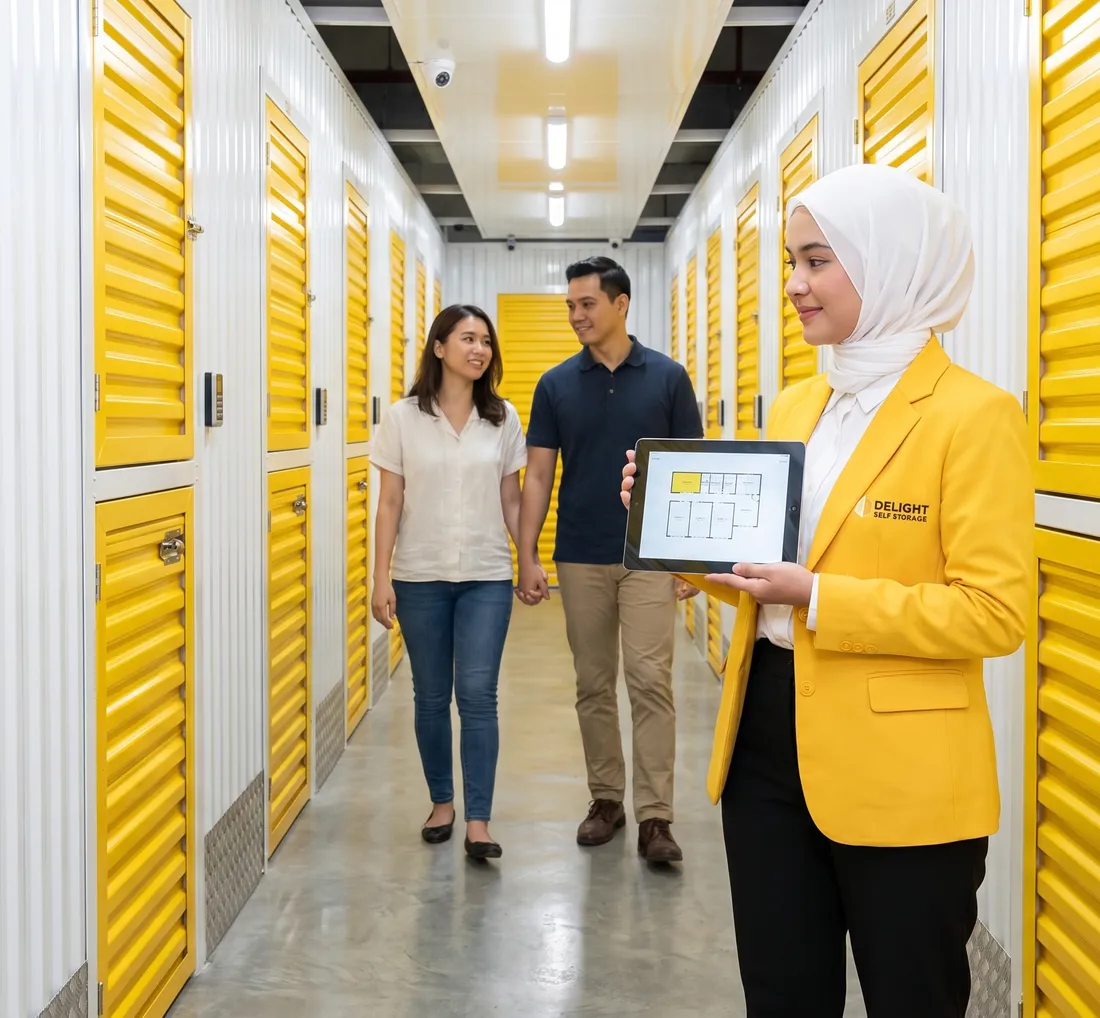
Many self storage providers in Dubai advertise 24-hour CCTV coverage, controlled entry, and individual locks, which lowers theft and tampering risk for high-value stock.
4. Document retention and audit traceability
Offsite storage with inventory lists and labelled racks helps Dubai firms comply with audit and retention timelines that apply to tax, corporate, or employment records.
In this way, self storage is important for businesses in Dubai, not only for space saving but also for risk management in a climate that frequently records extreme heat.
What do most owners discover about self storage after a crisis?
After a space crisis, many owners in Dubai discover that self storage changes how they view office and warehouse roles inside their business model.
Common realisations include:
- Office floors must focus on client experience, collaboration, and staff productivity, not boxes and racks.
- Storage needs fluctuate across seasons, campaigns, and contract cycles, so flexible units align better with variable demand than fixed additional offices or warehouses.
- Detailed inventory lists and labelled shelving inside self storage units reduce lost item rates and duplicated purchases.
- Clear separation between operational stock and archive material improves decision-making about what to keep, sell, or recycle.
These discoveries often appear only after a lease review, audit, or relocation deadline exposes the hidden costs of internal storage. Early adoption of self storage for business in Dubai brings those benefits without the stress of last-minute changes.
How can a Dubai business integrate self storage before space becomes a crisis?
A structured integration plan introduces self storage in Dubai as part of normal operations rather than an emergency solution.
Step sequence for integrating self storage for business in Dubai
1. Map current space usage
Measure how many square feet in the office host documents, slow inventory, displays, or redundant equipment.
2. Classify items by velocity and risk
Separate daily use items, weekly use items, and rarely accessed assets such as closed files or retired hardware.
3. Estimate the required unit size and location
Translate item volume into unit sizes using provider guides such as 25, 50, and 100 square feet categories.
4. Select facility type and terms
Compare climate-controlled versus standard units, 24-hour access versus limited access, and contract length against expected business cycles.
5. Create an inventory and labeling scheme
Prepare shelf maps, box labels, and digital index files before moving items.
6. Schedule periodic reviews
Reassess unit size and contents at fixed intervals so the space stays aligned with actual business needs.
This approach treats self storage for business in Dubai as an adjustable extension of corporate real estate rather than a separate, unmanaged store.
What practical signs suggest a Dubai business is approaching a space crisis that self storage could relieve
A Dubai business approaches a space crisis that self storage could relieve when visible clutter, reduced circulation space, and ad hoc storage decisions start to interfere with day-to-day operations.
A simple self-assessment for owners and managers includes these questions:
1. How many workstations sit next to stacks of cartons or sample boxes
- Count desks with storage piles higher than desk level.
- A tally above three desks in a small office suggests pressure.
2. How many meeting rooms double as storage rooms most days of the month
- Note the number of days when visitors encounter stored items in shared spaces.
3. How much time staff spend searching for files, samples, or spare parts each week
- Track hours spent on retrieval in one week; hours above three for small teams indicate inefficiency.
4. How often new deliveries arrive without a clear, pre-allocated storage location
- Observe whether pallets or boxes sit temporarily in corridors, receptions, or doorways.
5. How many compliance or safety remarks mention blocked exits or overloaded shelves
- Review internal checklists or building management notes for repetition.
6. How many times per year do urgent storage arrangements arise during peak trading periods
- Count last-minute rentals, short-notice third-party warehousing, or staff taking items home.
If three or more of these indicators apply, the business already experiences conditions where self storage for business in Dubai can relieve pressure and prevent the next space crisis from disrupting revenue.
What do Dubai business owners finally learn about self storage after a space crisis
Dubai business owners finally learn after a space crisis that self storage is not an optional extra but a structural component of operating in a high-rent, high-growth city.
The combination of dense business districts, rising office and warehouse costs, and strict building standards means that every square foot inside a workplace carries a measurable financial value, so long-term storage of cartons, files, and idle equipment inside prime space weakens the business case for the lease.
The main lesson from owners who experienced a space crisis is straightforward:
- Early use of self-storage in Dubai for business archives, stock, and equipment preserves productive office space.
- Clear policies for what enters the unit and how items return protect time and assets.
- Regular review of storage volumes keeps the unit mix aligned with growth, seasonal peaks, and new product lines.
This understanding explains why self-storage is important for businesses in Dubai and why owners who cross the first crisis often adjust their planning so that future growth depends on a mix of office seats, digital infrastructure, and well-managed external storage capacity.
FAQs
Why is self storage important for businesses in Dubai with limited office space?
Self storage is important for businesses in Dubai because it moves archives and slow stock out of expensive offices and frees central space for staff and client activity.
How can self storage for business in Dubai affect overall occupancy costs?
Self storage for business in Dubai often replaces prime rent of AED 300 or more per square foot with a lower unit tariff and therefore reduces annual occupancy expense for stored items.
What kind of businesses gain the most from self storage in Dubai?
E-commerce firms, SME wholesalers, professional services, event agencies, and contractors gain the most because each segment manages inventory peaks and campaign equipment.
How does self storage in Dubai support SMEs that operate from small offices?
Self storage in Dubai supports SMEs by acting as an external back room for cartons, files, and exhibition assets, while compact offices focus on daily operations.
Can self storage for business in Dubai improve compliance and audit readiness?
Self storage for business in Dubai improves compliance when firms label boxes, record rack locations, and align retention periods with off-site inventories.
How does climate-controlled self-storage in Dubai protect business assets?
Climate-controlled self-storage in Dubai stabilises temperature and humidity, so electronics, documents, textiles, and wooden fixtures avoid heat and moisture damage.
What space-related warning signs suggest a Dubai office requires self storage?
Desks beside carton stacks, meeting rooms used as storerooms, blocked corridors, and frequent searches for files or stock indicate a requirement for self storage.
How does self storage in Dubai influence future expansion plans for a company?
Self storage in Dubai allows headcount growth in the same office by moving non-essential items off-site instead of expanding floor area after every sales increase.
Is self storage for business in Dubai suitable only for long-term storage needs?
Self storage for business in Dubai suits both long-term archives and short campaign peaks because unit sizes and contract lengths adapt to project cycles.
What is the simplest first step for a Dubai business considering self storage?
The simplest first step is a basic floor audit that counts square feet occupied by boxes and equipment and then matches that volume with an external unit size.