Storage Unit Size for a 1BHK Apartment in Dubai
Find the right storage unit size for a 1BHK apartment in Dubai — compare options, costs & book the perfect unit today.
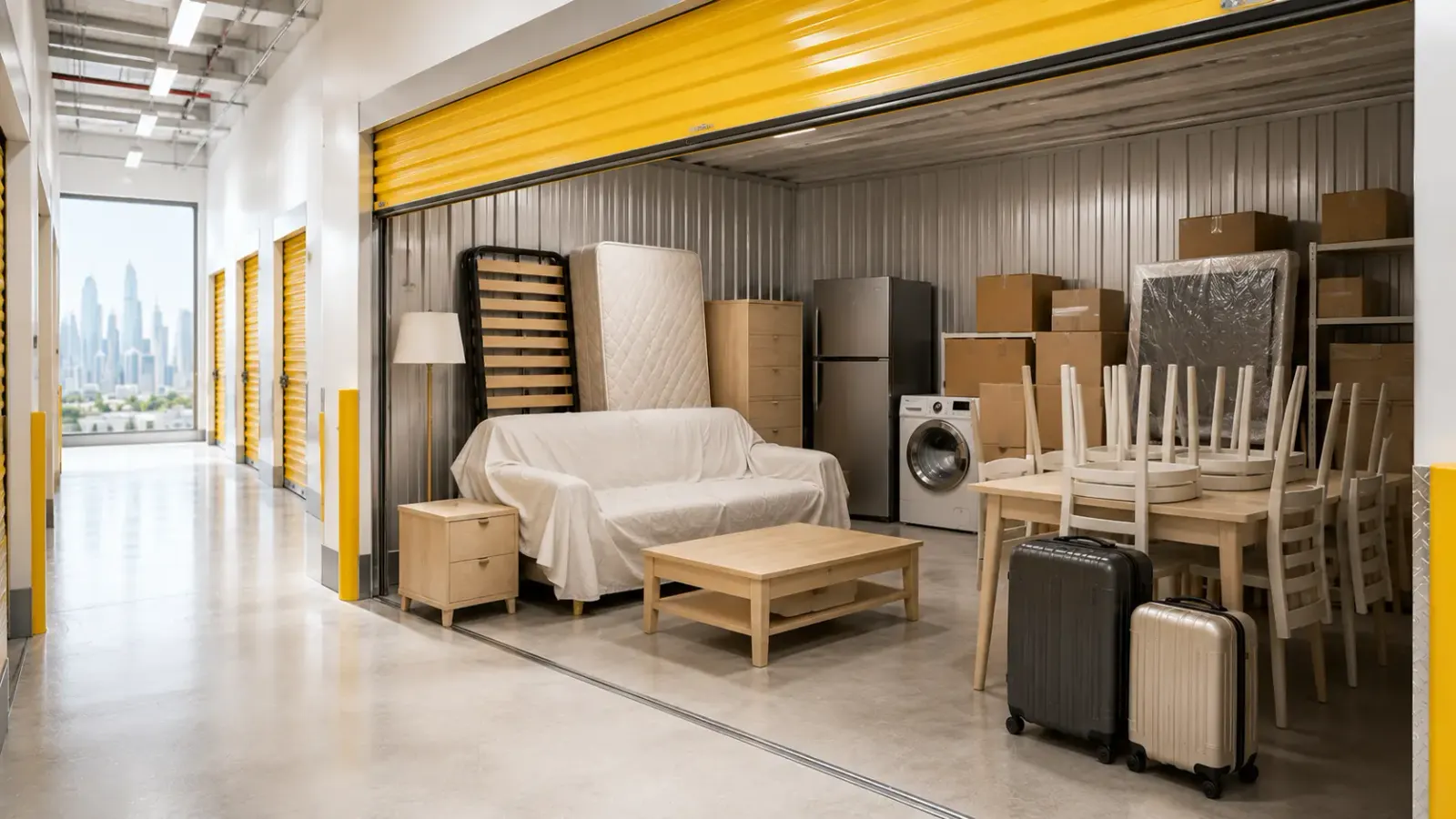
Moving out of a 1BHK apartment in Dubai can make you realise just how much furniture one bedroom can hold. There is the bed and wardrobe, of course, but then comes the sofa, TV unit, dining table, appliances, boxes, clothes and all the smaller things that somehow multiply during a move. So, how much storage do you actually need?
For a typical furnished 1BHK, a 50 to 75 sq ft self-storage unit is a sensible starting point. A 50 sq ft unit can work for a lightly furnished apartment or a smaller inventory, while 75 sq ft is usually more comfortable when you are storing most of the furniture and household belongings. The final choice depends less on the “1BHK” label and more on what you actually own.
What Storage Unit Size Fits a 1BHK Apartment in Dubai?
A 1BHK apartment does not have one fixed storage requirement. One person may live with a bed, small sofa and a handful of boxes, while another may have a king-size bed, large wardrobes, dining furniture, appliances and months of accumulated belongings.
As a practical guide:
| 1BHK storage requirement | Suggested size | Suitable for | | Lightly furnished | 50 sq ft | Bed, sofa, wardrobe and boxes | | Average furnished 1BHK | 50–75 sq ft | Furniture, appliances and household cartons | | Fully furnished or bulky inventory | 75–100 sq ft | Larger furniture sets and additional belongings |
A 50 sq ft unit can be enough if your furniture is compact and you are storing a limited number of boxes. A 75 sq ft unit gives you more flexibility and is a safer choice if you are storing most of the apartment. If you have a particularly large sofa, several wardrobes, a dining set or a lot of non-stackable items, you may need to consider 100 sq ft. For a wider comparison of storage requirements across different apartment sizes, see which storage unit size you need.
What Does a Typical 1BHK Apartment Load Include?
Before choosing a unit, make a quick inventory. You do not need an elaborate spreadsheet. A simple list of large, medium and small items is enough to start. A typical furnished 1BHK may include:
- Double, queen or king bed and mattress
- One or two bedside tables
- Wardrobe
- Three-seater sofa
- Coffee table
- TV and TV stand
- Dining table and chairs
- Refrigerator
- Washing machine
- Microwave and other small appliances
- Desk or work table
- Chairs
- Suitcases
- Clothes and personal belongings
- Books and documents
- Around 15–30 moving cartons
Not every apartment will contain all of these. Built-in wardrobes, furnished rentals and minimalist living can significantly reduce the amount of furniture that needs to go into storage. On the other hand, a 1BHK occupied for several years can contain far more than the original move-in inventory. That is why measuring your belongings is more reliable than choosing a unit based only on the number of bedrooms.
Is 50 Sq Ft Enough for a 1BHK?
It can be. A 50 sq ft storage unit is a reasonable choice when your 1BHK is lightly furnished or you are storing selected belongings rather than everything. For example, you might fit a bed, mattress, compact sofa, TV unit, wardrobe, small appliances and several cartons if everything is packed efficiently. It can also work well if you are storing your belongings temporarily while travelling or moving to another apartment.
The problem starts when you try to fit every piece of furniture into the same space. A large sectional sofa can consume a surprising amount of room. So can a full-size dining set or multiple freestanding wardrobes. If your unit becomes packed from floor to ceiling with no sensible access, the nominal size may be correct on paper but inconvenient in real life. In that situation, 75 sq ft may be the better choice.
Is 75 Sq Ft Better for a Furnished 1BHK?
For many fully furnished 1BHK apartments, 75 sq ft is the more comfortable option. A 75 sq ft unit gives you more room to organise belongings properly. You can place larger furniture along the sides, stack cartons safely and keep frequently needed items closer to the entrance. If you expect to access the unit regularly, that extra space can be particularly useful.
What Does 1BHK Storage Cost in Dubai?
The 1 bedroom apartment storage price in Dubai depends on the unit size, facility, location, access arrangements, storage conditions and rental terms. Current published pricing can vary considerably between providers and unit sizes. For a broader breakdown of Dubai storage prices, including typical costs by square footage, see storage cost in Dubai by unit size.
As a general budgeting guide:
| Unit size | Indicative monthly price | | 25 sq ft | AED 300–450 | | 50 sq ft | AED 550–750 | | 75 sq ft | Around AED 700–1,000 | | 100 sq ft | Around AED 900–1,300 |
These figures are useful for budgeting rather than guaranteed quotes. The final amount can depend on availability, storage type, rental duration, access arrangements and any additional services. When comparing quotes, look at the total monthly cost, not just the advertised starting price. Check whether VAT, insurance, pickup, delivery, deposits or other charges are included.
Where 1BHK Storage Loads Usually Go Wrong
Most storage problems do not happen because people have too many belongings. They happen because the space was estimated without thinking about how those belongings would actually fit. One common mistake is measuring the number of boxes but forgetting furniture. Ten neatly stacked boxes may take less usable space than one large sofa. A wardrobe that cannot be dismantled can also create awkward gaps around it.
Another mistake is filling the unit completely without leaving any access. If you need something from the back, you may end up moving half the contents to reach it. That becomes particularly frustrating when the storage period lasts several months. There is also the temptation to stack everything as high as possible. While using vertical space can be helpful, items should be stacked safely and protected appropriately. A slightly larger unit can sometimes be worth the additional monthly cost if it means you can organise your belongings properly and reach them when needed.
Storing Part of a 1BHK vs Storing Everything
Your storage requirement changes dramatically depending on what you plan to put away.
If You Are Storing Everything
If you are leaving your apartment temporarily and need to store almost the entire 1BHK, start by measuring the largest items. List your bed, mattress, sofa, wardrobe, dining table, appliances, TV unit, desk and large cartons. For a lightly furnished apartment, 50 sq ft may work. For a typical furnished 1BHK, 75 sq ft is a stronger starting point. If you have unusually bulky furniture, a 100 sq ft unit may provide the breathing room you need.
If You Are Storing Only Some Belongings
Partial storage is different. Perhaps you are moving into a smaller apartment and need to keep one wardrobe, some boxes and a few appliances elsewhere. Or maybe you are travelling for six months and only want to store personal belongings. In that situation, you may not need a 75 sq ft unit. A 25 or 50 sq ft space could be enough, depending on the items. Think about what is actually leaving your apartment rather than using the entire 1BHK inventory as your estimate.
How to Pack a 1BHK for Storage
Packing properly can make a smaller unit work harder.
- Start with furniture. Place large pieces on your inventory list first because they determine the layout.
- Dismantle furniture where possible. Remove table legs, bed frames and other removable parts. Keep screws and fittings in labelled bags so you are not searching for them months later.
- Use similar-sized boxes. Uniform cartons are easier to stack than a collection of bags and random boxes.
- Put heavy items lower. Books, files and heavier cartons should not sit on top of fragile belongings.
- Protect mattresses and upholstered furniture. Use suitable covers and make sure items are clean and dry before putting them into storage.
- Label every box. Write the contents on more than one side so you can identify them without moving everything around.
- Keep an access route. If you know you will need something later, do not bury it at the back.
How Much Does a 1BHK Storage Unit Actually Hold?
The answer depends on the unit’s dimensions as well as its floor area. For example, a 10 × 7.5 ft unit provides approximately 75 sq ft of floor space. A 10 × 5 ft unit provides approximately 50 sq ft. But floor area is only part of the calculation. Ceiling height adds storage volume, especially when you have cartons and smaller belongings that can be stacked. This is why two units with similar floor areas can feel different in practice. Before booking, ask for:
- Length and width
- Usable height
- Door dimensions
- Access arrangements
- Loading and unloading facilities
These details can make a difference when you are storing large furniture.
What If You Are Unsure Between 50 and 75 Sq Ft?
This is probably the most common decision for a 1BHK. Choose 50 sq ft if your apartment is lightly furnished, you have relatively few boxes, or you are only storing selected belongings. Choose 75 sq ft if you are storing most of a furnished 1BHK, have a dining set, extra wardrobe, larger sofa or a significant number of cartons. If your inventory sits somewhere in the middle, think about how often you will need access. A tightly packed 50 sq ft unit may be acceptable for long-term storage when you rarely visit. But if you need to retrieve items regularly, the extra space of a 75 sq ft unit can make life much easier.
What Should You Check Before Renting?
Size and price are important, but do not stop there. Ask the provider about access hours, security, storage conditions, contract length and notice requirements. If you are storing furniture, electronics or other belongings that may be affected by Dubai’s climate, ask whether climate-controlled storage is available. Get the complete price in writing. If additional services such as collection or delivery are available, ask whether they are included or charged separately.
It is also sensible to understand your rights before signing a service agreement. The official UAE Government explains that consumers have the right to receive correct information about the service they receive and to be informed about their rights and obligations. You can review the official UAE consumer protection guidance before committing to a storage agreement.
The Right Storage Size for Your 1BHK
For most people searching for 1BHK storage in Dubai, the decision comes down to 50 or 75 sq ft. A 50 sq ft unit is a good fit for a lightly furnished apartment or a partial load. A 75 sq ft unit is generally more comfortable when you are storing most of a furnished 1BHK, including furniture, appliances and cartons.
If your belongings are particularly bulky, moving up to 100 sq ft may make more sense. Do not choose solely because the smaller unit is cheaper. Make a list of your furniture, count your cartons, consider how often you need access and compare the actual dimensions before booking. The goal is not to rent the largest unit available. It is to find enough space to keep your belongings organised, accessible and protected without paying for empty capacity every month.
Khalid Al Mansoori
Storage & Warehousing Operations Specialist
14+ years in UAE self-storage and warehousing, managing facilities across Dubai, Abu Dhabi, and the Northern Emirates. Specializes in climate-controlled storage, unit sizing, security systems, and Free Zone vs Mainland compliance.
Sarah Mitchell
Content Lead & Storage Solutions Researcher
8 years researching and writing on UAE storage and logistics. Focuses on storage costs, unit-size guides, and packing for Dubai's climate, working closely with facility teams for accurate pricing and specs.