
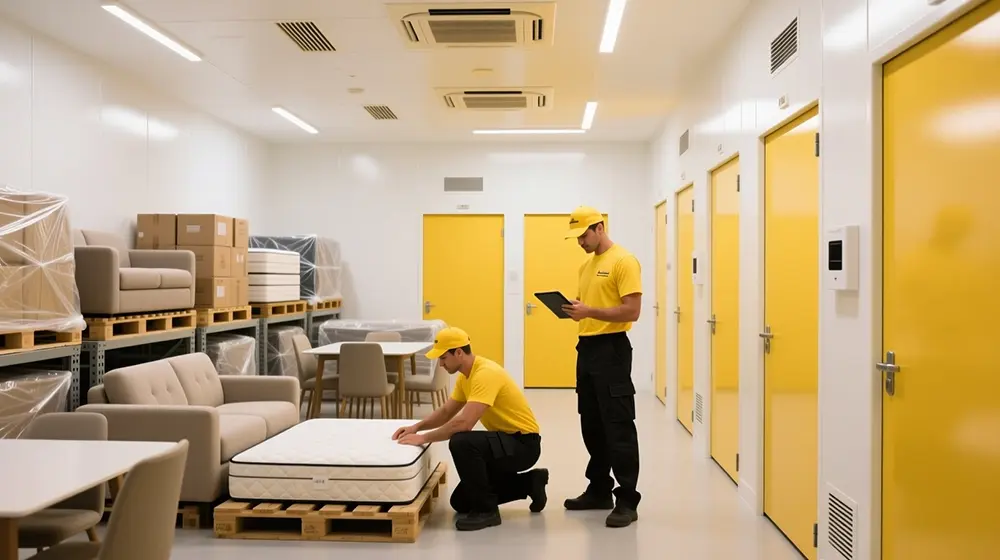
Furniture storage in Dubai now sits where fast population growth, rising self storage use, and coastal humidity meet. Dubai’s population has climbed to around 4 million residents, adding hundreds of thousands of people in just a few years and keeping home moves, new leases, and villa refurnish projects almost constant. At the same time, the UAE self-storage market already generates about US$602.5 million in annual revenue and is forecast to reach about US$ 859.2 million by 2030, so more living rooms, bedrooms, and dining sets now sit in storage units for months at a time. Coastal humidity quietly turns this convenience into a risk. Average relative humidity in Dubai stays near 60 % through the year, which sits close to the threshold that supports mold growth on wood, textiles, and padding. When furniture comes back with stains, musty smells, or swollen panels, landlords and insurers may call it gradual damage and refuse claims.
This guide explains how Dubai climate, storage contracts, and documentation habits interact, and how one extra line about humidity and condition reports can shift the outcome of deposit and insurance negotiations.
Why does the Dubai climate create mold risk inside furniture storage units?
Dubai’s climate creates mold risk inside furniture storage units because warm air, high humidity, and enclosed spaces support mold growth on organic materials. Indoor relative humidity stays safer when it stays below 60 % and ideally between 30 and 50 %, because higher humidity encourages mold growth on materials such as wood, paper, and textiles. Mold spores grow actively when relative humidity stays above roughly 60 % and when materials remain damp, and most mold species become dormant only when humidity drops significantly and surfaces dry out.
Average annual relative humidity stays close to 60 %, with monthly values between about 53 and 65 %, so the city’s baseline climate regularly moves in the range that supports mold growth if indoor conditions are not controlled.
Climate risks for furniture storage in Dubai
- Warm air temperatures for many months each year.
- Average humidity near or above the 60 % threshold.
- Nighttime humidity peaks near coastal areas.
- Long storage periods for furniture during overseas assignments and villa refurnish projects.
Furniture storage in Dubai often uses units in industrial buildings or converted warehouses that lack precise humidity control, so the climate context and building design together increase mold risk for stored furniture.
What humidity and temperature numbers define mold risk for stored furniture?
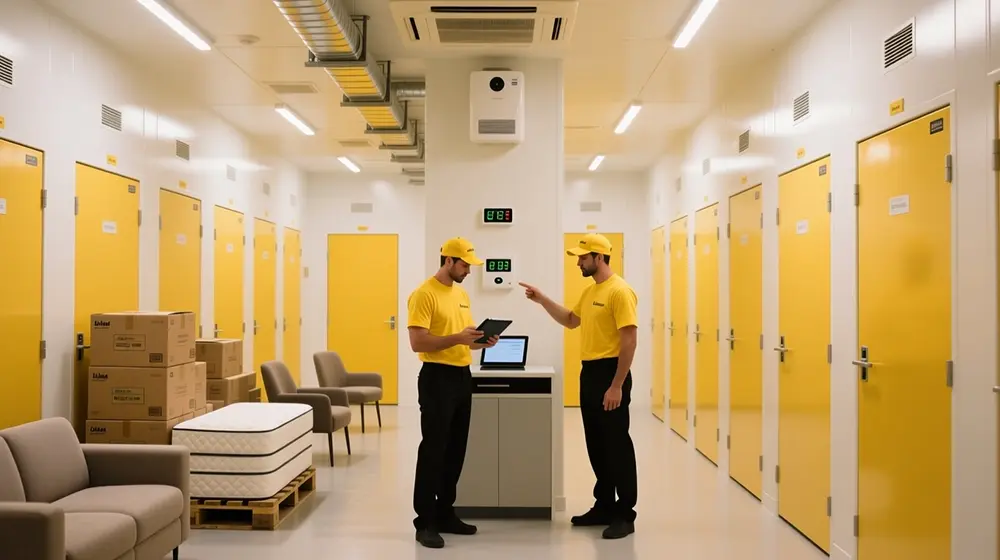
Humidity and temperature numbers define mold risk for stored furniture by marking the threshold where spores start to grow and where materials stay damp. Indoor relative humidity should remain below 60 % and ideally between 30 and 50 %, because humidity above that level already provides enough moisture in the air for mold growth. According to the same technical guidance, humidity and damp surfaces together determine mold risk, and mold often starts to grow within about 24 to 48 hours after a water incident when warm temperatures and high humidity continue.
Summer days show high temperatures and moderate to high humidity, while nights often show even higher humidity near the coast, so furniture storage in Dubai inside unmanaged units stays near the mold growth threshold during long periods.
Mold risk ranges for furniture storage in Dubai
| Condition | Relative humidity range | Approximate risk for stored furniture in the Dubai context |
|---|---|---|
| Dry indoor air | Below 40 % | Lower risk for mold growth on wood and fabrics |
| Controlled indoor air | About 40 to 55 % | Moderate risk, especially in enclosed corners without air circulation |
| High humidity | Above 60 % and warm | High risk for mold growth on textiles, wood, and paper surfaces |
Furniture storage in Dubai becomes safer when storage providers maintain humidity closer to the controlled range and when residents keep air paths open around furniture.
How often do rental disputes and deposit deductions involve damage claims?
Damage claims appear frequently in rental disputes in Dubai because security deposits protect property condition, and because many disagreements concern the state of the unit at handover. The Rental Disputes Centre handles rental disputes in Dubai under the regulatory authority for real estate, and common issues include rent increases, eviction disagreements, and deposit deductions. Common disputes include failure to return deposits, disagreements about maintenance responsibilities, and arguments about damage that one party claims as fair wear and tear and the other party claims as avoidable deterioration.
Tenants present evidence and documents when they challenge deposit deductions, and decisions depend heavily on contracts, photos, reports, and proof of payment, not only on verbal accounts. When furniture storage in Dubai leads to mold patches, stains, or swollen panels, landlords sometimes classify this as tenant negligence rather than a building defect, especially if moisture signs appear on walls or floors at the same time, and this pattern contributes to deposit deductions and friction.
Damage items linked to storage and humidity
- Swollen wardrobe doors and side panels made from particle board.
- White or green spots on fabric sofas and bed bases.
- Rust marks on bed frames and table fittings.
- Musty odor in mattresses and fabric headboards.
- Discoloration of wooden table tops and edges.
These markers often appear after long periods in warm and humid storage, so tenants benefit from connecting furniture storage in Dubai with deposit protection strategies.
Which storage unit types in Dubai increase or reduce mold risk?
Storage unit types in Dubai increase or reduce mold risk depending on building design, level of climate control, and actual humidity. Climate controlled units use air conditioning and ventilation to keep temperature and humidity more stable, which protects sensitive items such as documents, electronics, and upholstered furniture. Self-storage in the UAE includes a mixture of large warehouse style sites, smaller urban storage centres, and climate controlled facilities, with rising demand for medium and large unit sizes as households and businesses store more bulky items.
The following table summarizes the relative mold risk for typical unit types used for furniture storage in Dubai.
| Unit type | Typical features in Dubai | Climate and mold risk for furniture |
|---|---|---|
| Open warehouse bay | Shared space, limited partitioning, basic roof | High risk due to temperature swings and limited humidity control |
| Internal non cooled room | Corridor access, some shading, minimal active ventilation | Medium to high risk, depending on building envelope and occupancy |
| Climate controlled storage unit in Dubai | Air conditioning, sealed doors, climate monitoring | Lower risk, especially when humidity stays below 60 % |
| Underground or basement room | Cooler air, possible condensation on walls or floors | Mixed risk, with local high risk near damp surfaces |
Furniture storage in Dubai shifts from high risk to lower risk when residents select climate controlled storage for high value furniture and when providers explain actual climate ranges rather than using climate control as a general marketing phrase.
Why do insurers and storage providers often reject mold claims?
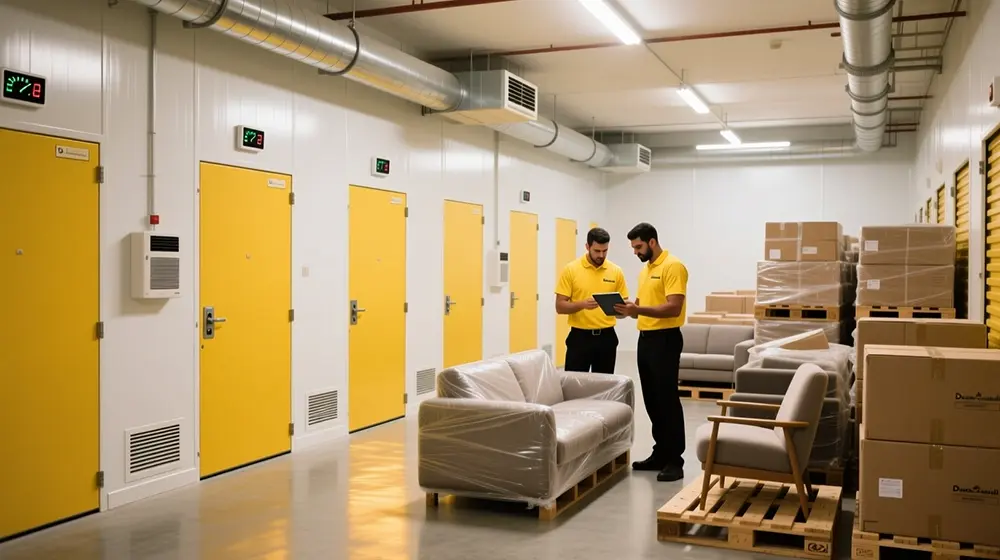
Insurers and storage providers often reject mold claims because policy wording treats mold as gradual damage and because contracts assign responsibility for proper packing and moisture control to the customer. Gradual damage from damp, moisture, mold, or fungus falls outside standard cover, while only sudden and accidental incidents such as burst pipes or defined floods qualify as insured events. Liability does not extend to loss caused by inherent vice in the goods, to normal deterioration, or to fluctuations in temperature and humidity, which includes many mold scenarios in furniture storage in Dubai.
Many cases centre on the interpretation of contract clauses and on the quality of evidence, and any area not covered clearly in the contract or policy can become a point of dispute between tenant and provider.
Frequent reasons for rejected mold and damage claims
- Policy exclusion for mold, fungus, or gradual deterioration.
- A contract clause that states storage occurs at the owner’s risk for moisture and climate related damage.
- Lack of evidence showing that the furniture entered storage in dry and clean condition.
- Use of plastic wraps that trap condensation around surfaces.
- Absence of a clear climate promise in the storage contract, even when marketing mentions climate control.
These reasons appear repeatedly in disputes over furniture storage in Dubai, so residents benefit from reading each exclusion line carefully before moving furniture into any unit.
Which contract phrases and evidence reduce rejected insurance requests?
Contract phrases and evidence reduce rejected insurance requests when they define climate expectations, record furniture condition, and allocate responsibilities clearly between the resident and storage provider. Tenants and landlords both present documentary evidence such as contracts, payment records, and photos, and the decision depends on those documents and on the legal framework, not on informal promises. Tenants who document the condition of the property and contents at check in and check out place themselves in a stronger position during deposit and damage discussions.
Contract details to request for furniture storage in Dubai
- Clear description of unit type, including mention of climate controlled storage in Dubai when that feature exists.
- Stated temperature and humidity ranges for climate controlled units, even if given as approximate bands.
- Explanation of which party handles pest control, cleaning, and humidity monitoring.
- A clause that clarifies the process and timeframe for reporting damage after collecting furniture.
- Limit of liability per unit and per event, with numeric values in dirhams.
Items to prepare before a furniture storage booking
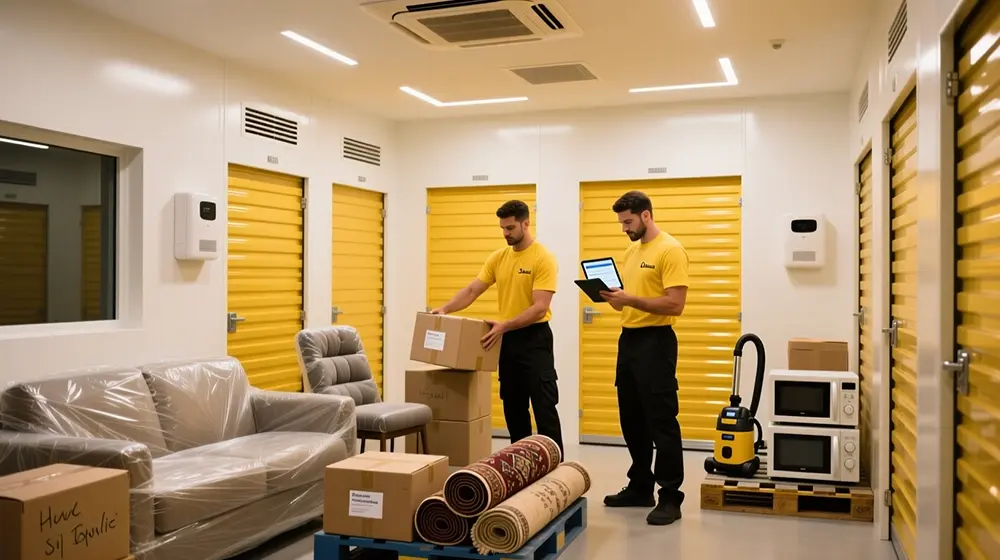
- Inventory list with item names, materials, and approximate values.
- Date-stamped photos and short video clips of each furniture set from multiple angles.
- Screenshots or copies of any marketing statements that mention climate control or mold protection.
- Copy of the full contract, including all small print and exclusion sections.
- Receipts for packing materials or professional packing services.
These steps link furniture storage in Dubai directly to the documentation habits that support later claims and deposit discussions.
How can residents compare climate-controlled storage costs using numbers?
Residents compare climate controlled storage costs using numbers by relating monthly fees to furniture replacement value and by reflecting on market level figures for self storage.
The UAE self-storage market generated about USD 602.5 million in revenue in 2024 and may reach about USD 859.2 million by 2030, which indicates a growing and increasingly structured industry. The Middle East self-storage market stands at about USD 2.2 billion, so the UAE holds a notable share within a broader regional trend toward flexible storage.
Simple cost logic for furniture storage in Dubai
- Step 1: List the approximate replacement cost of each major furniture set, such as the living room, bedroom, and dining room.
- Step 2: Sum the replacement costs to create a total value for items that enter storage.
- Step 3: Compare this total with the annual cost of climate controlled storage in Dubai for the required unit size.
- Step 4: Decide whether the climate control cost stands below a defined %age of replacement value.
This numeric view turns furniture storage in Dubai into a calculated risk management decision rather than an instinctive response to the lowest monthly quote.
What step by step packing plan protects furniture in storage?
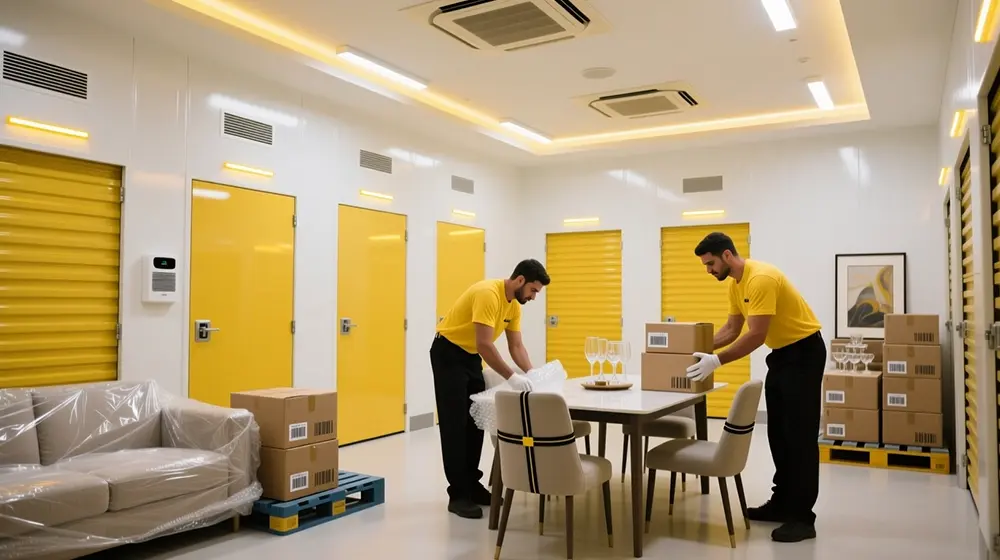
A step by step packing plan protects furniture in storage when it manages moisture, air flow, and physical impact during transport and storage. Surface moisture and trapped humidity support mold growth, so drying, spacing, and proper covering methods reduce risk for stored items.
Step by step plan for furniture storage in Dubai
1. Drying step
- Confirm that upholstery and wooden surfaces feel completely dry before packing.
- Avoid last minute steam cleaning or wet wiping before the move.
2. Surface protection step
- Use breathable cotton sheets or specialised fabric covers for sofas and mattresses.
- Avoid fully sealed plastic covers that trap condensation around fabrics.
3. Loading step
- Place heavier items such as wardrobes and tables on pallets or blocks to allow air flow under each piece.
- Keep gaps between items and never press surfaces tightly against external walls.
4. Arrangement inside the unit
- Leave a clear central path inside the unit so that air moves and inspections remain easy.
- Avoid stacking mattresses flat if space allows vertical positioning with support.
5. Moisture control step
- Place moisture absorber tubs in unit corners as an extra layer of control.
- Note the date on each absorber and replace according to product guidance.
6. Monitoring step
- Visit the unit periodically during long storage, especially during the most humid months, and look for early signs such as smell or small spots.
This procedure increases the chance that furniture storage in Dubai finishes with intact furniture and reduced mold related conflicts.
How can tenants prepare for disputes about mold damage and deposit deductions?
Tenants build a dispute ready evidence file for mold and damage by compiling contracts, visual records, and communication logs in a structured way. Tenants and landlords use the Rental Disputes Centre when negotiations fail, and the tribunal examines written evidence such as Ejari registrations, contracts, invoices, and media files.
Elements of an evidence file related to furniture storage in Dubai
- Tenancy contract, Ejari registration, and any renewal addenda.
- Storage contract, including all terms about liability, climate control, and exclusions.
- Insurance policy schedule or storage protection documents that mention mold or damp.
- Date stamped photos and videos of furniture before storage, during unit placement, and after removal.
- Records of humidity readings if a simple meter was placed inside the unit.
- Email threads and messages exchanged with the storage company about any concerns or incidents.
- Expert or technician reports if furniture cleaning or mold treatment occurred after storage.
A tenant who keeps this type of evidence for furniture storage in Dubai shows that they acted with care and can present a coherent story if a deposit or insurance dispute arises.
What checklist tests the strength of a furniture storage plan in Dubai
A quiz checklist tests the strength of a furniture storage plan in Dubai by revealing gaps in climate awareness, documentation, and contract review. Answer yes or no.
- Do you know the average humidity in Dubai and how it compares with the 60 % mold threshold?
- Do you hold the full written contract for your chosen storage facility, including exclusions?
- Do you know whether your unit appears as a basic warehouse, internal room, or climate controlled storage in Dubai?
- Do you have at least three clear photos for each major furniture piece before storage?
- Do you know the combined replacement value of all furniture items entering storage?
- Do you know which parts of your insurance policy discuss mold or damp related damage?
- Do you know where and how to contact the Rental Disputes Centre if a deposit dispute occurs?
More yes answers indicate a stronger furniture storage plan in Dubai.
Checklist before signing a storage contract
- Read all contract pages and mark any lines that mention humidity, water, mold, fungus, or gradual deterioration.
- Ask the provider to state a target temperature and humidity range if the unit is sold as climate controlled storage in Dubai.
- Record a full visual survey of furniture on the day of packing.
- Collect written acknowledgment of inventory receipt from the mover or storage facility.
- Store digital copies of all documents in at least two secure places.
This checklist gives residents a simple tool for assessing risk before furniture enters storage.
Conclusion: Turn Mold Risk into Your Advantage
Furniture storage in Dubai will always sit close to the mold line because the city’s humidity rarely gives you a break. You cannot change the climate, but you can change the way you choose storage units, read contracts, and keep records. When you treat furniture storage as part of your deposit and insurance planning, you stop accepting vague promises and start asking for numbers, ranges, and clear terms in writing. The difference often comes down to one line in the contract and one small folder of evidence. A written climate range, a short clause on responsibility for moisture, and a proper photo record can decide whether a claim is rejected or paid. The same details can decide whether a landlord removes or keeps a large part of your deposit after mold appears on stored furniture.
Before you move a single sofa or wardrobe into a unit, link three things in your mind: Dubai humidity, the exact storage contract you sign, and the evidence file you keep. When these three pieces match, you turn furniture storage in Dubai from a stressful unknown into a calculated choice that protects your furniture, your deposit, and your peace of mind.
Frequently Asked Questions
Why is furniture storage in Dubai so sensitive to mold?
Because average humidity sits near the mold threshold for much of the year, stored furniture stays in a climate that easily supports mold growth if not controlled.
What humidity range should I look for inside a storage unit?
Aim for indoor humidity below 60 %, with a preferred band somewhere between about 40 and 55 % for stored furniture.
Do climate controlled storage units always cover mold damage?
No, many contracts exclude gradual mold damage even when units are marketed as climate controlled, so you must check the wording line by line.
How can I prove that my furniture entered storage in good condition?
Take clear, date stamped photos and short videos of each item from several angles before collection and keep them in a safe digital folder.
What kind of contract phrases help with future insurance or deposit disputes?
Useful phrases include stated temperature and humidity ranges, clear responsibility for moisture control, and limits of liability shown in dirhams.
Is plastic wrapping a safe option for long term furniture storage in Dubai?
Tight plastic wrapping can trap condensation around fabrics and wood, so breathable covers usually offer safer protection in a humid climate.
How do I decide if climate controlled storage is worth the extra cost?
Compare the yearly cost of the unit with the realistic replacement value of your major furniture sets and decide if the fee is a small share of that total.
Can I rely on marketing claims alone when choosing a storage facility?
No, always check that any claim about climate control or mold protection appears in the written contract and not only in brochures or websites.
What evidence should I prepare if I expect a possible dispute later?
Gather contracts, Ejari and tenancy records, storage documents, photos, videos, and any technician reports into one well organized evidence file.
How often should I visit my furniture storage unit in Dubai?
Visit at intervals during the most humid months to check smell, surfaces, and moisture absorbers so you can catch small mold issues before they spread.