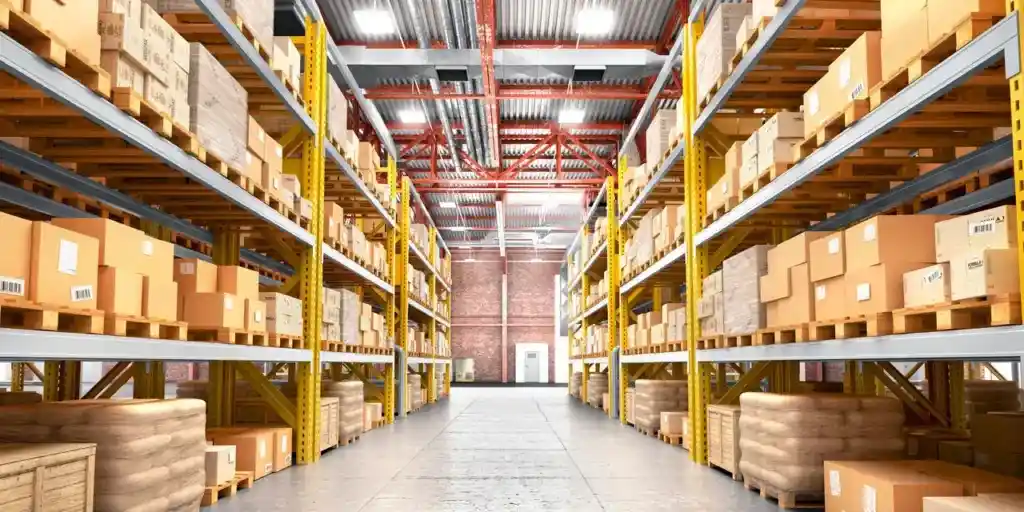
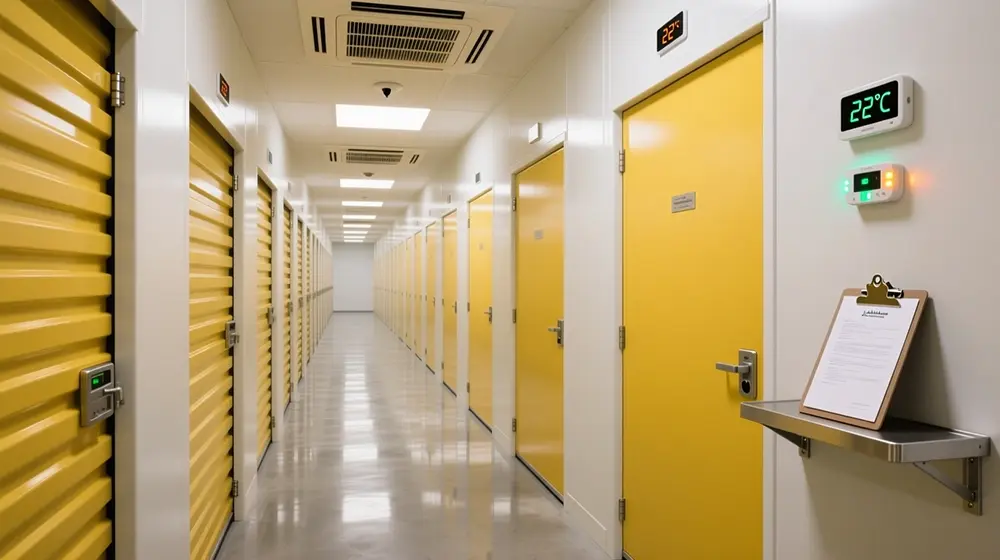
Ajman now sits in a climate and property corridor where heat, humidity, and population growth quietly dictate how people store their belongings. Summer highs climb above 40 °C for weeks, while average relative humidity often stays near 60 % or more, a range that encourages corrosion, mold, and electronic failure if goods sit in ordinary rooms or basic sheds. At the same time, Ajman city holds several hundred thousand residents and continues to grow, which pushes more furniture, appliances, and e commerce inventory out of compact apartments and busy villas into paid storage space. Within this setting, a controlled warehouse in Ajman describes more than cool air. It points to specific temperature and humidity ranges, electricity backup, and legally enforceable promises that appear in contracts.
This guide explains why climate control matters in Ajman, how storage prices really work, and which hidden clauses, penalties, and fees every resident or online seller should understand before signing a storage contract.
Climate Data Explaining Demand for Climate-Controlled Warehouses in Ajman
A climate controlled warehouse in Ajman becomes necessary because climate records show long, hot seasons, persistent humidity, and a growing urban base that stores valuable goods outside small apartments and busy villas.
What do the Ajman temperature and humidity records show?
Ajman temperature and humidity records show that outdoor conditions remain hot for many months and that humidity stays in a range that encourages corrosion and mold if goods sit without control.
Climate tables for Ajman show mean high temperatures of about
- 38 °C in May
- 40 °C in June
- 42 °C in July and August
The same sources record relative humidity around
- 44 to 50 % during peak hot months
- 55 to 62 % in the shoulder months
- 62 % or more in some winter months
Ajman averages around 61 % relative humidity, with a low of 52 % and a high near 69 % across the year.
These values place Ajman inside a high humidity band for much of the year.
Climate indicators relevant to a climate controlled warehouse in Ajman
| Month | Mean high temperature °C | Relative humidity % |
|---|---|---|
| May | 38 | 44 |
| June | 40 | 50 |
| July | 42 | 49 |
| August | 42 | 49 |
| Annual | — | 61 |
Humidity above roughly 60 % encourages processes such as current leakage, electrochemical migration, and corrosion inside electronic systems Keeping relative humidity below about 60 % reduces humidity induced failure risk in many applications.
A climate controlled warehouse in Ajman, therefore, carries real technical significance, not only a marketing label.
Ajman Population Growth and Its Impact on Climate-Controlled Storage Demand
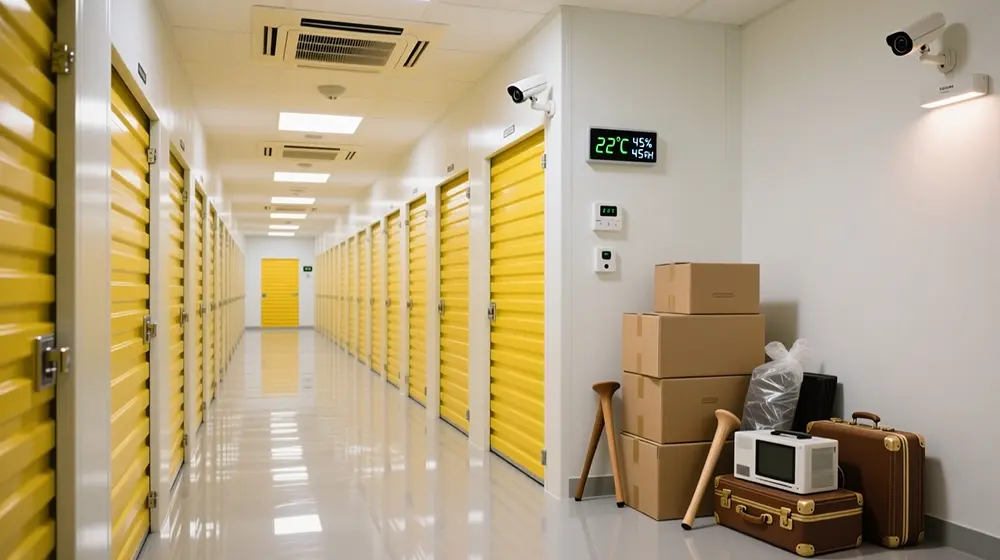
Ajman population growth connects to climate controlled storage demand because more residents, more goods, and more businesses compress space and increase the total value stored outside primary homes and offices.
- Ajman’s 2025 population is now estimated at 423,929.
- Ajman had a population of about 504,846 in 2017. In 2023, its GDP at current prices exceeded AED 36 billion.
This growth pattern describes increasing numbers of tenants, landlords, small companies, and e commerce sellers using a climate controlled warehouse in Ajman as an extension of their limited indoor space.
Items That Rely Most on Climate-Controlled Warehouses in Ajman
Items depend most on a climate controlled warehouse in Ajman when they react strongly to heat and humidity, and when damage translates into direct financial loss, inspection disputes, or business interruption.
Which household appliances rely on a climate controlled warehouse in Ajman?
Household appliances rely on a climate controlled warehouse in Ajman because internal metals, control boards, seals, and insulation absorb moisture and face corrosion and leakage under high humidity.
Research on corrosion reliability of electronic systems identifies humidity driven corrosion as a key cause of failure in electronics, with effects such as electrochemical migration and conductive filament growth on printed circuit boards.
Typical appliances stored in a climate controlled warehouse in Ajman include
- Refrigerators and freezers with copper coils, steel shells, and foam insulation
- Washing machines and dryers with metal drums, rubber seals, and electronic panels
- Dishwashers with stainless interiors and submerged electrical components
- Air conditioners and split units with exposed aluminium fins and electronic controls
Each unit contains a mix of metals and electronic circuits that respond poorly to months of uncontrolled humidity. A climate controlled warehouse in Ajman, with temperatures around mid twenties Celsius and humidity around or below 60 %, reduces corrosion, mold growth, and insulation degradation.
Furniture & Textiles That Benefit Most from Climate-Controlled Warehouses in Ajman
Furniture and textiles gain most from a climate controlled warehouse in Ajman because wood, leather, foam, and fabric absorb moisture and develop odor, staining, or warping when humidity stays high.
Relative humidity above about 70 % creates favourable conditions for mold growth on organic materials, while cyclic humidity drives moisture in and out of porous structures.
Examples that align with a climate controlled warehouse in Ajman include:
- Solid wood tables and doors where joints move under moisture load
- Veneered panels where glue lines weaken under repeated swelling
- Leather sofas where the surface finish and stitching degrade under damp air
- Mattresses and carpets where trapped dust and moisture produce persistent odors
A climate controlled warehouse in Ajman that maintains stable temperature and filtered air reduces the probability that such items return to a rented apartment or villa in a condition that triggers deposit deductions.
Market Prices Showing Real Costs of Climate-Controlled Warehouses in Ajman
Market prices reveal the real cost baseline for a climate controlled warehouse in Ajman because advertised monthly rates for climate controlled storage in nearby emirates give a reference range before hidden fees and surcharges.
What do regional self storage price ranges show?
Regional self storage price ranges show that climate controlled units position themselves above basic storage but still within a common band for small and medium units.
- A storage marketplace in Dubai advertises self storage from about 149 dirhams per month for small units in basic configurations.
- A storage provider in Abu Dhabi quotes small units between roughly 250 and 650 dirhams per month, medium units around 1250 to 1600, and large units around 2250 to 2950, with higher rates for added features such as climate control.
- A shipping and storage company in Dubai lists a 20 foot container at about 1100 dirhams per month and a 40 foot container at about 1950 dirhams per month, including loading and unloading.
- An industrial zone operator markets an air conditioned self storage unit in the UAE of about 5 square metres or 15 cubic metres at around 400 dirhams per month with controlled access and surveillance.
Specialist storage operators describe climate controlled facilities in the region as spaces kept near 24 to 25 °Cwith continuous air conditioning and regular cleaning.
These data points create a price frame for a climate controlled warehouse in Ajman. Actual Ajman prices fall inside or close to this band, depending on unit size, climate specification, and contract length.
Indicative monthly storage price ranges relevant to a climate controlled warehouse in Ajman
| Storage type | Indicative monthly price AED | Climate control note |
|---|---|---|
| Small basic unit | from 149 | basic storage |
| Small unit | 250 to 650 | Climate control is often a premium option |
| Air conditioned unit 5 m² 15 m³ | about 400 | Air conditioned, climate-controlled |
| 20 foot container | about 1100 | Container storage, climate level varies |
| Large warehouse type unit | 2250 to 2950 or more | Climate control and access features are significant |
A climate controlled warehouse in Ajman inherits this structure and then adds its own climate surcharge, administration fees, and penalties in the contract.
Hidden Contract Clauses in Ajman Climate-Controlled Warehouses
Contract clauses in a climate controlled warehouse in Ajman that providers rarely highlight cover liability, climate obligations, access limits, security deposit rules, penalties, and disposal procedures.
How do liability and exclusion clauses shift risk in a climate controlled warehouse in Ajman?
Liability and exclusion clauses shift risk in a climate controlled warehouse in Ajman by defining narrow conditions under which the operator accepts responsibility and broad conditions under which the customer carries the loss.
Examples from UAE storage contracts show patterns such as
- Classification of the operator as the landlord of space rather than the bailee of goods
- Exclusion of liability for damage due to inherent vice or natural deterioration
- Exclusion of liability for events outside direct control, including some climate events
- Requirement that the customer arrange insurance for stored goods
In practice, a climate controlled warehouse in Ajman often markets protection but contracts that protection with disclaimers and liability caps.
How Climate Clauses Affect Warehouse Performance in Ajman
Climate clauses define the real performance of a climate controlled warehouse in Ajman because they specify target temperature bands, humidity thresholds, and tolerances for temporary deviations.
Climate controlled self storage operators in the region state that units are kept at about 24 to 25 °Cwith continuous air conditioning and ventilation.
A careful review of a climate controlled warehouse in the Ajman contract examines
- Whether a numeric temperature range appears, such as 22 to 26 °C.
- Whether a maximum relative humidity %age appears, such as below 60 %.
- Whether climate obligations apply at all times or exclude maintenance and power cut periods.
- Whether monitoring data are recorded and retained for later evidence.
Reliability research indicates that humidity control below about 60 % reduces corrosion and humidity related failures in electronics.
A climate controlled warehouse in Ajman that defines climate ranges only with qualitative terms, such as cool and dry, does not align with these quantitative recommendations.
Access, Penalties & Disposal Clauses in Ajman Climate-Controlled Units
Access, penalties, and disposal clauses operate in a climate controlled warehouse in Ajman by linking payment status and time limits to the right of entry and the fate of stored goods.
Guides and sample contracts for property and storage in the UAE describe structures such as
- Late payment penalties are assessed at a daily or monthly % of outstanding rent
- Blocking of access after a defined period of non payment
- Right to clear the unit and sell or dispose of goods to recover costs
In a climate controlled warehouse in Ajman, these clauses combine climate related expectations with financial enforcement. Customers who treat storage as an informal extension of home risk a rapid escalation of charges and loss of goods if payment issues arise.
Tenancy Deposits & Insurance for Ajman Climate-Controlled Warehouses
Tenancy deposits and insurance connect to a climate controlled warehouse in Ajman because stored items often return to rented units and appear in inspection reports, while insurance policies evaluate storage conditions in risk assessment.
How do UAE tenancy deposit norms relate to stored goods in Ajman?
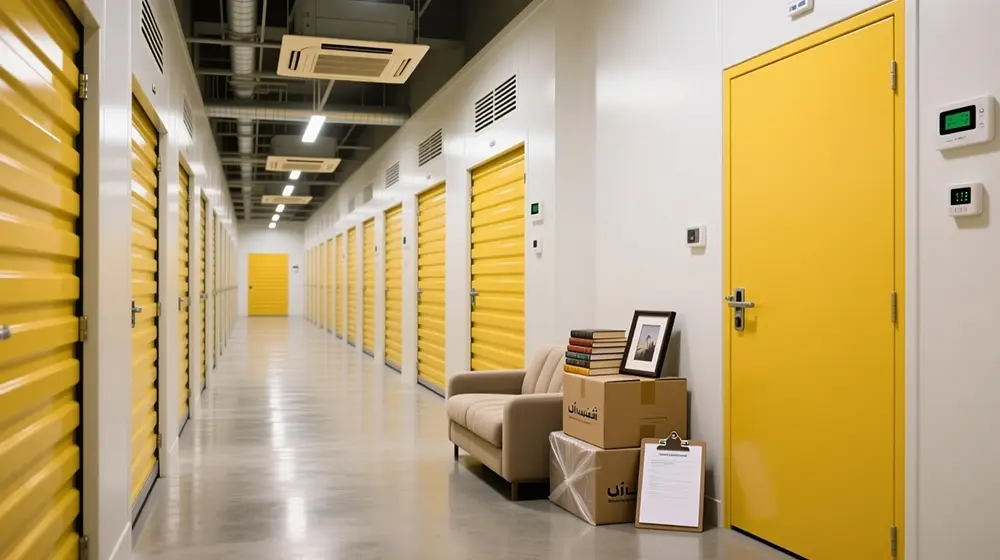
UAE tenancy deposit norms relate to stored goods in Ajman because deposit amounts scale with annual rent, and stored assets such as appliances and furniture affect the final deposit outcome.
Multiple property guides for Dubai and the wider UAE describe a common standard:
- About 5 % of the annual rent as a security deposit for unfurnished properties
- About 10 % of the annual rent as a security deposit for furnished properties
Regulatory guidance in one financial free zone caps the security deposit for short term residential leases at 5 % of the first year’s annual rent. If a tenant stores appliances and furniture in a climate controlled warehouse in Ajman during a relocation or renovation, the condition of those items upon return influences inspection findings and deposit release.
How Insurance Evaluates the Role of a Climate-Controlled Warehouse in Ajman
Insurance evaluates the role of a climate controlled warehouse in Ajman by assessing whether stored goods sit within recommended climate ranges and whether the facility maintains security standards such as access control and surveillance.
Technical literature on electronics reliability identifies humidity driven corrosion and mold as common failure drivers, and professional guidance often recommends maintaining humidity below about 60 % to limit such risks.
A climate controlled warehouse in Ajman that documents its climate ranges, monitoring regime, and response procedures presents a stronger case when insurers review claims related to stored goods. At the same time, many storage contracts assign responsibility for arranging insurance to the customer, not the warehouse operator.
Key Location Factors for Climate-Controlled Warehouses in Ajman
Location factors matter for a climate controlled warehouse in Ajman because transport links, proximity to ports or free zones, and local traffic patterns affect logistics cost and response time.
Ajman city forms part of a continuous urban corridor with Sharjah and Dubai, with a population of around mid four hundred thousand and strong connections to ports and free zones.
For a climate controlled warehouse in Ajman, key location attributes include
- Distance to residential districts that supply stored household goods
- Distance to e commerce hubs, free zones, and courier depots
- Access routes that avoid peak congestion at inter emirate corridors
These attributes influence the practical value of a climate controlled warehouse in Ajman beyond internal climate performance.
Basic Fee Comparison for Ajman Climate-Controlled Warehouses
Basic fee comparison can support the selection of a climate controlled warehouse in Ajman by converting all offers into a consistent monthly figure and identifying recurrent extras.
Recommended fee fields include
- Base monthly rent for the climate controlled warehouse in Ajman
- Explicit climate surcharge per month, if separate
- Access and handling fees per visit or per pallet
- Insurance related charges or proof of an external policy
- Late payment % per day or per month
- Clearance or disposal fee per unit
A climate controlled warehouse in Ajman appears cost effective when the total monthly cost, including typical access and insurance, remains within the market range indicated in Table 2 while delivering clear climate and contract data.
Pre-Signing Checklist for Ajman Climate-Controlled Warehouse Agreements
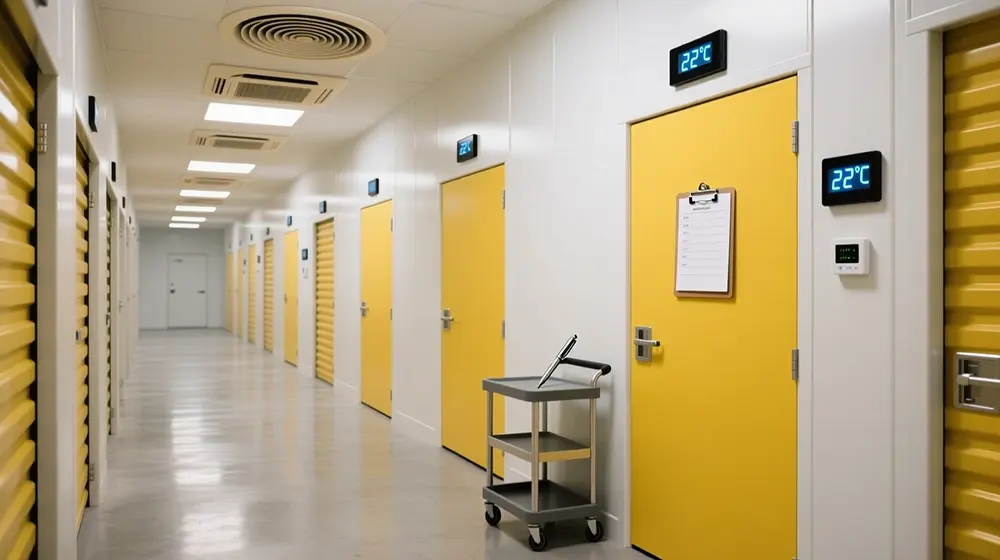
A structured checklist helps before signing a climate controlled warehouse in Ajman contract because it organises questions on climate, clauses, and fees into a repeatable review process.
Technical checklist for a climate controlled warehouse in Ajman
Use the following points during site visits and document review.
Climate and infrastructure
- Ask for the written temperature range and maximum humidity for the climate controlled warehouse in Ajman.
- Request recent climate logs for at least three months.
- Confirm the presence of backup power for climate systems.
- Inspect unit walls, floor, and ceiling for past condensation or staining.
Contract clauses
- Locate liability and exclusion sections for the climate controlled warehouse in Ajman.
- Identify climate related disclaimers and any force majeure extensions.
- Confirm insurance responsibility and required cover limits.
- Review default, lien, and disposal clauses and associated timelines.
Fee structure
- Record base rent and any climate surcharge in the climate controlled warehouse in Ajman.
- Identify administration fees, access fees, and handling fees.
- Note late payment percentages and minimum clearance charges.
Conclusion: Why a Climate Controlled Warehouse in Ajman Demands Careful Reading, Not Blind Trust
A climate controlled warehouse in Ajman looks simple from the outside. It is a clean unit, a cool corridor, and a security gate on a busy road between Sharjah and Dubai. Yet once the door closes, months of heat and humidity still exist just a few centimetres away in the concrete and steel that surround your stock.
For households, the difference between proper climate control and vague promises can decide whether a fridge, leather sofa, or carton of books returns home in good condition or becomes an argument during the final inspection. For online sellers, it can be difficult to decide if a shipment of electronics or cosmetics ships on time or turns into a quiet write off after mold, corrosion, or warped packaging appear.
The contract, therefore, matters as much as the warehouse tour. Real protection sits in written temperature ranges, maximum humidity levels, monitoring rules, and clear penalties, not in friendly sales phrases. When you know the late payment %, the climate band, the disposal procedure, and the insurance responsibility before you sign, you stop treating storage as an extra cupboard and start treating it as a controlled asset.
If you walk into a site visit in Ajman with numbers, questions, and a clear checklist, the warehouse provider will see that you are not buying empty cool air. You are buying documented climate performance and a contract that protects the real value of what you store.
FAQs
What makes a climate controlled warehouse in Ajman different from normal storage?
It maintains defined temperature and humidity ranges, usually around the mid twenties Celsius and below about 60 % relative humidity, rather than just offering shade and a lockable door.
Why does Ajman’s humidity matter so much for stored goods?
Average humidity in Ajman sits near 60 % across the year, which encourages corrosion, mold, and electrical failure if goods sit in unmanaged air for months.
Which items benefit most from climate controlled storage in Ajman?
Household appliances, electronics, wood and leather furniture, textiles, books, and many beauty or personal care products gain the most because they react quickly to heat and moisture.
How can I check if a warehouse in Ajman is truly climate controlled?
Ask for a written temperature range, a maximum humidity %, recent climate logs, and details of backup power or monitoring, rather than accepting terms such as cool and dry.
What price range should I expect for climate controlled storage near Ajman?
Regional data suggest that small climate influenced units often start in the low hundreds of dirhams per month and can rise into the low thousands for large or premium spaces.
Which contract clauses do customers most often overlook?
Many people skip liability exclusions, late payment penalties, access blocking rules, disposal rights, and the exact climate obligations that define what the operator actually promises.
How do climate clauses protect my appliances and inventory?
They define the temperature and humidity band that the operator must maintain, which directly affects corrosion risk, mold growth, and the condition of your goods at collection.
Why should tenants in Ajman link storage decisions to security deposits?
Stored furniture and appliances often return to rented flats and villas, so their condition at inspection can reduce or protect deposits that equal about 5 to 10 % of annual rent.
Who usually carries insurance responsibility in storage contracts?
Many storage operators classify themselves as landlords of space and require the customer to arrange insurance on the goods, so you should never assume cover exists by default.
What quick test shows I am ready to sign a climate controlled warehouse contract in Ajman?
If you can state the climate range, unit size, late payment %, insurance provider, and disposal procedure from memory, you are far closer to a truly informed signature.