
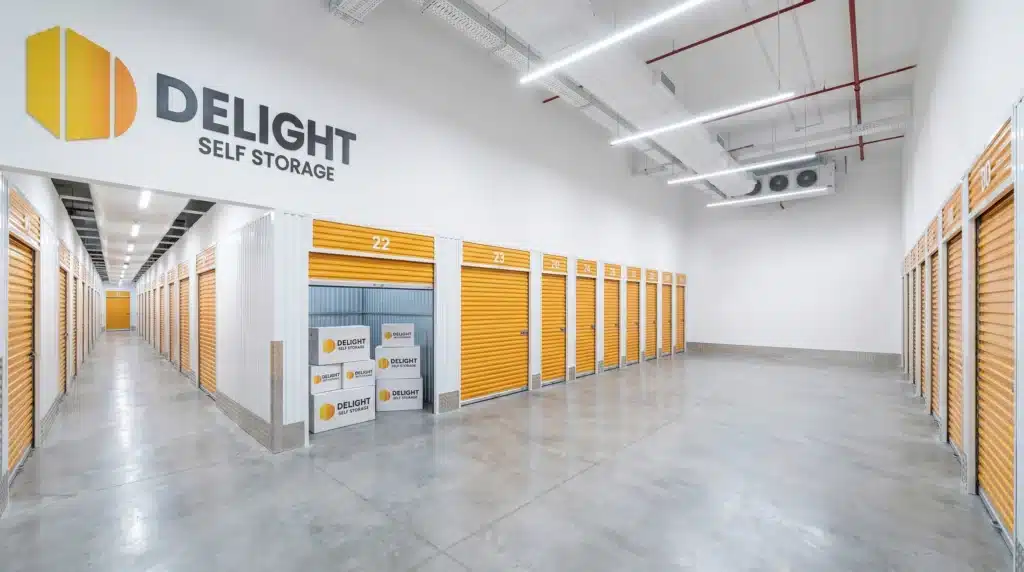
Summer storage in Dubai protects furniture, electronics, documents, fabrics, leather, and seasonal belongings from heat, humidity, mold, corrosion, swelling, and material fatigue. Climate-controlled units reduce those risks by stabilizing the storage environment during the hottest months.
Dubai summer turns storage into an environment-control decision. July temperatures reach an average maximum of 40.6°C, while UAE summer humidity can rise into ranges that increase mold, swelling, odor, and corrosion risk.
That matters when you store furniture, electronics, mattresses, documents, leather, clothing, or seasonal belongings. A standard unit may give you space, but heat and humidity can still affect wood joints, fabric fibers, paper files, batteries, and packed boxes.
This guide explains how summer storage in Dubai works, why climate-controlled units matter, which items need extra protection, and how to compare storage facilities in Dubai before you rent. You also get practical packing steps, risk tables, and checklists for keeping stored belongings safer during Dubai’s hottest months.
What is summer storage in Dubai?
Summer storage in Dubai is short-term or long-term storage for belongings exposed to high temperatures, relative humidity (RH), dust, and temperature fluctuation during the hot season.
For customers, summer storage usually supports apartment moves, villa renovations, overseas travel, student breaks, tenancy gaps, downsizing, and seasonal decluttering. The decision is not only about space. It is about environmental risk.
A standard storage unit gives you a secure place. A climate-controlled storage unit adds temperature control, humidity reduction, ventilation, and more stable air conditions. That difference matters when stored items contain wood, fabric, paper, leather, batteries, adhesives, foam, or metal parts.
Dubai residents often store items while moving between Dubai Marina, Jumeirah Village Circle, Business Bay, Downtown Dubai, Mirdif, Arabian Ranches, Dubai Hills Estate, Jumeirah, Al Barsha, and Deira. In these cases, the item mix usually includes furniture, mattresses, documents, electronics, decor, luggage, and children’s items.
Why does Dubai summer create storage risk?
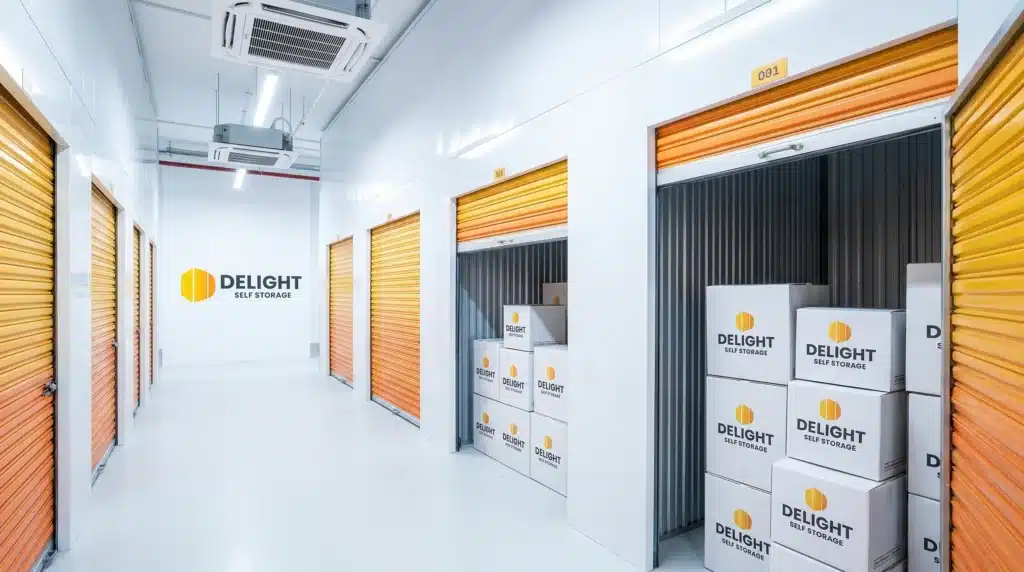
Dubai summer creates storage risk because high heat speeds material aging, while high humidity increases mold, swelling, odor, corrosion, and condensation risk.
July Weather in Dubai: In July, Dubai daily highs rise from 104°F to 106°F, or about 40°C to 41°C, and rarely exceed 112°F, or about 44°C. That is average city climate data, not the temperature inside sealed rooms, vehicles, loading areas, or poorly insulated stores.
The higher risk band appears during heat peaks and non-conditioned storage. UAE weather reporting has recorded coastal and island highs between 42°C and 47°C, with internal areas reaching 44°C to 49°C during late July conditions. Maximum humidity is between 70% and 90% in coastal and island areas.
NCM-related July climate reporting shows why humidity matters. Gulf Today reported that the UAE National Centre of Meteorology recorded average July RH at 47%, with maximum RH ranging from 64% to 81%. The same NCM report listed 51.8°C as the highest July temperature recorded in Muzeirah in 2017.
For storage, those numbers mean three practical risks:
- Heat affects glue, batteries, finishes, plastics, veneers, and foams.
- Humidity affects wood, leather, fabrics, paper, mattresses, and cardboard.
- Temperature swings affect condensation, odor, packaging strength, and surface stability.
The risk increases when items sit in sealed cartons, plastic wrap, non-ventilated rooms, or standard units without air-conditioning and humidity control.
How hot and humid does Dubai get in summer?
Dubai summer commonly reaches average highs around 40°C to 42°C in July, while UAE July maximum RH ranges from 64% to 81% in NCM climate reporting.
NCM-related reporting says July average RH is 47%, while mean maximum RH ranges from 64% to 81%. Mean minimum RH ranges from 19% to 36%.
Those numbers explain why storage damage can appear uneven. One item may face dry heat during midday. The same item may face humid air during evening, early morning, coastal fog, or closed indoor conditions.
The Aletihad report notes that July 2023 recorded 11 fog occasions and 5 misty days in the UAE. Fog and mist matter for storage because they show how humid air can appear even in a desert climate.
This table summarizes climate figures that matter when comparing storage facilities in Dubai.
| Climate factor | Reported figure | Storage meaning |
|---|---|---|
| Dubai July average maximum | 40.6°C | Heat-sensitive items need controlled conditions |
| Dubai July high average | 42°C | Standard units can become risky for furniture and electronics |
| Dubai July mean temperature | 37°C | Stored items remain warm for long periods |
| July average temperature range | 34.6°C to 37.2°C | Heat exposure is sustained, not occasional |
| July average maximum range | 39.7°C to 43.8°C | Loading and storage edges face peak heat |
| UAE July maximum RH range | 64% to 81% | Mold and swelling risk increase |
| UAE highest July temperature | 51.8°C | Heat peaks justify climate-controlled storage |
The figures show a practical pattern. Dubai storage is not only about daytime heat. The larger issue is repeated exposure to heat, moisture, and air movement changes.
How does humidity damage stored furniture and household items?
Humidity damages stored items by adding moisture to porous materials and creating conditions for mold, swelling, rust, odor, and adhesive failure.
The United States Environmental Protection Agency (EPA) advises keeping indoor RH below 60%, ideally between 30% and 50%, where possible. EPA also states that RH can be measured with a humidity meter.
This matters for summer storage in Dubai because NCM-reported maximum July RH ranges from 64% to 81%. That range sits above the EPA’s 60% mold-control threshold.
What does humidity do to common storage materials?
| Material | Moisture reaction | Visible damage | Storage action |
|---|---|---|---|
| Wood | Absorbs and releases water vapor | Swelling, warping, cracks, loose joints | Use climate-controlled storage and airflow gaps |
| Fabric | Holds moisture inside fibers | Odor, mold, yellowing, dust binding | Clean, dry, and cover with breathable fabric |
| Leather | Reacts to moisture and heat | Mold, hardening, cracking, surface marks | Use breathable covers and avoid tight plastic |
| Paper | Absorbs humidity quickly | Curling, sticking pages, stains, mold | Use archive boxes and dry storage |
| Electronics | Faces condensation and corrosion | Port corrosion, battery stress, screen issues | Pack dry and store in stable conditions |
| Metal fittings | Reacts to moisture and salts | Rust, staining, stiffness | Wrap dry and separate from damp items |
The main rule is simple. If an item absorbs moisture, contains glue, or includes electronics, climate-controlled storage protects value better than ordinary storage space.
Which items need climate-controlled storage in Dubai?
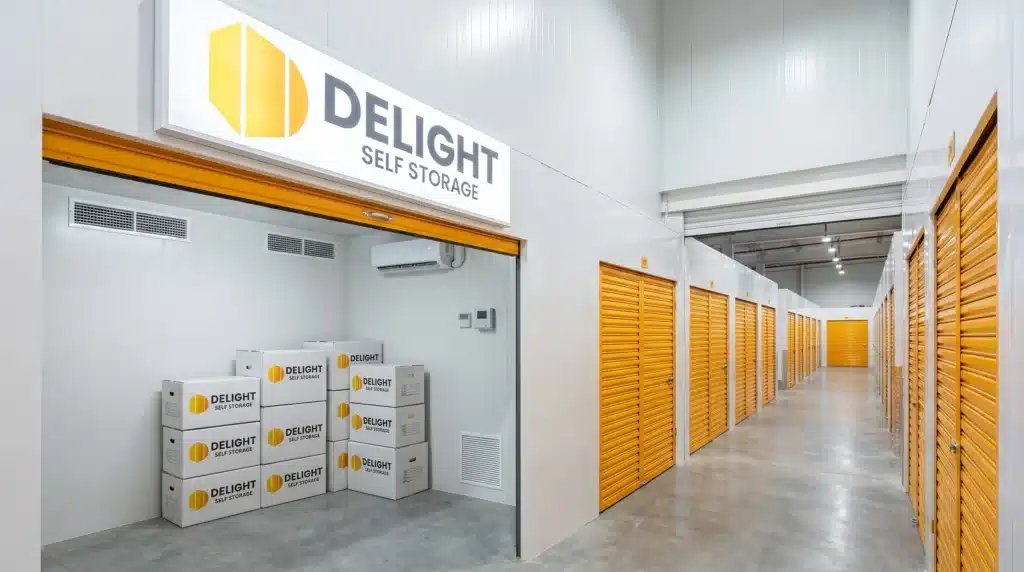
Climate-controlled storage in Dubai suits items that react to heat, humidity, dust, odor, corrosion, or material movement.
These items deserve controlled storage during summer:
- Wooden beds, wardrobes, cabinets, tables, shelves, and chairs
- Sofas, mattresses, headboards, cushions, carpets, and curtains
- Leather bags, shoes, jackets, belts, and upholstered pieces
- Books, certificates, photo albums, tenancy files, and business records
- Laptops, monitors, printers, cameras, speakers, routers, and gaming devices
- Artwork, frames, mirrors, collectibles, and decorative pieces
- Baby cots, prams, car seats, soft toys, and seasonal children’s items
- Villa furniture and apartment furniture stored during renovation or travel
Wood and upholstered furniture need special attention. The Canadian Conservation Institute explains that incorrect RH includes damp conditions over 75% RH, RH above or below a critical value for the object, and RH fluctuations.
What happens to wood furniture in Dubai storage?
Wood furniture absorbs and releases moisture, so humidity fluctuation can cause swelling, shrinkage, warping, veneer lifting, and loose joints.
Wood is hygroscopic. That means wood changes moisture content according to surrounding air. A wardrobe door can swell before a table leg cracks. A veneer panel can lift while the main frame looks normal.
From a practical risk assessment perspective, the many forms of incorrect RH can be subdivided into four types:
- Damp, over 75% RH
- RH above or below a critical value for that object
- RH above 0%
- RH fluctuations
Dubai storage adds four furniture risks:
- Large items sit close to walls and lose airflow.
- Plastic wrapping traps moisture against surfaces.
- Heavy stacking creates pressure on joints and legs.
- Heat softens glue, finishes, veneer adhesives, and foam padding.
Climate-controlled furniture storage reduces those risks by controlling temperature and moisture. Correct packing still matters. A controlled unit cannot protect a damp sofa or a wet-cleaned carpet packed too early.
What happens to fabric, clothing, and mattresses?
Fabric, clothing, curtains, carpets, and mattresses absorb moisture and hold odor when humidity stays high.
Textiles store moisture inside fibers. Cotton, linen, wool, silk, upholstery foam, and mattress layers all react differently. The storage problem becomes stronger when the item enters the unit with sweat, dust, perfume, food particles, pet hair, or cleaning moisture still present.
Textiles become more fragile at low RH, while higher humidity can increase biological risks. Smithsonian textile guidance reports that Smithsonian museums try to maintain textile collections around 45% RH ± 8% and 70°F ± 4°F.
A Dubai home storage plan treats fabrics as moisture-sensitive items. Clean and dry every textile before packing. Use breathable covers for upholstered items. Avoid direct plastic wrap against fabric for long storage periods because trapped moisture can create odor and surface markings.
What happens to paper, photos, and documents?
Paper, photos, books, and documents absorb moisture; curl; stick; stain; and support mold when RH stays too high.
The United States National Archives advises families to keep archival materials below 75°F, or about 24°C, and RH below 65% to prevent mold growth and reduce insect activity. The same guidance warns that very low RH below 15% can cause brittleness.
Dubai storage customers often store tenancy documents, school files, immigration paperwork, photo albums, books, certificates, invoices, and business archives. These items do not take much space, but they carry a high replacement cost.
Use sealed document boxes with internal folders. Keep paper away from floors. Avoid storing documents against outer walls. Do not pack papers in damp cardboard. Use plastic archive boxes only when the papers are fully dry, and the box does not trap existing moisture.
What happens to electronics in summer storage?
Electronics face heat stress, condensation, corrosion, battery degradation, dust entry, and plastic deformation in poor summer storage.
Apple suggests that iPhone and iPad devices work best between 0°C and 35°C. Apple also recommends that devices should be stored between -20°C and 45°C and should not be left in parked cars because temperatures can exceed that range.
This source does not cover every electronic item, but it gives a useful consumer benchmark. Dubai storage customers often place laptops, tablets, routers, gaming consoles, external drives, printers, cameras, monitors, drones, and smart-home devices into storage.
Electronics have three summer storage problems:
- Heat stresses lithium batteries and plastic cases.
- Humidity increases condensation and corrosion risk.
- Dust enters vents, ports, keyboards, and fans.
Pack electronics with this sequence:
- Back up data before storage.
- Remove disposable batteries from remotes and accessories.
- Use original boxes when available.
- Add padding around screens and corners.
- Use silica gel inside packaging, not directly in ports.
- Label cables by device.
- Let devices reach room temperature before switching on after retrieval.
Do not move electronics from a hot outdoor van into a cold room and power them immediately. Give devices time to stabilize first.
What is climate-controlled storage?
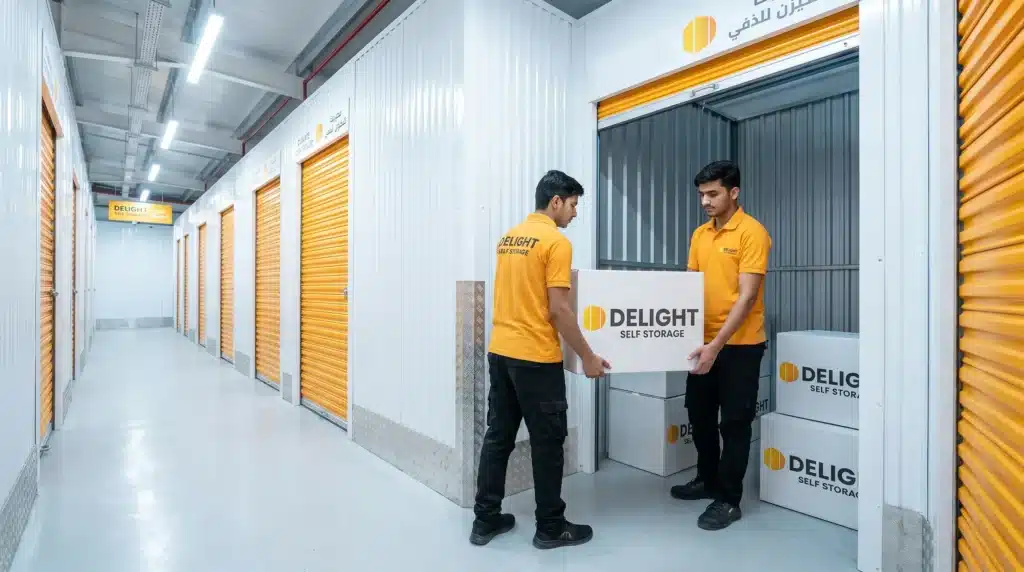
Climate-controlled storage is storage that manages temperature, humidity, airflow, and indoor stability to reduce environmental damage.
A climate-controlled unit does not need museum-level preservation to benefit household belongings. It needs consistent cooling, moisture control, clean airflow, sealed indoor conditions, and safe handling during pickup and access.
Dubai Municipality’s Green Building Regulations connect indoor air quality with ventilation, HVAC maintenance, contaminant limits, and testing. These building controls show why indoor environment management matters in enclosed spaces.
ASHRAE guidance also supports controlled humidity thinking. An ASHRAE technical document states that RH in habitable spaces should be maintained between 30% and 60%. It also notes that high RH may cause condensation in electronic data processing equipment.
For storage, the value of climate control comes from stability. A cooled, monitored, clean unit reduces the daily shock that heat-sensitive items face in ordinary storage rooms.
Climate-controlled storage vs standard storage in Dubai
Climate-controlled storage protects heat-sensitive and humidity-sensitive belongings better than standard storage during Dubai summer.
| Storage type | Environmental control | Better for | Main limitation |
|---|---|---|---|
| Standard storage | Basic space and access control | Plastic crates, metal tools, luggage, low-risk items | Limited protection from heat and humidity |
| Air-conditioned storage | Temperature reduction | General household goods and short storage | May not actively control humidity |
| Climate-controlled storage | Temperature, humidity, airflow, and stability | Furniture, electronics, documents, fabrics, leather | Costs more than basic storage |
| Specialist furniture storage | Handling plus controlled storage | Villa furniture, sofas, beds, wardrobes | Requires correct wrapping and inventory |
Standard storage is not always wrong. It can work for durable items with low replacement value. It becomes risky when your boxes contain absorbent, electronic, glued, wooden, or sentimental items.
Use climate-controlled storage when the item is difficult to replace, expensive to repair, or sensitive to moisture.
How do you choose storage facilities in Dubai during summer?
Choose storage facilities in Dubai by checking climate control, humidity management, building insulation, cleanliness, pest control, access rules, security, and pickup handling.
The storage facilities in Dubai often offer a wide mix of self-storage, warehouse storage, furniture storage, box storage, and moving company storage. The right choice depends on what you store, how long you store it, and how sensitive the belongings are.
A summer storage checklist gives you a better comparison than price alone.
- Check whether the unit has air-conditioning across the storage area.
- Ask whether humidity receives active monitoring or only general cooling.
- Check whether the facility uses CCTV, access logs, alarms, or supervised entry.
- Ask whether items sit on pallets, shelves, racks, or direct flooring.
- Check whether pickup teams wrap furniture before outdoor loading.
- Ask whether mattresses, sofas, and fabrics receive breathable protection.
- Check whether pest control runs on a documented schedule.
- Ask whether storage rooms stay closed during peak summer heat.
- Check whether insurance options cover water, fire, theft, and handling damage.
The best storage decision usually combines three controls. Use a climate-controlled unit, pack items according to material type, and keep a written inventory with photos.
How do you pack furniture for summer storage?
Pack furniture for summer storage by cleaning, drying, disassembling, wrapping with breathable protection, elevating, and leaving airflow gaps.
Furniture storage in Dubai needs more care than simple wrapping. A summer packing plan handles heat, humidity, dust, pressure, and movement.
- Clean before storage
Clean furniture before storage because dust, oils, food residue, and moisture increase odor and pest risk.
Vacuum sofas, chairs, mattresses, and cushions. Wipe wooden surfaces lightly, then dry them fully. Use a suitable cleaner for leather. Avoid soaking upholstery, foam, and wood.
- Dry before wrapping
Dry furniture before wrapping because trapped moisture creates the first mold risk.
Keep cleaned furniture in an air-conditioned room before packing. Do not wrap carpets, curtains, mattresses, or sofas while they feel cool, damp, or recently cleaned.
- Disassemble large pieces
Disassemble large furniture because smaller parts store with less pressure and lower breakage risk.
Remove bed frames, table legs, shelves, detachable cushions, and loose glass tops. Place screws and fittings in labeled bags. Keep the hardware bag with the matching item.
- Use breathable covers
Use breathable covers because tight plastic can trap moisture against fabric, wood, and leather.
Moving blankets, cotton sheets, and breathable furniture covers work better for long storage. Plastic can protect during transport, but tight plastic is risky for long storage in humid conditions.
- Elevate and space items
Elevate furniture because direct floor contact increases exposure to dust, cleaning water, moisture, and pressure.
Use pallets, boards, racks, or raised platforms. Leave small airflow gaps between large items. Avoid pushing wardrobes, sofas, and mattresses tightly against walls.
How do you prevent mold in summer storage?
Prevent mold in summer storage by controlling humidity, storing only dry items, avoiding trapped moisture, improving airflow, and checking items during long storage.
Mold prevention starts before pickup. A storage facility cannot correct a damp mattress, wet rug, or recently cleaned sofa packed too soon. Moisture inside the item stays inside the unit.
EPA guidance links indoor humidity control to mold prevention and recommends keeping RH below 60%, ideally 30% to 50%. The same source advises fast action when condensation or moisture appears on surfaces.
A summer mold prevention checklist includes:
- Dry washed fabrics before packing.
- Use breathable covers on sofas and mattresses.
- Place moisture absorbers inside closed bins.
- Keep cardboard away from floors.
- Replace weak cardboard with sealed plastic bins for non-breathing items.
- Leave airflow gaps around furniture.
- Inspect long-term storage every 2 to 3 months.
Moisture absorbers help inside boxes. They do not replace climate control. A humid unit can overwhelm small desiccant packs, especially during long summer storage.
What should you avoid storing in hot or humid units?
Avoid storing damp items, perishable goods, hazardous materials, unprotected electronics, loose documents, wet rugs, and valuable items without insurance or inventory.
Perishable goods attract pests. Hazardous materials create safety risks. Wet items introduce mold. Unprotected electronics face heat and moisture exposure. Loose paper absorbs humidity and becomes harder to recover.
For Dubai summer storage, avoid these 9 storage mistakes:
- Storing a mattress without cleaning and drying.
- Wrapping leather tightly in plastic.
- Placing boxes directly on the floor.
- Leaving batteries inside remotes and toys.
- Storing documents in weak cardboard.
- Stacking heavy cartons on upholstered furniture.
- Using sealed bags for damp clothing.
- Ignoring humidity control for long-term storage.
- Skipping photo inventory before pickup.
The mistake pattern is simple. Most summer storage damage starts with moisture, pressure, heat, or poor documentation.
How long can you store items in Dubai’s summer?
You can store low-risk items for several months in standard storage, but furniture, electronics, documents, fabrics, and leather need climate-controlled storage from the first month.
Duration increases cumulative risk. A mattress stored for 2 weeks during a move faces less risk than a mattress stored for 6 months during travel. A photo album stored for 1 month faces less risk than family archives stored through several humid seasons.
| Storage duration | Suitable items | Recommended control | Main risk |
|---|---|---|---|
| 1 to 4 weeks | Luggage, plastic bins, simple household extras | Clean packing and basic storage | Handling and dust |
| 1 to 3 months | Furniture, clothes, electronics | Climate-controlled storage | Heat and humidity exposure |
| 3 to 6 months | Villa furniture, documents, mattresses | Climate control plus inspection | Mold, odor, material movement |
| 6 to 12 months | Sentimental and valuable items | Climate control, inventory, insurance | Cumulative deterioration |
| 12 months or longer | Archives, antiques, business files | Specialist packing and controlled storage | Long-term material aging |
The longer the storage period, the more important the environment becomes. A climate-controlled unit reduces the effect of repeated hot and humid cycles.
What documents and evidence should you keep?
Keep an inventory, photos, storage contract, pickup receipt, insurance terms, item condition notes, and access records.
Documentation protects you if damage, loss, or dispute occurs. It also helps you retrieve items faster after storage. A simple evidence pack reduces confusion when several boxes look similar.
Your evidence pack can include:
- Room-by-room inventory.
- Photos of furniture before wrapping.
- Photos of electronics with serial numbers.
- Box numbers and contents list.
- Storage unit size and access details.
- Insurance or liability terms.
- Pickup and delivery dates.
- Condition notes for fragile items.
This evidence pack also helps during moving, tenancy handover, renovation, or travel. It gives you a clean record of what entered storage and in what condition.
Final takeaway: Store for Dubai’s climate, not just for space
Summer storage in Dubai is not only about finding an empty unit. It is about choosing a storage environment that can protect belongings from heat, humidity, dust, condensation, and long exposure cycles.
Furniture, documents, electronics, leather, fabrics, and mattresses do not fail all at once. Damage often starts quietly. Wood absorbs moisture. Fabric traps odor. Paper bends. Electronics collect dust and face condensation risk. A packed box may look fine from the outside while the material inside is already under stress.
Climate-controlled storage gives you a stronger margin of protection during Dubai’s hottest months. It helps reduce the pressure that summer heat and humidity place on household items, especially when you combine it with dry packing, breathable covers, raised placement, item labeling, and photo records.
Store durable items in basic storage only when they can tolerate heat. Store valuable, absorbent, electronic, wooden, or sentimental items in a climate-controlled space. That one decision can protect the condition, usability, and replacement value of the items you plan to use again.
FAQS
Can Dubai heat damage furniture even inside a storage unit?
Yes, Dubai heat can affect stored furniture inside a unit when the space lacks cooling, airflow, and humidity control.
Why do stored items smell musty after summer?
Stored items smell musty when fabric, cardboard, leather, or foam traps moisture in a closed space with poor airflow.
Is air-conditioned storage the same as climate-controlled storage?
No, air-conditioned storage mainly reduces temperature, while climate-controlled storage manages temperature, humidity, airflow, and indoor stability.
Which household items suffer first in Dubai summer storage?
Mattresses, sofas, paper files, leather goods, wooden furniture, electronics, and fabric items usually show the earliest storage stress.
Can I store clothes in plastic bags during Dubai summer?
Plastic bags can trap moisture around clothes, so breathable garment covers or dry sealed bins work better for summer storage.
Should I clean furniture before putting it in storage?
Yes, clean and fully dry furniture before storage because dust, body oils, food traces, and moisture increase odor and pest risk.
Why should boxes stay off the storage floor?
Boxes stay safer off the floor because raised placement reduces contact with dust, moisture, cleaning water, and floor-level temperature changes.
How often should I check stored items in summer?
Check stored items every 2 to 3 months during long-term storage, especially if the unit contains furniture, documents, textiles, or electronics.
Does climate-controlled storage remove the need for proper packing?
No, climate-controlled storage reduces environmental risk, but proper packing protects items from pressure, dust, scratches, and trapped moisture.
What is the best rule before choosing storage facilities in Dubai?
Choose storage facilities in Dubai by matching the unit environment to the most sensitive item you plan to store, not the cheapest box size.